Finally, what was written in historical accounts has materialized in physical evidence with major implications for Norwegian history: marine archaeologists discovered a rare, striking whale trap off the coast of Norway.
Researchers found a circular band of stones stretching over 200 feet wide on the seabed, which confirmed this method for hunting whales indeed existed, as they had failed to find any physical proof of it in 1,000 years outside of written records.
Due to the underwater belt’s sheer size, the monumental construction revealed a community dependent on whaling, as by-products became commodities to be exchanged and traded between these local groups. But considering these crafty medieval Norwegians were hunting minke whales, no wonder. They would have needed an intelligent strategy, as these whales grow up to 23-33 feet long and weigh up to 20,000 pounds.
What the trap revealed, aside from being the first of its kind to be discovered in picturesque surroundings, was a terrible ordeal for whale and human alike.
A brutal way to die, for medieval while
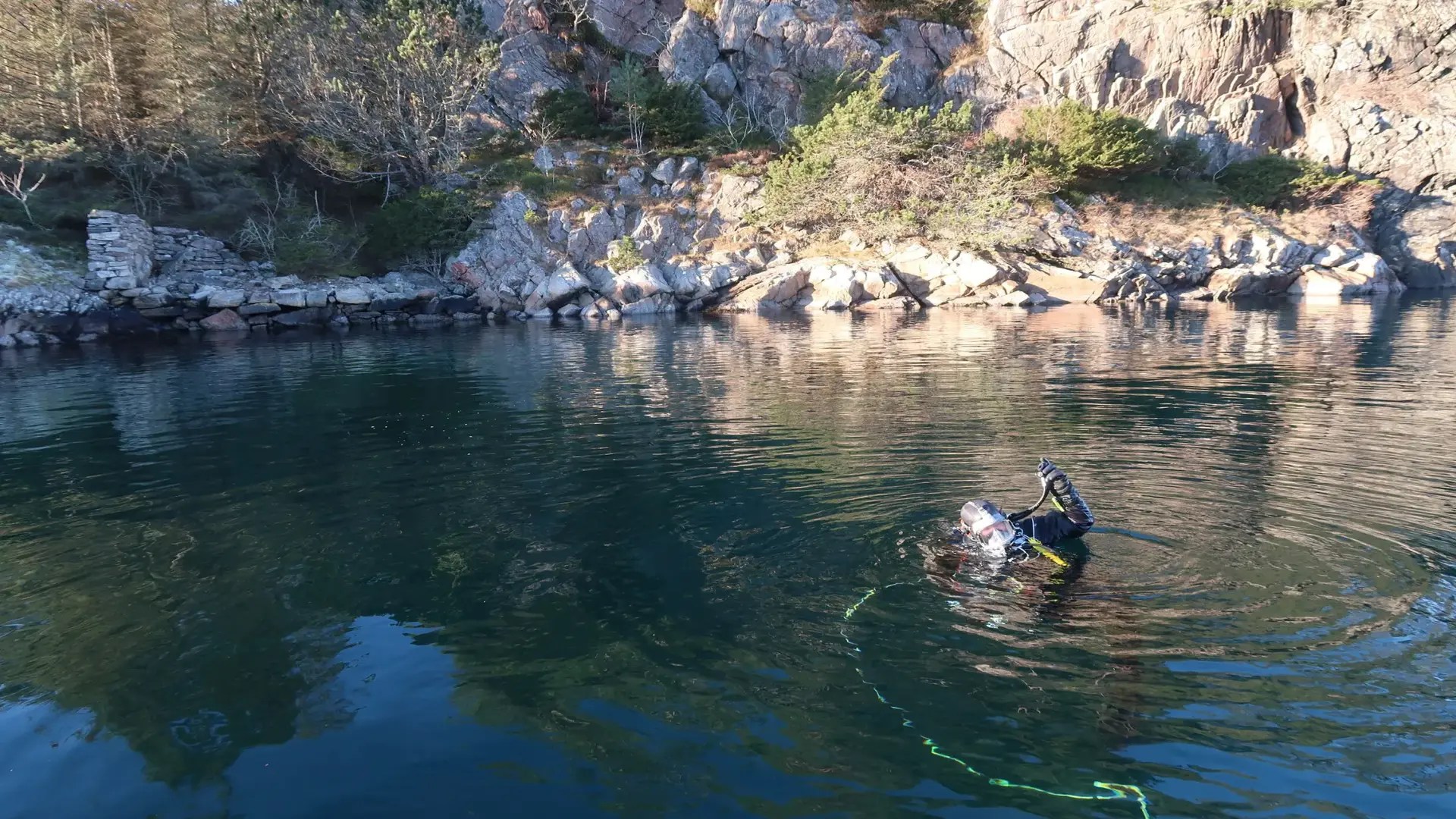
The massive medieval whale trap was discovered in the Telavåg strait, near Bergen. Researchers read of this installation in 16th-century texts, which led them to finally take the dive earlier this year to investigate. Historically, the Norwegians would capture whales in narrow inlets, according to Ancient Origins.
The stone formation was the foundation for a system of barriers of ropes meant to guide, most likely, minke whales into a bay, a closed area, where they could hunt “a beast” unwilling to be killed, evidently, more easily, as per Heritage Daily.
When a whale entered the bay, the entire community would respond by closing the barrier first, so the animal couldn’t escape. They shot the whales with poisoned arrows infected with bacteria from spoiled meat, so that they would weaken the animal, just attempting to make a passage.
The Norwegians knew it brutal, too
After being brutally attacked with crossbows, the medieval Norwegians harpooned the poor whale and dragged it to shore in rowing boats manned by dozens. Almost akin to a fire drill at school, when a whale appeared, the village would leap into action.
But whales fought to the death, literally, so they would shake out the harpoons. Though terribly wounded, they refused to surrender, swimming around for days, but survival trumps niceties, so the medieval Norwegians implemented a terrible approach to hunt their prey, as per Ancient Origins.
Almost ritualistic, these communities would toss their eyes back in the water to ensure that future generations would continue to come back, almost as a way to appease the gods, or acknowledge the brutal nature of what it meant to survive, as the whale was distributed as food to everyone.
The research team plans to continue underwater fieldwork this summer, in hopes of recovering more evidence of these well-documented but rare whale hunting installations, Ancient Origins concludes.