Ukrainian forces say they have begun combat-testing wearable exoskeletons designed to reduce physical strain on soldiers and improve reloading speed in artillery operations.
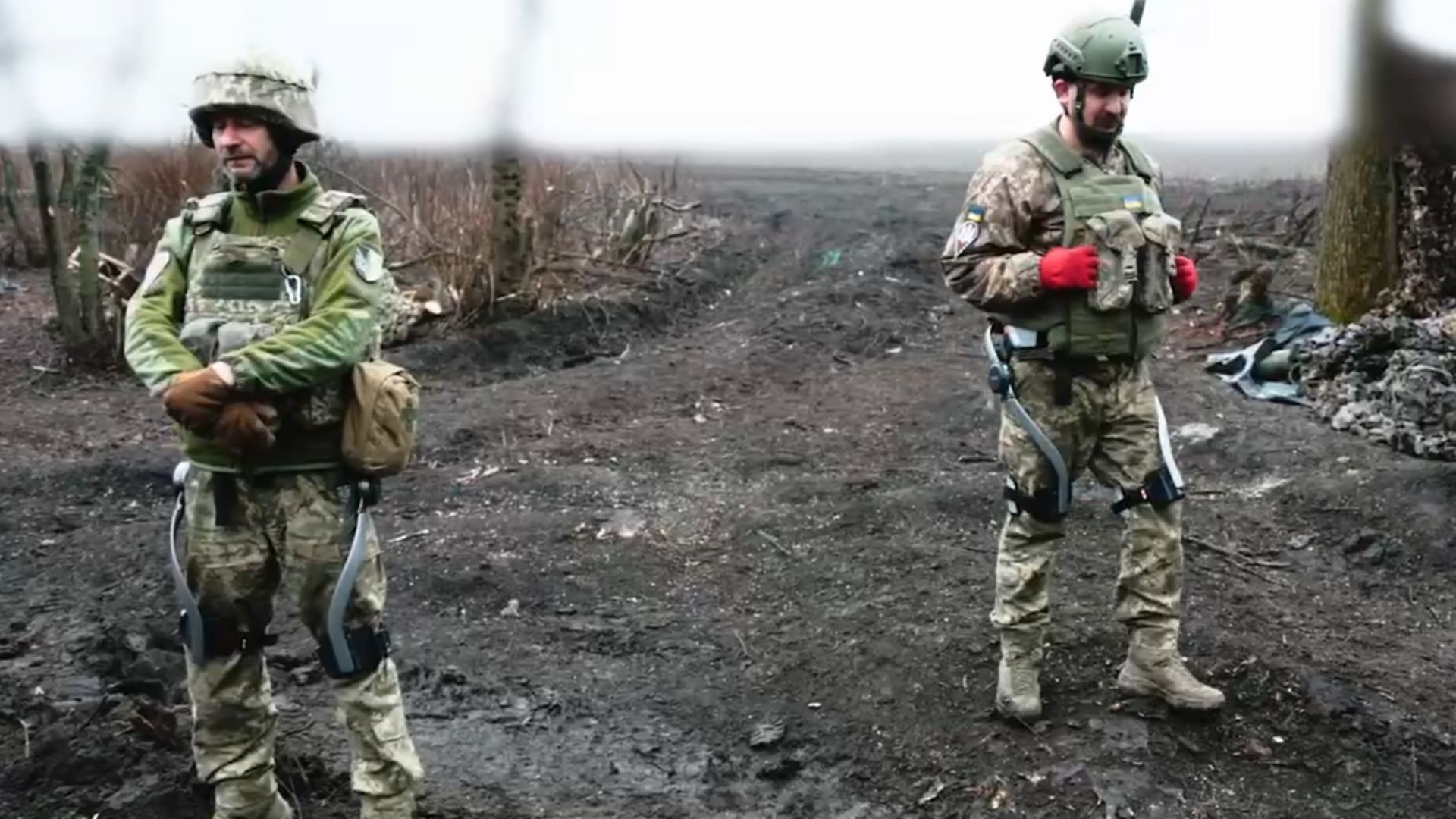
The Ukrainian Air Assault Forces’ 7th Rapid Reaction Corps recently released footage showing troops from the 147th Separate Artillery Brigade using the systems during operations in the Pokrovsk sector. In the video, soldiers wearing the devices are seen carrying and loading heavy 155 mm artillery shells onto a French-supplied CAESAR self-propelled howitzer.
According to the corps, the trial systems are being evaluated both in logistics roles and combat roles, marking the first known battlefield testing of exoskeleton technology within Ukraine’s defense forces.
Designed to reduce fatigue and boost mobility
According to statements from the Ukrainian military and reports from outlets including UNITED24 and Ukrinform, the wearable exoskeletons are designed to reduce the physical load on a soldier’s legs by up to 30 percent while allowing assisted movement speeds of up to 20 kilometers per hour (around 12 mph). The devices have an operational range of roughly 17 kilometers.
The system is worn around the waist and legs, with a structural frame extending along the back and toward the knees. Hip-mounted actuators function as mechanical joints, helping transfer some of the load from the user’s muscles to the device itself. The exoskeletons are also reportedly equipped with artificial-intelligence software that adapts in real time to the user’s movements and load conditions, offering multiple operational modes.
Despite their capabilities, the prototypes remain lightweight and portable. Ukrainian officials say each unit weighs roughly 2 kilograms (about 4.4 pounds) and can be folded into a compact case roughly the size of a briefcase, making them easier to transport and deploy in the field.
The technology is aimed primarily at reducing the extreme physical strain experienced by artillery crews. According to Colonel Vitalii Serdiuk, deputy commander of the 7th Air Assault Corps and head of its missile forces and artillery branch, artillery soldiers often carry between 15 and 30 shells per day, each weighing around 50 kilograms.
“Based on the test results, they get less fatigued, work faster, and maintain combat effectiveness longer,” Serdiuk said in comments accompanying the demonstration video.
Part of a broader push toward “tech-driven” forces
Ukrainian officials say the trials are part of a broader effort to integrate advanced tech into frontline operations. In a statement released alongside the video, the 7th Air Assault Corps said the introduction of exoskeleton systems forms part of its concept of a “technologically enhanced airborne force,” aimed at easing the physical demands placed on soldiers through engineering solutions.
Military exoskeleton development has been explored for years by several countries seeking to augment human endurance on the battlefield. The U.S. Army, for example, has tested systems such as the SABER exosuit, a soft wearable device designed to reduce spinal strain during heavy lifting, while defense contractor Lockheed Martin has developed the ONYX lower-body exoskeleton to assist soldiers carrying heavy loads. However, none of these systems has yet become standard-issue equipment.
For Ukraine, the technology could have particular value in artillery operations, where large quantities of ammunition must be transported and loaded repeatedly under combat conditions. Reports indicate that artillery crews may handle well over a metric ton of shells in a day of intensive firing, making fatigue a significant operational factor.
While the current devices are still experimental, battlefield trials suggest militaries are continuing to explore wearable robotics to extend soldier endurance and reduce injuries during physically demanding tasks. If proven effective, such systems could eventually expand beyond artillery units into logistics, engineering, infantry support, and eventually combat roles.