The world’s largest offshore wind farm has made a great step toward delivering clean power to more than 3.3 million UK households after successfully connecting its first export cable.
Developed by Ørsted, a Danish energy company headquartered in Fredericia, Hornsea 3 linked its first export cable from the North Sea seabed to the UK coast on March 26.
The achievement marked the start of the offshore wind farm’s electricity supply to the UK grid. The massive installation, which will have a capacity of 2.9 gigawatts (GW), is expected to be completed around the end of 2027.
According to reports, NKT, the project’s export cable supplier, started making the cables three years ago. It will finish them this summer. Jan De Nul will transport and install 422 miles (680 kilometers) of export cables by the end of the year.
Setting the first power link
The Round 3 wind farm began construction in 2018. It is located in the North Sea, about 75 miles (120 kilometers) off the east coast of England. It will boast a total capacity of six gigawatts (GW) once fully operational.
The newly connected cable will carry power generated by the offshore turbines to the land-based infrastructure. It is made up of two HVDC cables along with a fiber optic cable that transmits data back to the wind farm operations center. They are bundled together during installation.
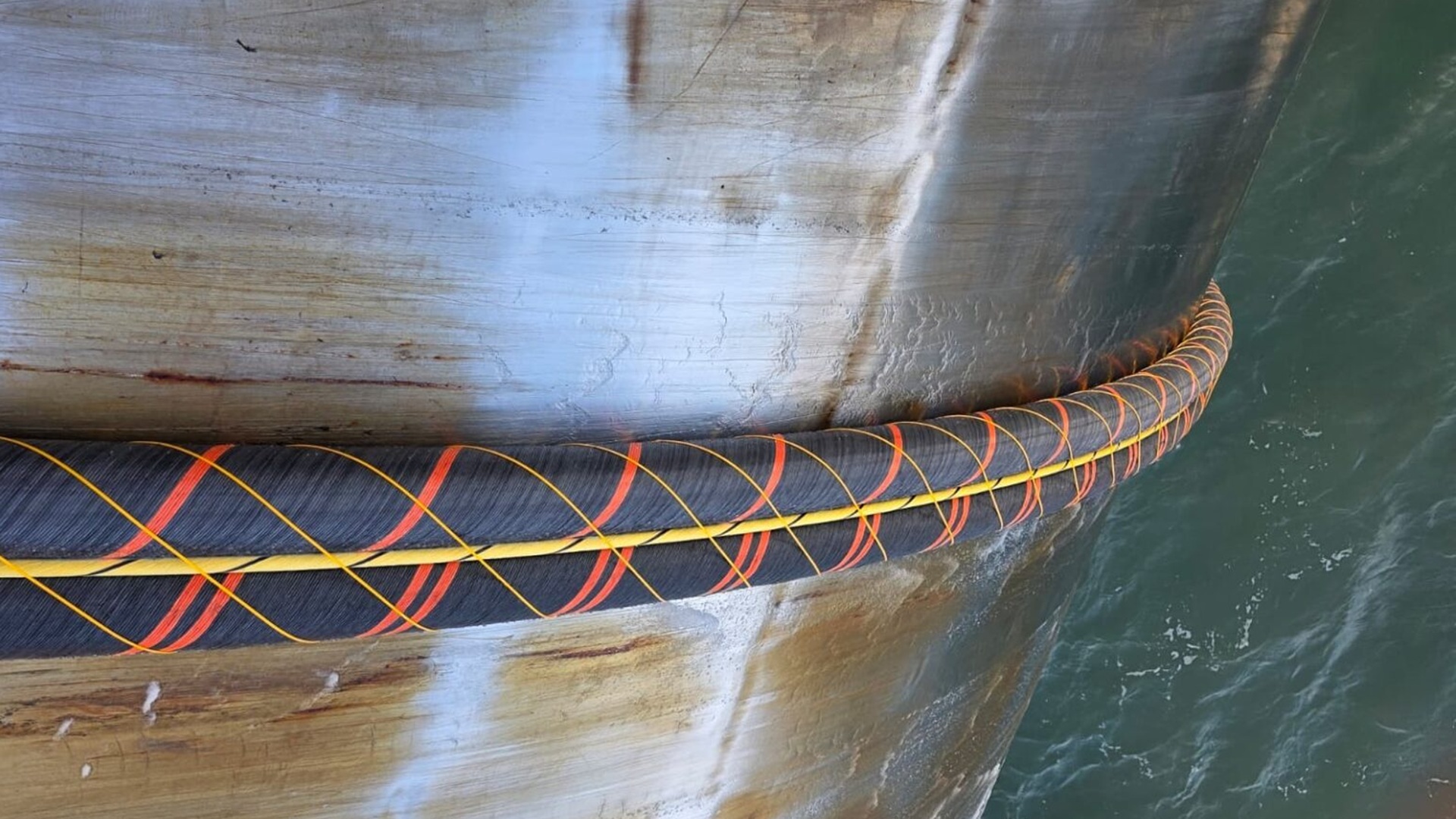
Credit: Ørsted
Hornsea 3 is set to become the firm’s third gigawatt-scale project in the Hornsea zone, following the 1.2-GW Hornsea 1 and 1.3-GW Hornsea 2. “Hornsea 3 will be a cornerstone in achieving the UK government’s climate and clean energy targets while increasing energy independence and creating local jobs,” Duncan Clark, Head of Ørsted UK & Ireland, said.
Once online, the wind farm will send electricity through offshore cables to land. It will then travel over 31 miles (50 kilometers) underground to the converter station at Swardeston, Norfolk.
“It will make a significant contribution towards the UK Government’s ambitious target of 50 GW of offshore wind by 2030 and net-zero by 2050,” Clark added.
Clean energy innovation
Ørsted has shipped key parts for Hornsea 3 from around the world. For example, large steel structures known as jackets were transported from the Dutch port of Vlissingen to the North Sea. These support the offshore converter stations.
Each one is built to withstand harsh sea conditions, and stands nearly 177 feet (54 meters) tall and weighs about 3,500 tons. The top section of one converter station traveled over 13,000 nautical miles from Thailand to Norway before installation.
The process is being led by Jan De Nul Group. Companies such as Hitachi Energy, Aibel, and Heerema Fabrication Group are contributing to the manufacturing and assembly of critical components.
Valued at approximately USD 11.2 billion (GBP 8.5 billion), the project is expected to boost the UK’s renewable capacity while reducing reliance on fossil fuels. It will feature Siemens Gamesa’s 14 MW turbines.
Hornsea 3 will create up to 5,000 construction jobs and an additional 1,200 long-term roles, and will be operated from Grimsby.