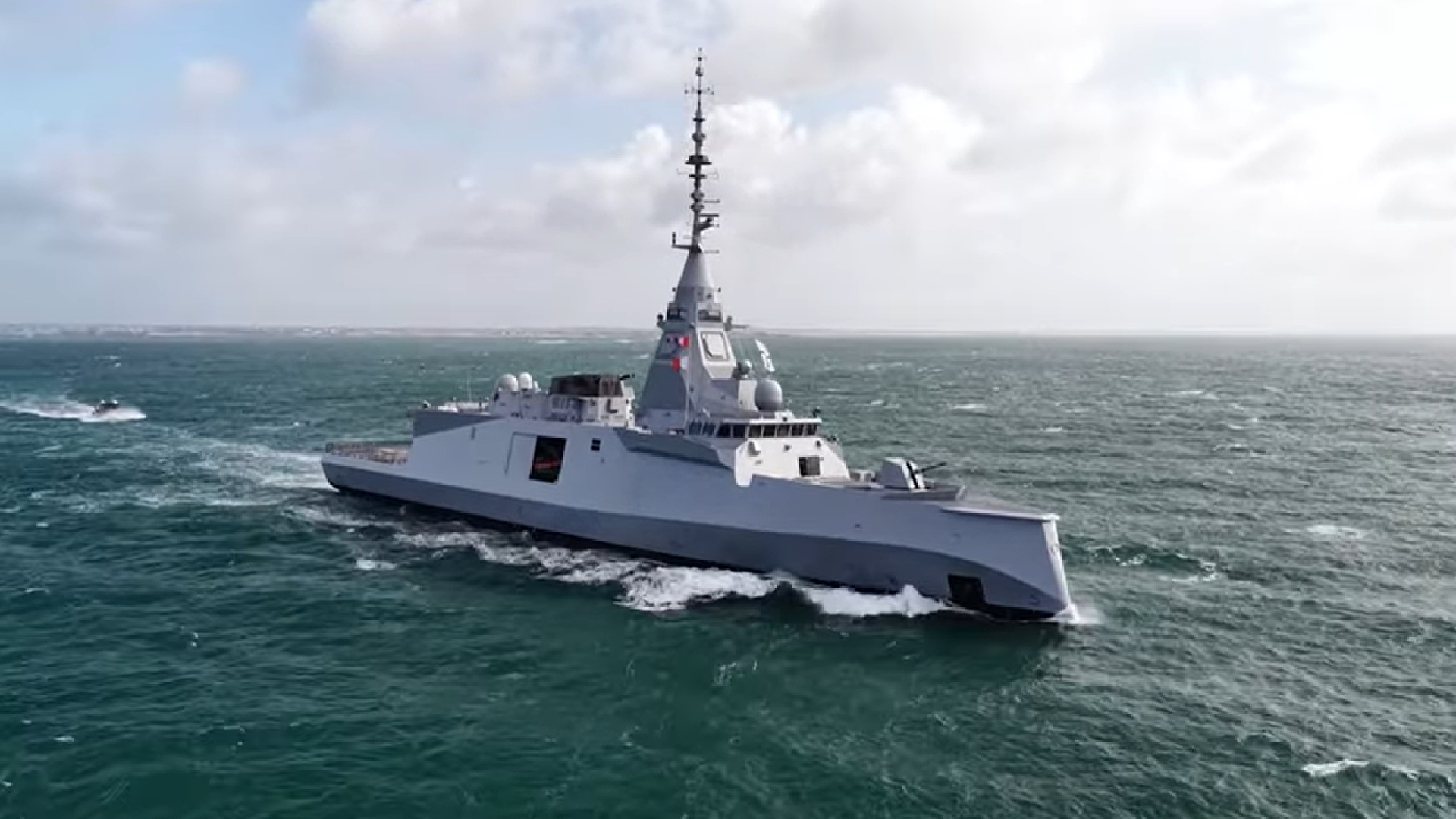
Sweden has selected the French Naval Group’s FDI (Frégate de Défense et d’Intervention) design as the basis for its next-generation frigates. The choice is notable because Sweden has historically leaned on domestic shipbuilding capacity and Nordic defense partnerships, making the selection of a French hull design a departure from established procurement patterns.
Why the FDI stood out
The FDI is a relatively new frigate class developed by Naval Group primarily for export. It displaces approximately 4,500 tonnes at full load and is designed around a modular mission bay architecture, which allows operators to reconfigure mission systems without major structural modifications.
The platform is built to accommodate a range of sensors, anti-ship missiles, surface-to-air missile systems, and torpedo tubes, giving it a versatile combat envelope by the standards of mid-weight surface combatants.
Its stealth geometry is another distinguishing feature. The hull and superstructure incorporate sloped surfaces intended to reduce radar cross-section, a design philosophy borrowed from larger stealth warships but applied at a frigate displacement. This radar signature management is increasingly standard in modern frigate procurement requirements across NATO and partner navies.
Sweden’s naval context and NATO accession
Sweden’s accession to NATO in March 2024 has directly reshaped its defense procurement calculus. Operating within the NATO framework demands a higher degree of interoperability — in communications architecture, weapons compatibility, and logistics — than Sweden’s previous non-aligned posture required. The FDI, already selected by Greece and under consideration by other NATO-adjacent buyers, offers a degree of commonality that a bespoke domestic design would not provide as quickly.
The Swedish Navy currently operates the Gävle-class corvettes and the Gotland-class submarines, with the surface fleet skewed toward smaller, shallow-water platforms suited to Baltic Sea operations. A frigate acquisition represents a move toward blue-water capable assets that can operate in the North Sea and Atlantic in support of NATO commitments, not merely in coastal defense roles.
Industrial and transfer-of-technology considerations
Procuring a foreign design does not necessarily mean all construction happens abroad. Defense frigate programs of this scale typically involve negotiated industrial participation agreements, where portions of the build — hull sections, systems integration, or outfitting — are allocated to the purchasing country’s domestic industry. Whether Sweden will secure a meaningful share of the construction work, and under what terms, will shape the long-term industrial value of the contract.
There are inherent risks in any foreign-designed warship program. Supply chain dependencies, proprietary system architectures, and long-term maintenance contracts can constrain operational sovereignty. Sweden’s defense industry, which includes companies with established naval electronics and combat management system expertise, will need to negotiate carefully to retain meaningful autonomy over the ship’s core fighting systems throughout the vessel’s service life.
Armament and sensor fit still open
The FDI’s modular design means the exact weapons and sensor suite for Sweden’s variant has not been finalized publicly. Key decisions will include the choice of surface-to-air missile system — whether Sweden opts for MBDA’s Aster family, which Naval Group integrates natively, or pursues an alternative — and the anti-submarine warfare fit, which is operationally critical given Russia’s submarine activity in the Baltic and North Sea regions.