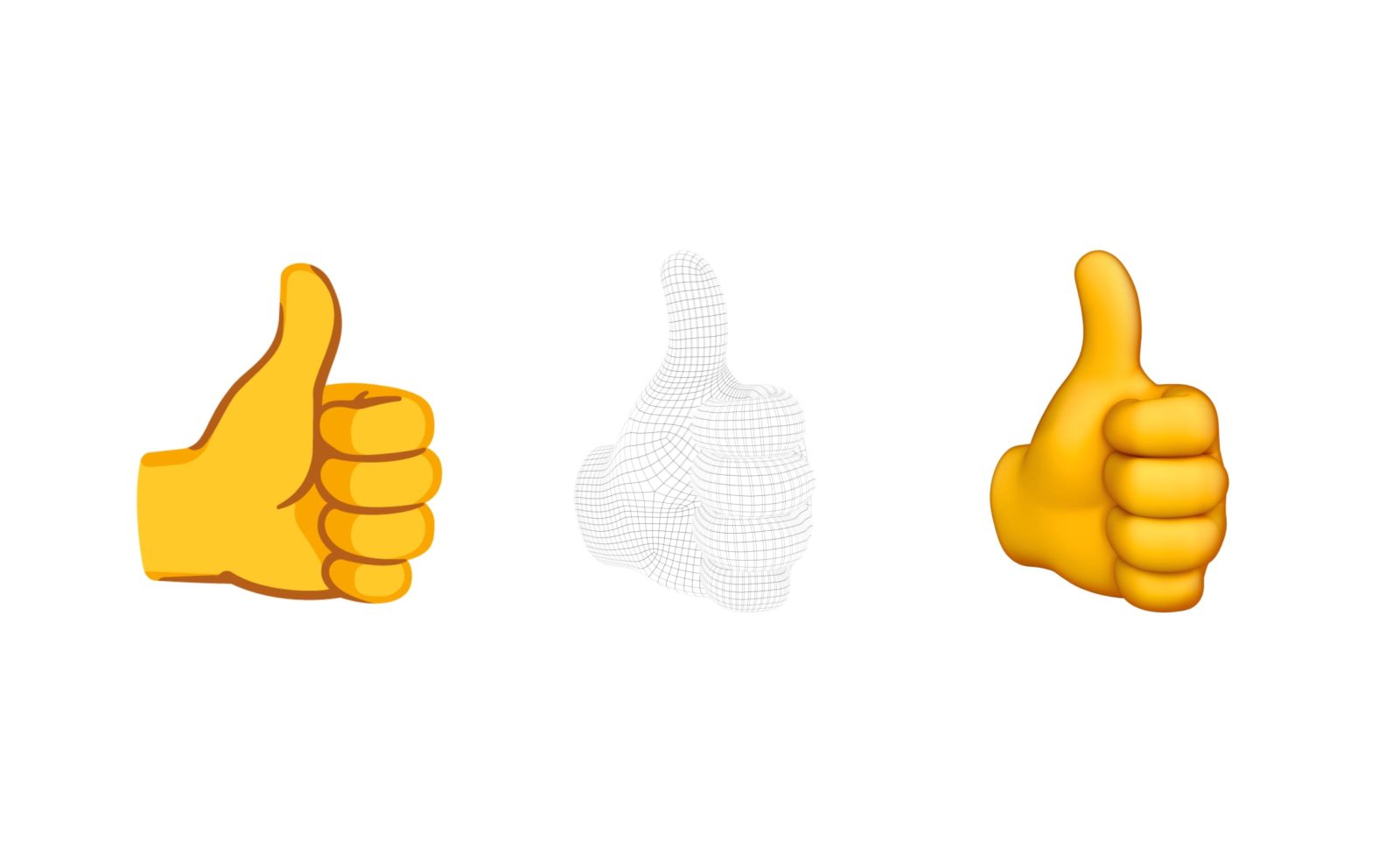
To mark World Emoji Day, Google has delved into the design of its new 3D emoji. As previewed at The Android Show in May, all 3,977 emoji characters have been redesigned to be three-dimensional.
To date, Google says its emoji style has “always favored expression over hyper-realism.” In going 3D, the emoji “designs can have dimension without being photorealistic.” Humorously:
They need a pulse and a soul — not the cold precision of industrial CAD models. Have you looked closely at a real kangaroo? They’re terrifying 🙀. We don’t need anatomical perfection. With the power of illustration, we can capture the true, playful vibe of a kangaroo.
The company ran “large-scale user studies to evaluate how changing emoji could potentially mess with human connection” and found “universal truths”:
- “Users overwhelmingly prefer full-body animals over floating heads”
- “adding props hurts comprehension
- “tiny tweaks (like swapping the direction of a wink) can turn mild confusion into accidental outrage”
The new emoji starts out as 2D drawings, with the shift to 3D models requiring Google to “resolve architectural questions” like: “What does the back of a smiley face look like? Is it a concave mask, a solid bouncy ball or a flat piece of paper?”
In regards to color, Google notes that “emoji with the darkest skin tones can be difficult to see in dark mode.”
That’s why we built an AI-powered contrast tool that analyzes each emoji at the pixel level, flags when the contrast ratio is too low and suggests high-contrast solutions that are implemented by designers

Noto Emoji 3D will first be available on Pixel phones later this year, and come to all Google products afterward. All characters are available as open-sourced 3D models (.OBJ files).


FTC: We use income earning auto affiliate links. More.