Mozilla has released Firefox 153, giving people a built-in way to keep work, personal, shopping, and banking activity apart. The update began rolling out to Release channel users on July 21 and also introduces HDR video playback on Windows, PDF improvements, and tighter controls over local files and network devices.
Containers open tabs in isolated spaces where cookies, logins, and site storage are not shared. Someone can remain signed into two accounts on the same website, keep a work Google account away from personal YouTube activity, or stop shopping cookies from following everyday browsing.
What can Firefox Containers actually do?
The feature is designed for people who regularly manage different online identities but do not want to rely on private windows or separate browser profiles. Company services can stay inside a Work container, financial websites inside Banking, and online stores inside Shopping.
Each container can have its own name, color, and icon, making its tabs easy to identify. To open one, right-click a tab and select “Open in New Container Tab.” Firefox includes Personal, Work, Banking, and Shopping categories, while custom options can also be created.
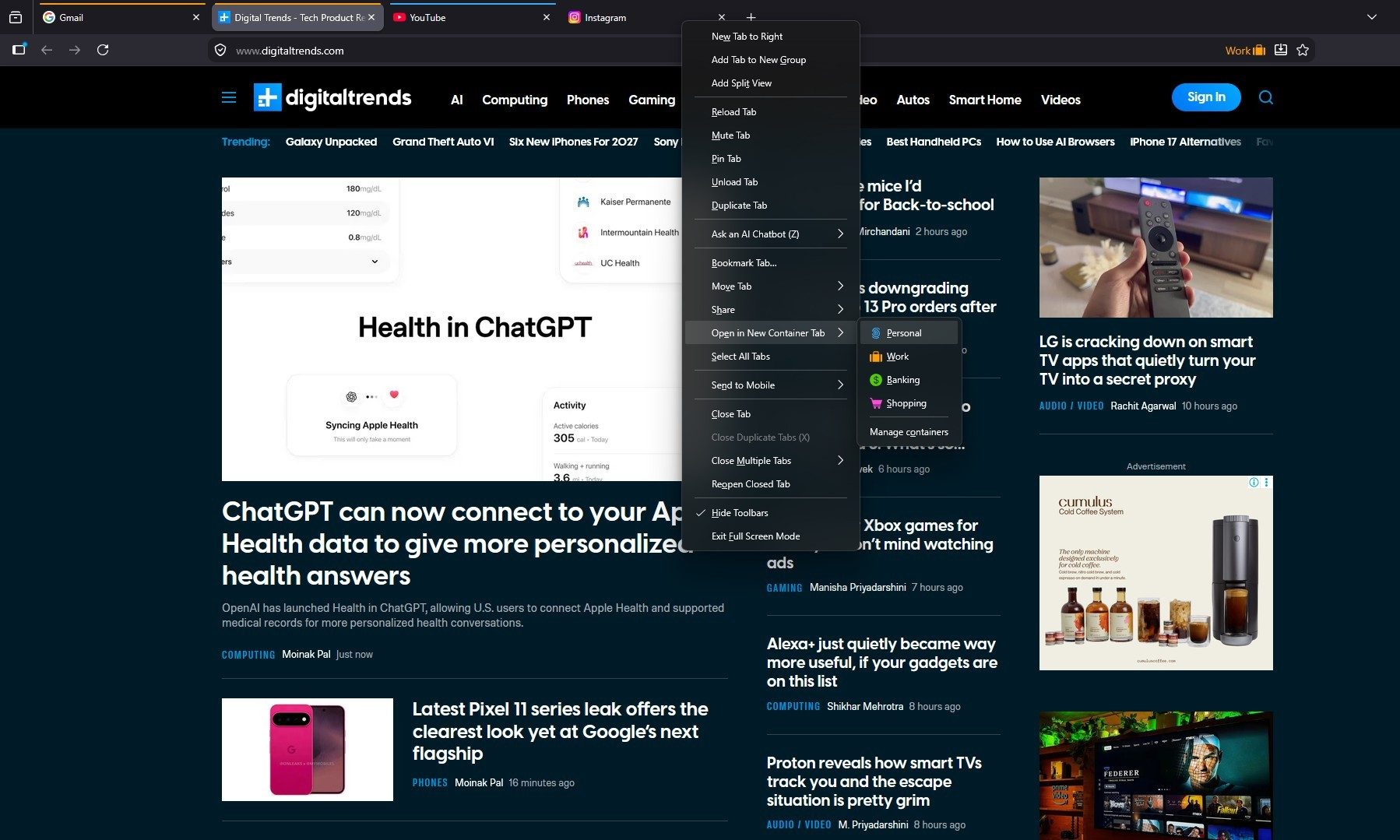
The technology itself is not new. Mozilla has offered it for years through the Multi-Account Containers extension. Firefox 153 builds the core experience into the browser, removing the need for an add-on for basic tab isolation.
The extension still offers more advanced controls, including assigning websites to specific containers and connecting individual containers through Mozilla VPN. Existing users can continue running it alongside the native feature.
What else is new in Firefox 153?
Firefox can now play HDR video on compatible Windows displays when HDR is enabled in system settings. Pages can also be shared through QR codes, while the PDF editor can merge files and add images as new pages.
Other additions include an address-bar color picker and experimental JPEG XL support through Firefox Labs. Extensions must now request separate permission to access local files, and websites need approval before connecting to devices or services on a local network.
For anyone who prefers a Chromium-based browser, Brave recently added a similar Containers feature to its desktop app. It offers the same basic way to keep accounts, cookies, and browsing sessions separate without switching profiles.