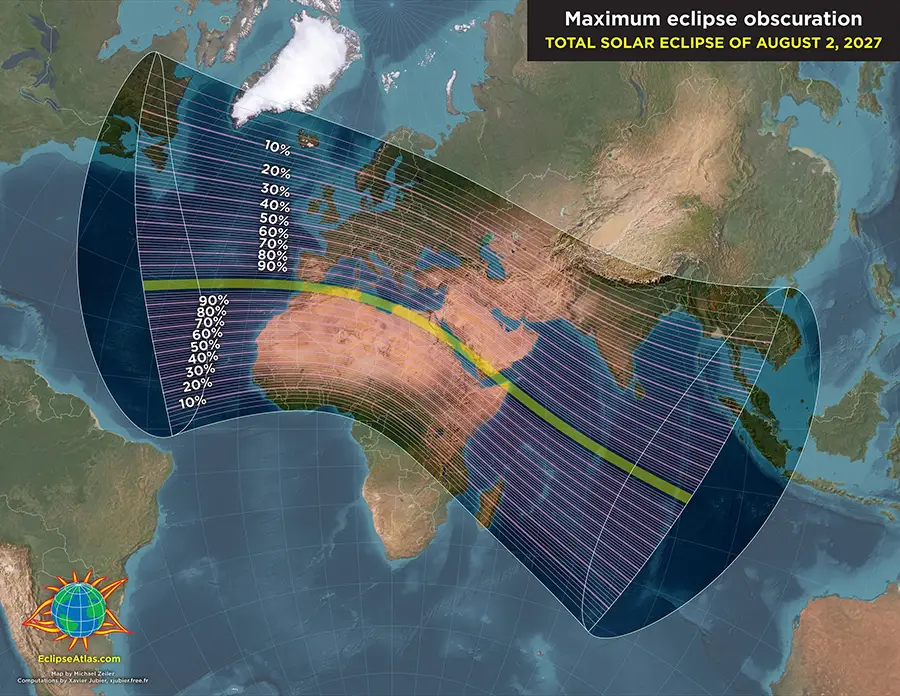
Michael Zeiler / EclipseAtlas.com
Some are calling the total solar eclipse on August 2, 2027, the “eclipse of the century.” Strictly speaking, the longest total solar eclipse of the 21st century occurred on July 22, 2009, when totality lasted up to 6 minutes 39 seconds. Still, the path of totality for the 2027 solar eclipse will cross over 89 million people in 10 countries, with some of the most favorable weather prospects ever associated with a major eclipse. Near Luxor, Egypt, totality will last 6 minutes, 22 seconds, making it the longest total solar eclipse until 2114.
Path of totality: geography
The path of totality begins in the Atlantic Ocean, west of the Strait of Gibraltar, before making landfall in southern Spain and northern Morocco. The Moon’s shadow then crosses over Algeria, Tunisia, Libya, and Egypt, before it traverses the Red Sea into Saudi Arabia and Yemen, hops across the Gulf of Aden and over the Horn of Africa in Somalia, and departs Earth over the Indian Ocean. The path will stretch 259 kilometers (161 miles) at its widest, passing over 15,227 kilometers of Earth’s surface.
Unlike Spain’s 2026 eclipse, which occurs close to sunset, the 2027 eclipse takes place during the late morning in Spain and Morocco. As the shadow moves eastward, the Sun climbs higher in the sky, reaching more than 80 degrees above the horizon in Egypt.
“In Egypt, you’re going to be right in the middle of a very big dark shadow of the Moon,” says Tyler Nordgren, author of Sun Moon Earth: The History of Solar Eclipses from Omens of Doom to Einstein and Exoplanets. “You’ll see the greatest number of stars and planets during totality that you can expect to see, and you’re going to have a corona that appears to stretch off in every direction around the vault of the sky.”
Path of totality: climate
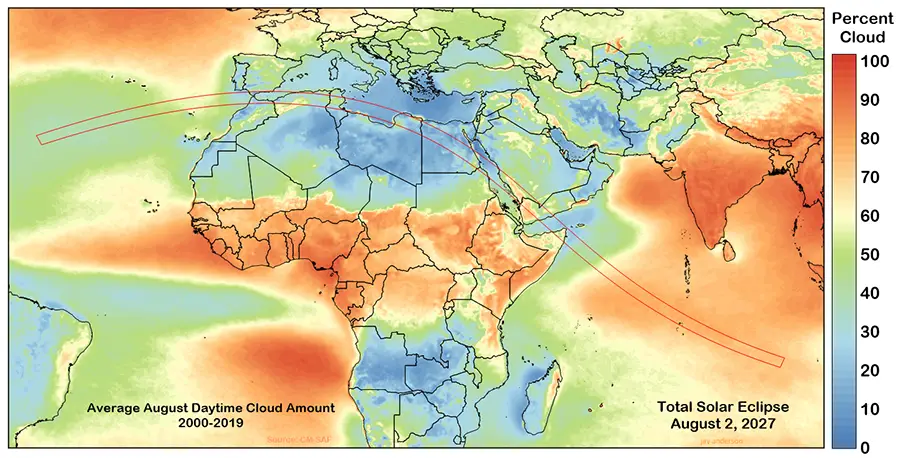
Jay Anderson (Eclipsophile.com) / data: EUMETSAT/CM SAF / eclipse track: Xavier Jubier
Meteorologist and eclipse chaser Jay Anderson writes on Eclipsophile, “Just about anywhere [in Tunisia, Libya, and Egypt] will present a good to excellent opportunity to see this event and bathe in over 6 minutes of totality.” In Egypt and Libya, dust and haze are more significant concerns than clouds.
Farther west, Spain and Morocco face a similar challenge. “The main threat in Spain and Tangier is a dusty pall over the whole of the sky from dust blown northward from desert basins in Mali and Mauritania,” writes Anderson. Another challenge comes from the Atlantic Ocean, with coastal fog and low cloud occasionally developing near these countries’ shorelines. Moving even a short distance inland can significantly improve weather prospects — as can going out on a cruise ship, which can maneuver to wherever clear skies are predicted.
Heat is another factor. August temperatures regularly exceed 104°F (40°C) in parts of Egypt and Libya, while Tunisia and coastal Morocco are generally more comfortable. The destination with the best eclipse statistics is not necessarily the destination that suits every traveler.
Egypt: the longest totality
Jamie Carter
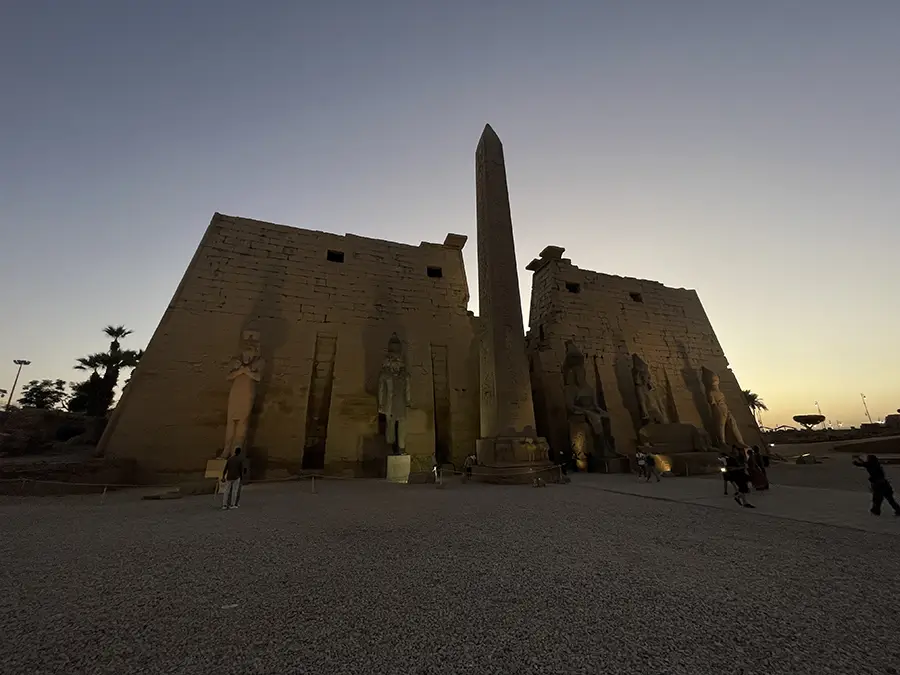
If the goal is to experience the longest totality possible, Egypt is impossible to ignore. In Luxor — once Thebes, the magnificent capital of ancient Egypt during the Middle and New Kingdoms — observers will experience 6 minutes, 20 seconds of darkness, as they’ll be close to the point of greatest eclipse.
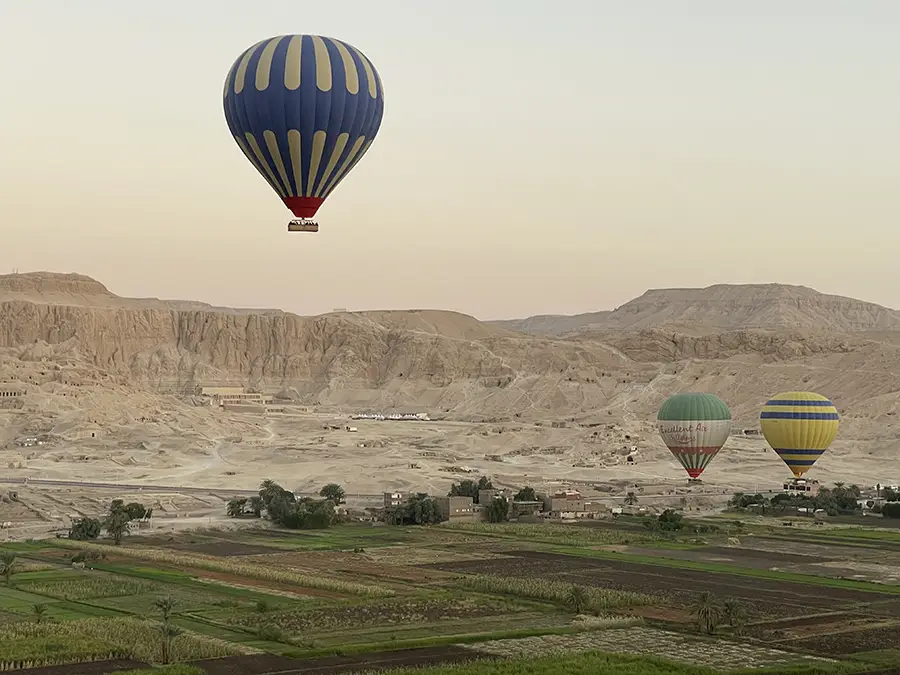
This location will be “ground zero” for the eclipse because of Luxor’s archaeological wonders: Luxor Temple and Karnak Temple on the East Bank and, across the Nile on its West Bank, the Valley of the Kings, the vast Hatshepsut Temple, the Colossi of Memnon (two statues that guard the Temple of Amenhotep III), and the Ramesseum.
The temptation is to imagine watching totality from the ancient monuments of a famously Sun-worshipping culture. However, for almost all eclipse chasers, the reality is likely to involve air-conditioned hotels and resorts along the Nile rather than ancient temple courtyards.
Jamie Carter
Away from Egypt: the other options
The path of totality first hits land in northern Morocco and, seconds later, Andalusia in southern Spain, bringing between four and five minutes of totality within easy reach of Europe’s road, rail, and airline networks. Flights are plentiful, tourism infrastructure is mature, and accommodation options are extensive. Although Spain sacrifices at least two minutes of maximum totality compared with Egypt, observers will still see an exceptionally long eclipse with up to 4 minutes 39 seconds of totality.
For Spain, this will be the second of three central solar eclipses in less than two years, between a total eclipse on August 12, 2026, and an annular eclipse coming up in January 26, 2028. Of those, the 2027 event will be most comfortable to watch thanks to the Sun’s location in the sky.
“The 2027 eclipse in Spain is in late morning, when the Sun has a good altitude, and it’s a little bit further south, where the cloud cover statistics are better as well,” says Graham Jones, astronomer at TimeAndDate.com. Tarifa, at the Iberian Peninsula’s southernmost tip, will see Spain’s longest totality. Alternatives with a shorter totality include Cádiz, Ronda, Málaga, and many dozens of beautiful beaches.
Eclipse chasers put off by Spain’s shorter totality and potential coastal clouds should look to Morocco, Algeria, and Tunisia. The latter sits in a particularly attractive position along the eclipse track. Select parts of Tunisia offer more than 5 minutes of totality, favorable cloud conditions, lower temperatures than in Egypt, and a mature tourism industry. (The exact nature of all of these conditions depends on the exact location; check locations here.) The country is likely to attract fewer visitors than either Spain or Luxor.
Photographing the 2027 total solar eclipse
Jamie Carter
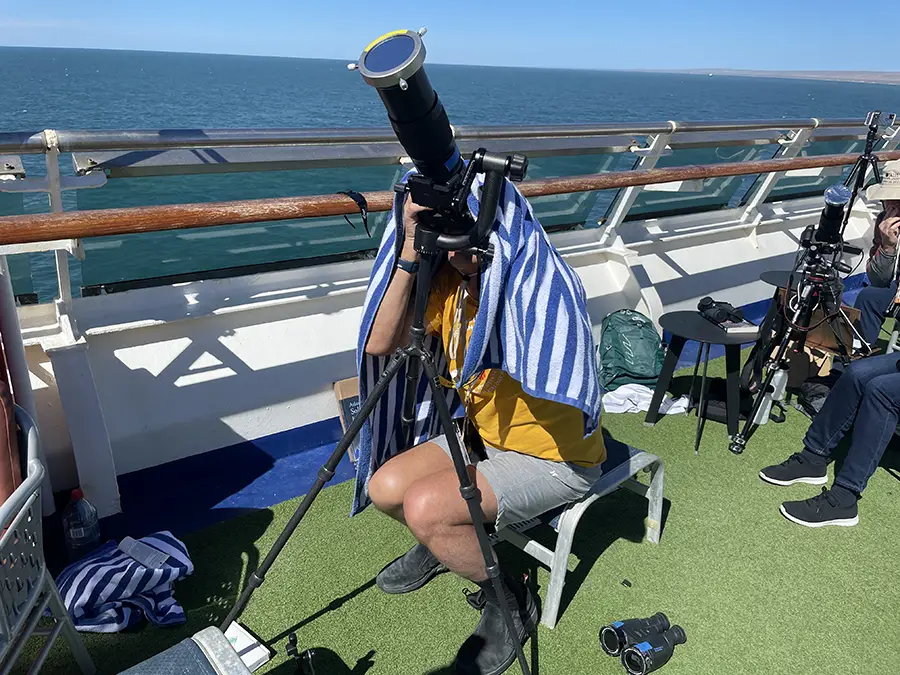
If you want to easily photograph the 2027 total solar eclipse, head to Spain, where you can bring all kinds of equipment, and totality will occur at a relatively low altitude (around 37 degrees).
In Egypt, Morocco, Algeria and Tunisia, there may be equipment-related challenges: While standard camera gear, lenses, tripods, and binoculars are generally permitted in these countries, customs can be strict and enforcement is inconsistent. Small telescopes may be inspected or temporarily held, while large telescopes, mounts, and professional-grade equipment can attract additional scrutiny unless permits have been arranged in advance. Bring only essential equipment, keep it compact and clearly for personal use, and be prepared to explain its purpose. Those on cruise ships won’t have such concerns, though photographing an eclipse from a cruise ship can be more difficult in rough seas.
There are also some unique challenges to photographing the point of greatest eclipse. “Being almost at the zenith is a hard place to point a telescope, camera lens, or even hold binoculars up, unless you’re flat on your back,” says Nordgren.
Totality in Egypt is likely to be among the longest and darkest experiences any living eclipse-chaser will ever witness. As such, this may be an ideal eclipse to simply enjoy lying on a blanket, reclining in a Sun lounger, or even floating in a swimming pool.
“Just concentrate on where you are,” says Nordgren. “You’ll be part of a 1,000‑year experience of eclipses that stretches back into time, and at the tip of the next 1,000 years of eclipses.”
Further Resources to Plan Your Trip:
Check weather prospects at Eclipsophile.com
Check eclipse circumstances at Xavier Jubier’s Interactive Google Map
Complete Guide to the Total Solar Eclipse 2027 (book for purchase)