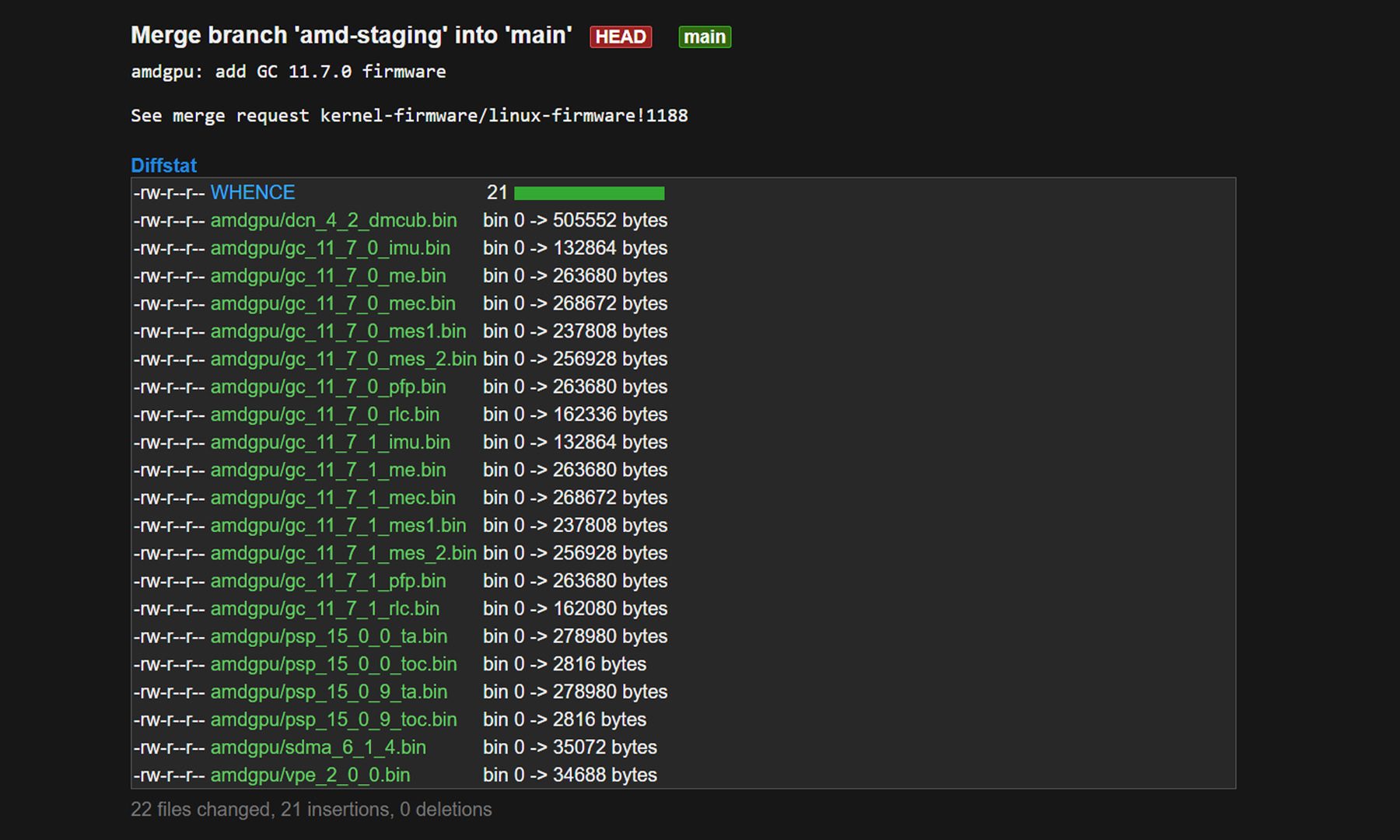
AMD’s next-generation Ryzen AI 500 “Medusa Point” APUs are getting another step closer to reality, and this time Linux is doing the leaking. As first noted by Phoronix, AMD has published the firmware needed for its upcoming RDNA 4m integrated graphics, giving us another indication that the Zen 6-based mobile chips are nearing their debut.
RDNA 4m is a rather interesting hybrid
The new firmware targets AMD’s GFX 11.7 graphics IP, known as RDNA 4m. It sits in an unusual position between the existing RDNA 3.5 architecture and full-blown RDNA 4. AMD’s desktop RDNA 4 GPUs use the newer GFX 12 family, while RDNA 4m remains part of the GFX 11 branch.
The “m” is widely believed to stand for mobile, with RDNA 4m seemingly designed specifically for APUs. Earlier Linux and LLVM work suggests it brings some RDNA 4-style features, including FP8/BF8 conversion and WMMA instructions, potentially giving Medusa Point newer AI and graphics capabilities without a complete graphics architecture overhaul.
The new firmware supports GFX 11.7.0 and 11.7.1, along with security, display, and memory-management components, suggesting AMD is getting much of the software stack ready for the new chips. That’s especially interesting given previous leaks of a 10-core Zen 6 Medusa Point APU in Geekbench, which showed promising performance gains over current Ryzen mobile chips. AMD has confirmed the Medusa codename for its next-gen Zen 6 client platform, but the exact specifications and launch details are still under wraps.
The APU refresh is getting spicy
The biggest question now is what AMD can actually squeeze out of this RDNA 4m design. It isn’t a full RDNA 4 GPU, but the added instruction support could give AMD’s integrated graphics a useful feature boost while keeping the APU relatively efficient.
For now, the firmware landing ahead of launch is another promising sign that Medusa Point is moving from roadmap territory toward real hardware. If AMD can pair Zen 6’s CPU improvements with a more capable iGPU and modern AI features, its next Ryzen generation could make for some seriously interesting laptops.