But Windows isn’t quite a nightmare hellscape. (At least, not for this reason.)
What the numbers say
A closer look at the data shows malware hit PCs harder, yes. That’s not a revelation—we’ve known bad actors spend much more time developing malware for Windows. PCs dominate the market. A recent estimate from StatCounter put Windows desktop market share at 71 percent. In real numbers, Microsoft CEO Satya Nadella revealed earlier this year that monthly active Windows PCs had surpassed 1.6 billion devices.
Meanwhile, Apple’s desktop market share in that same StatCounter estimate shows as a little over seven percent for macOS alone. (It rises to almost 20 percent when macOS and OS X are combined.) Windows users are just a bigger target. No one should be surprised the amount of Windows trojans and riskware all but pop off Surfshark’s chart, with viruses, suspected viruses, and other hazards trailing not far behind.
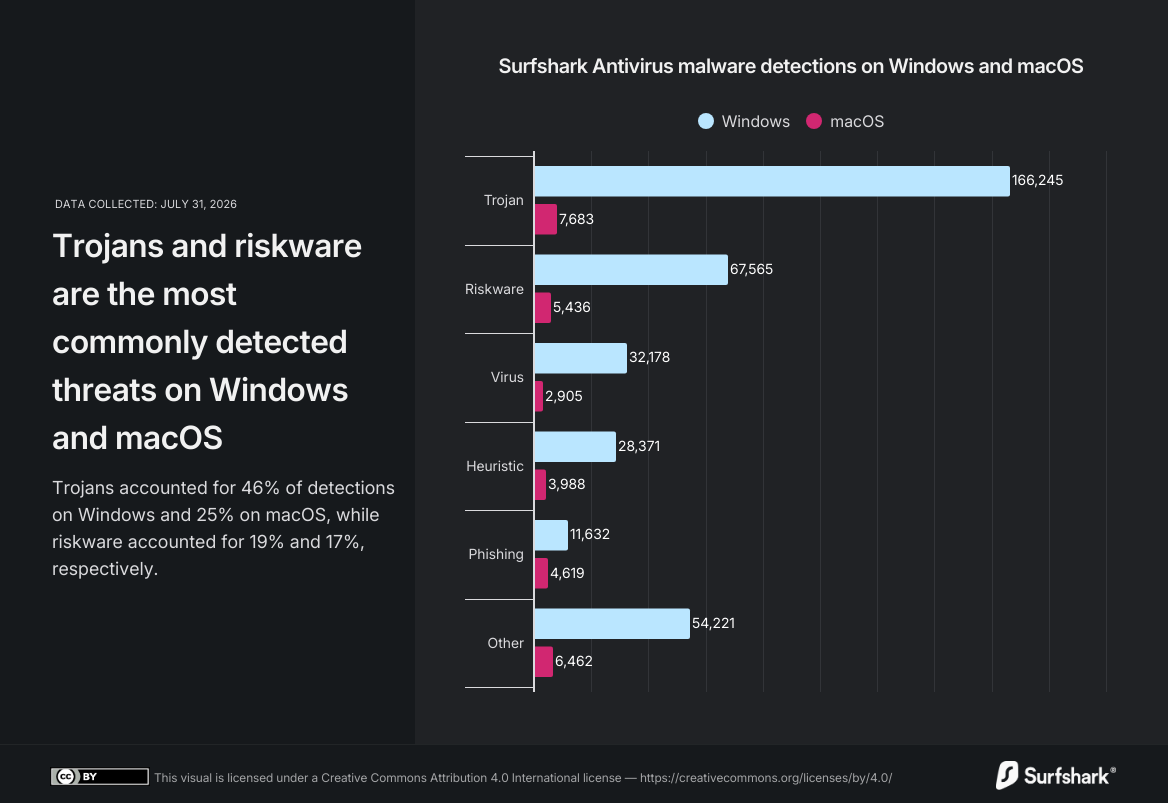
Surfshark Antivirus’s threat detection stats for January through July 2026.
What the numbers don’t say
In its write-up, Surfshark doesn’t give much detail beyond its raw data, percentages calculated, rankings of threats per operating system, and brief background on the threat types. As a result, we know little about their subscriber base. Someone who pays for antivirus software for Windows could engage in riskier online activity than their macOS counterpart, for example.
Surprisingly, Surfshark also doesn’t make any direct references to the differences between its 2025 and 2026 data. You could argue macOS is facing increasing risk, as in 2025, Windows users faced seven times more malware. As macOS’s market share rises, so do the amount and type of threats. (We just saw a ClickFix attack on macOS, where users were tricked into opening the Terminal app and running commands that installed infostealer malware.)
You can actually see a hint of this in Surfshark’s data. Proportionately, Surfshark macOS users often fell prey to a dangerous kind of attack: phishing. Phishing may sound harmless, but these days, you can lose significant cash (or accounts) to such campaigns. And sending out sophisticated, personalized phishing messages doesn’t require the same effort and investment as developing malware specific to macOS.