Does a market for 4G phones still exist? Xiaomi thinks so, so it released the Redmi Note 17 4G. We’ve already looked at the battery life and charging tests of its 5G sibling and promised to compare the two in a separate article – this is that article. We will, of course, compare it with other models too, but which ones?
We tried to pick out mostly 4G phones for this comparison, however, we just don’t review that many 4G phones – so, we had no choice but to put the Redmi Note 17 4G against a group of mostly 5G phones.
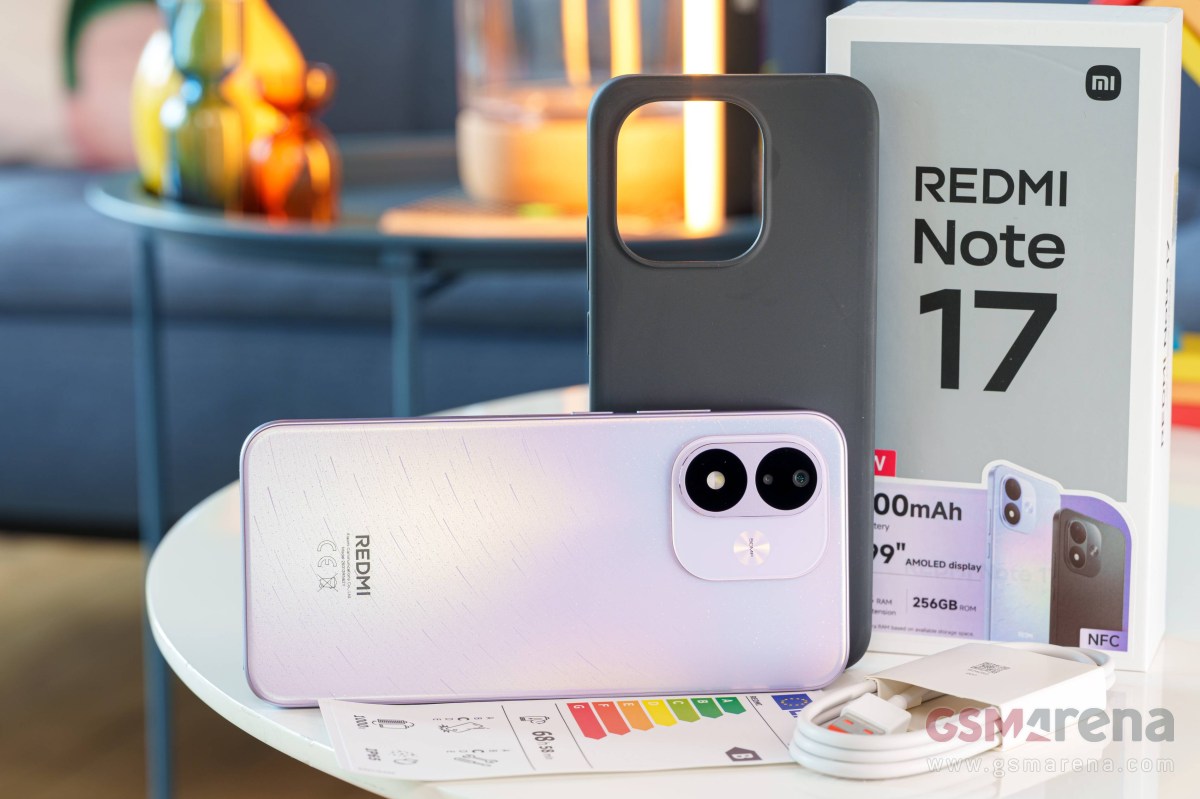
Redmi Note 17 4G retail package
As promised, we start with the comparison between the 4G and 5G versions of the Redmi Note 17. They have largely the same hardware except for the chipset – the 4G model gets a 6nm Snapdragon 6s 4G Gen 2, while the 5G model gets a 4nm Snapdragon 4 Gen 4. Both phones have 7,700mAh Si/C batteries with 45W charging and huge 6.99” displays (1080p+, 120Hz).
Surprisingly, it is the modem that hurts the Redmi Note 17 4G the most – the call time is significantly worse than the 5G model. Video playback is also quite a bit shorter and the web browsing time is an hour down. So, even if you don’t care about 5G connectivity, you should have a good look at the price difference between the two models. The 5G version offers longer battery life and slightly better performance.
This time around, Xiaomi skipped the 4G Pro model, but there was one last generation – the Redmi Note 15 Pro 4G. The combo of a smaller screen (6.77”) and a smaller battery (6,500mAh) works out to an Active Use Score that comes close to the Note 17 4G. However, the Helio G200 Ultra (6nm) chipset didn’t do great in the gaming and web browsing tests.
The Redmi Note 17 Pro is only available in 5G form and while it has a larger battery of 8,340mAh than the vanilla Note 17 models (+640mAh), its Active Use Score is lower than both phones.
The Redmi Note 15 4G and 5G had 6,000mAh and 5,520mAh batteries, respectively, paired with 33W and 45W charging. In other words, the old 4G model got a larger battery that had slower charging than its 5G sibling. This year’s Note 17 4G and 5G are on par in both respects.
After a quick 15-minute charge, both phones were at 23%. At the 30-minute mark, the two phones were still on the same level (save for some rounding error). What’s interesting is that the old Redmi Note 15 Pro 4G didn’t pull ahead, even though it has a smaller battery (6,500mAh vs. 7,700mAh) and the same 45W charge rating.
Meanwhile, the new Pro (5G) has a bigger battery (+8%) and faster charging (+49%). These two balance out and the Pro model is on nearly the same charge level as the two vanilla Redmi Note 17 phones. You may think that 8% and 49% are not balanced, but the reality is that the peak charging rating isn’t what determines charge time – the charge curve does that.
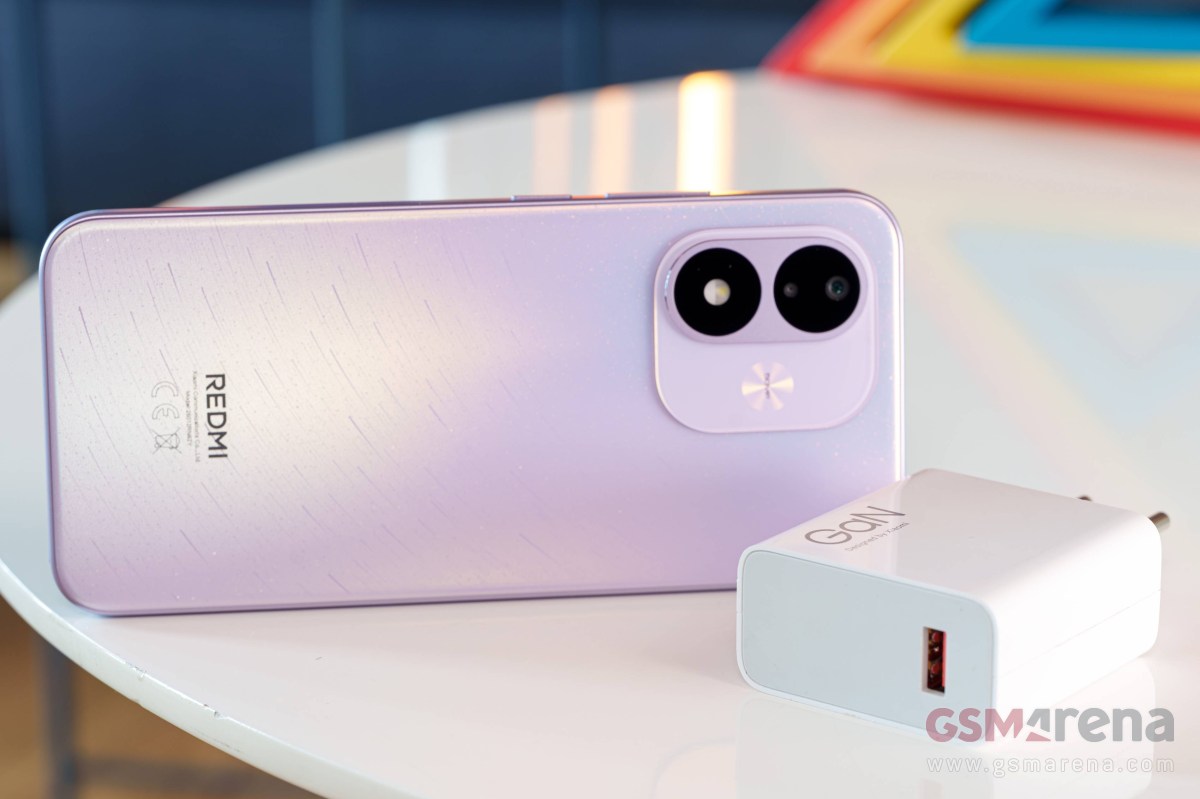
The Redmi Note 17 4G supports 45W charging
This brings us to the third tab – the Redmi Note 17 4G needed an hour and a half for a full charge. The 5G model got there three minutes quicker, but that is within the margin of error – we don’t think that the different chipsets had any impact here.
The Redmi Note 17 Pro (8,340mAh, 67W) beat the Realme 16T (8,000mAh, 45W) to the finish line, despite having a bigger battery. We think the vanilla Note 17 models would have benefited from 67W charging support too as an hour and a half feels sluggish.
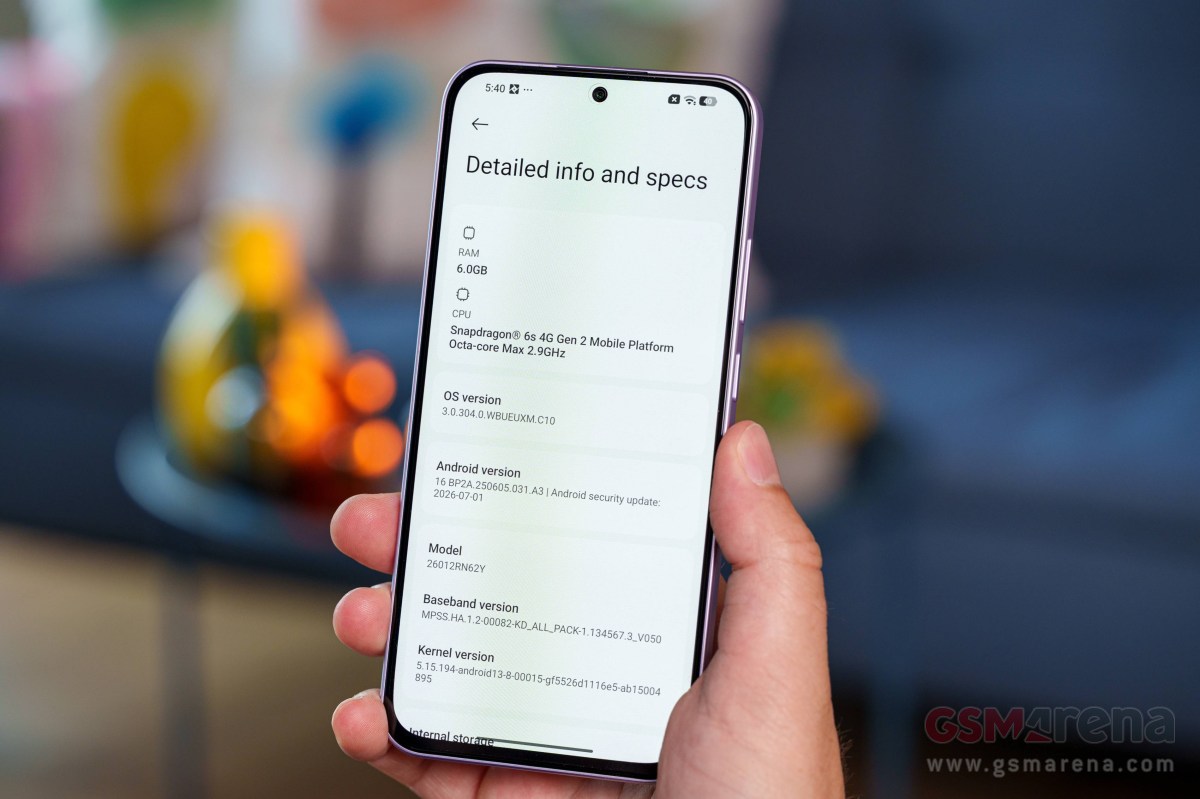
The Redmi Note 17 4G uses a Snapdragon 6s 4G Gen 2 chipset – this is actually a downgrade from the Note 15 4G, which had a Helio G100 Ultra, which benchmarked better than the Snapdragon.
So, this is a downgrade or, if we’re being generous, a side-grade. The old model also had a 108MP main camera (1/1.67”) that was replaced by a basic 50MP module (1/2.76”). And sure, the new model has a larger 6.99” display (vs. 6.77”), but whether you consider having a huge phone (that is 79.1mm wide!) an upgrade or not is up to you.
Here’s what we think – the larger battery capacity on the Redmi Note 17 4G gives it better battery life, which is a solid upgrade. But the 5G version lasts even longer and both charge at the same speed (which we still think could have been improved).
The global pricing of the Note 17 4G is $250, while the 5G variant is $50 more. In Europe, the difference in MSRPs is €100, but after discounts you are looking at €230 for a 4/128GB 4G and €300 for a 6/128GB 5G model (an 8% off coupon got that down to €276). In India, the 4G model didn’t even launch, there’s only the 5G model.
The price gap between the 4G and the 5G phones is not small, but we think it’s worth it for the better performance and longer battery life of the Redmi Note 17 5G. And if you don’t like that one, you can always just get the Poco M8 Pro. The 4G model feels out of place and out of time.