Would you rather read instructions for splitting a dinner bill or tap a bill splitter and let it do the math? I’d pick the latter.
OpenAI’s SOl-6 rollout, starting October 7, 2026, adds Intelligent UI. Basically, it lets the chatbot assemble interactive answers instead of replying in plain text.
What does Intelligent UI actually do?
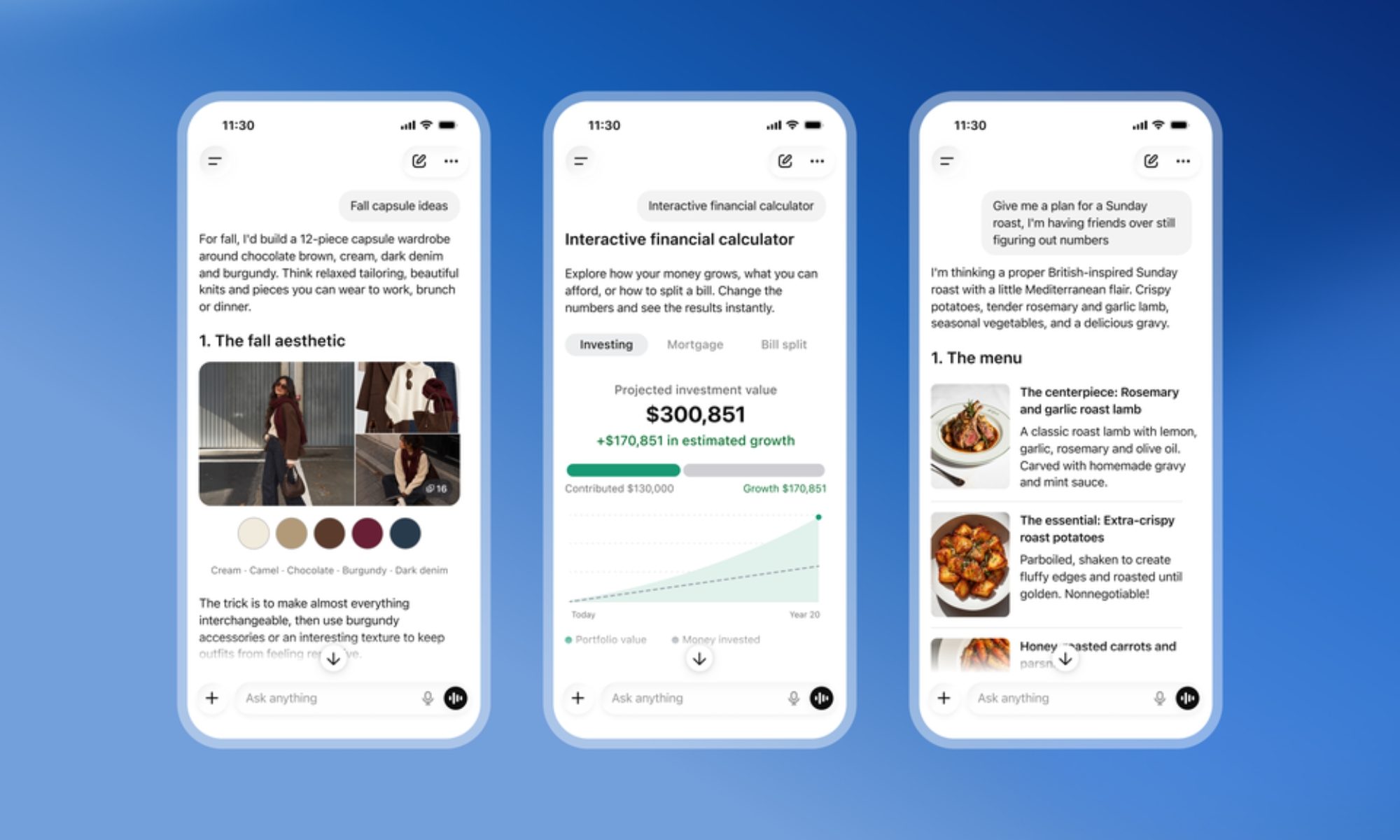
ChatGPT now picks the format of its answer. It can mix answer text with charts, buttons, forms, and diagrams, making it more appealing and interactive. Ask about a road trip and a map can appear with detour tips.
You can even request a bill splitter or calculator that works inside the chat, something that sounds quite useful to me. For those who use ChatGPT to learn about new concepts, it can turn explanations into interactive visual lessons.
OpenAI built it from ready-made interface pieces and a compiler. Basically, the model writes while the program assembles the visual component on the screen. That means the interface can appear progressively, without making you wait for the entire response.
To my surprise, OpenAI admits the model’s taste in layouts could still use some improvement.
Who gets GPT-6, and is it really faster?
GPT-6 isn’t entirely new. Until last month, it was available to paid customers. However, October 7, 2026, marks the broader rollout of GPT-6 with Intelligent UI inside ChatGPT. Plus, Pro, Business, and Enterprise users get it first in the Chat tab.
Meanwhile, Free and Go users follow on October 8, 2026. For ChatGPT, paid plans get GPT-6 Sol, while Free and Go users get GPT-6 Luna. For questions that require web search, GPT-6 Instant starts answering 44% sooner on average than GPT-5.6 Instant.
The newer model also makes better decisions about when to search and finds supporting information more reliably. I haven’t seen independent testing yet, so I’m taking that 44% figure with some skepticism.
RELATED COVERAGE: