We’ve all got an old smartphone lying around somewhere, collecting dust in a drawer. Maybe you’ve kept it as a backup, or perhaps you haven’t gotten around to selling it. But what if that forgotten Android phone could actually power a walking robot? It sounds like something you’d build for a science fair, but researchers at the University of California, Los Angeles (UCLA) have turned that idea into a working prototype.
That’s exactly the idea behind PhoneBot, a small humanoid robot developed by UCLA researchers. Instead of relying on expensive hardware, it uses an ordinary Android smartphone to understand its surroundings and control its movement. Even more interesting, the robot costs around $400 to build, excluding the phone. And you don’t need the latest flagship either. Even an older Android phone can do the job.
Your Android phone is doing more than making calls
PhoneBot stands about 19 inches tall and weighs around four pounds, so it fits comfortably on a desk. But don’t let its size fool you. In demonstrations, researchers got it walking, following a person, and even picking itself up after falling face-first onto the ground. What’s particularly interesting is how much responsibility the smartphone takes on. Instead of equipping the robot with expensive cameras and dedicated computing hardware, the researchers mounted an Android phone on its torso.
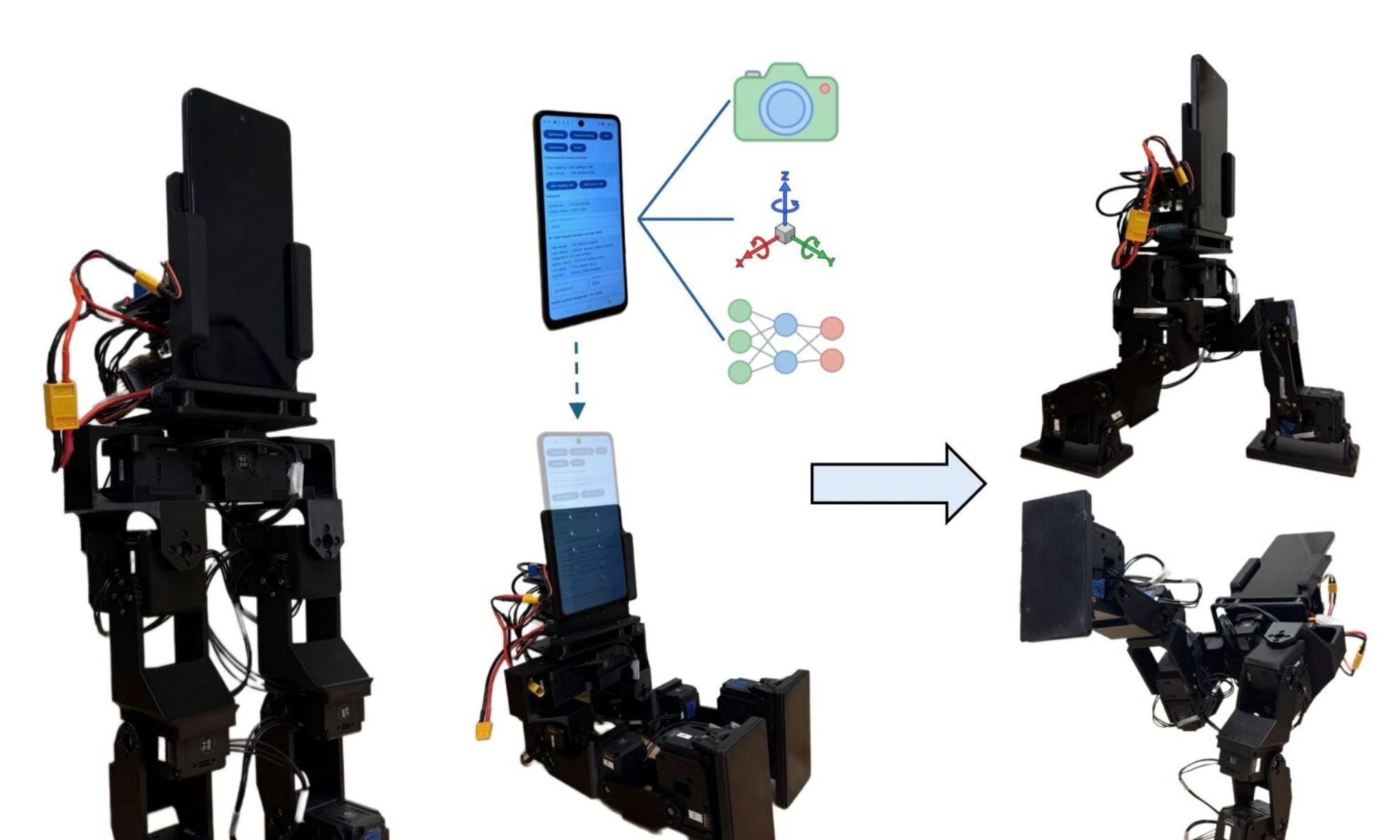
The phone’s camera helps it identify and follow people, while its built-in sensors monitor movement and orientation. It also processes movement instructions and sends them over Wi-Fi to a small computer that controls the robot’s 13 motors. And here’s something even more impressive. The researchers tested PhoneBot with four different Android devices, including the Honor 9 from 2017 and newer budget Motorola and Samsung phones. All four handled the essential tasks, although the Honor 9 couldn’t support the mapping feature because it lacked the necessary Google services. So, that aging Android phone in your drawer might still have plenty of life left.
It’s not ready to do your chores, but that’s not the point
Before you start imagining PhoneBot fetching your coffee or cleaning your room, there are a few limitations worth knowing about. For starters, it doesn’t have arms, and its walking abilities have only been developed for flat surfaces. Its affordable motors also restrict how much weight it can support. Still, the researchers have bigger plans. They want to teach PhoneBot to navigate uneven ground, give it lightweight arms, and eventually handle more of its voice-processing capabilities directly on the smartphone.
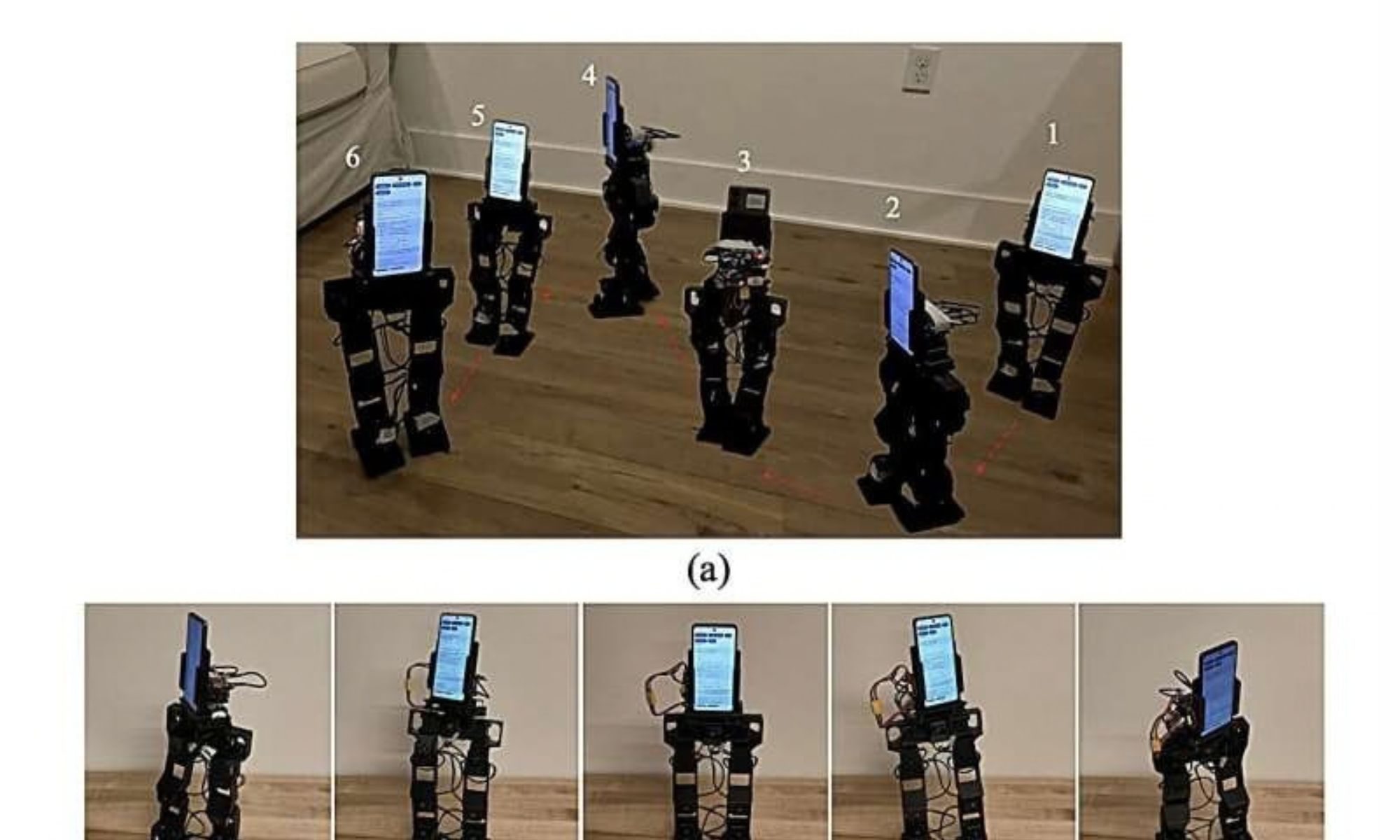
The project also builds on earlier smartphone-powered robotics research, including Intel’s wheeled OpenBot platform. However, getting a two-legged robot to walk reliably introduces an entirely different challenge, particularly when balance is involved. According to the team’s research paper, they improved PhoneBot’s walking behavior by training its software with mirrored movement examples, helping both legs share the workload more evenly. Ultimately, PhoneBot isn’t trying to compete with expensive humanoid robots. It’s an open-source project designed to make robotics experimentation more affordable and accessible, especially for students and researchers. And if an ordinary Android phone can already accomplish this much, it’ll be interesting to see what the next version can do.