I’ve spent a lot of time with smart telescopes, from relatively inexpensive Seestar models to the original Vaonis Vespera and the Vespera Pro. They all promise essentially the same thing — you put a telescope outside at night, choose something interesting on your smartphone and let the technology take care of the rest. The Vaonis Vespera 3 does that exceptionally well, but after spending several nights with it, I’m convinced it’s designed for a rather different kind of buyer.
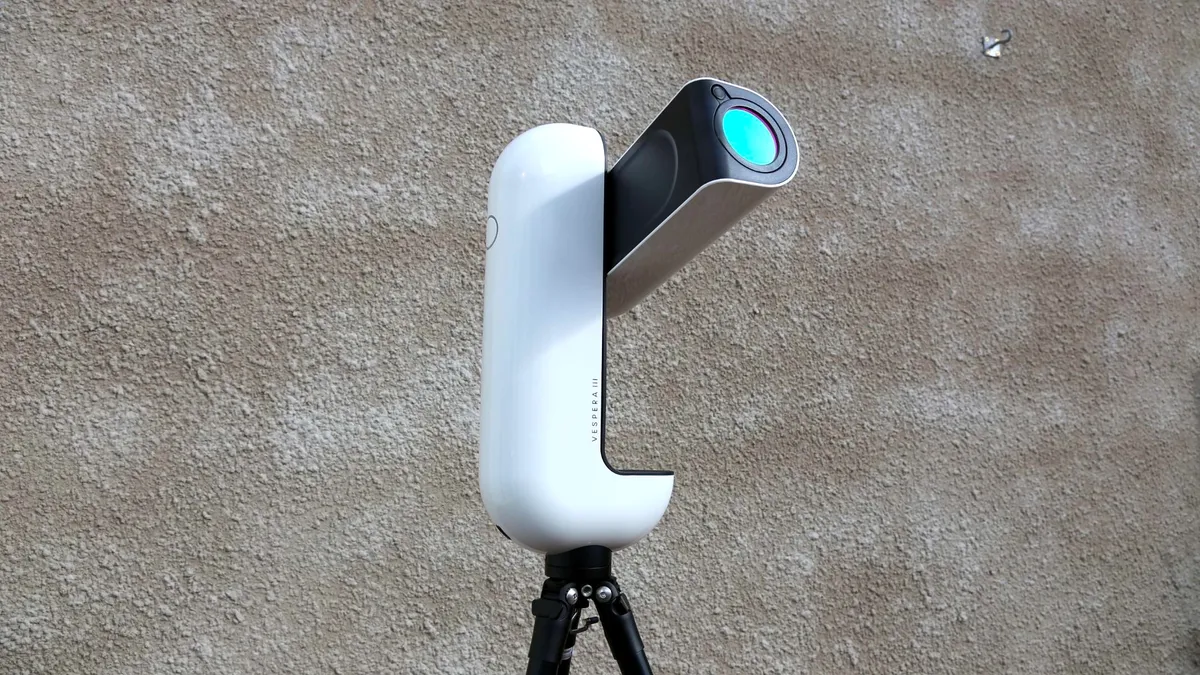
At $2,490/£2,199, this is hardly an impulse purchase for the beginner who’s curious about astronomy – you could buy several perfectly capable smart telescopes for the same money. Yet I found myself increasingly impressed by what the Vespera 3 could achieve, particularly when I returned to the same object over several nights. The images were sharp, the colors were excellent and I almost never had to think about the battery.
That doesn’t mean the experience was flawless. I sometimes spent longer than I’d have liked waiting for the telescope to get ready, but once it began photographing the sky, the Vespera 3 reminded me why I love smart telescopes so much.
Why I kept returning to the same objects over several nights
One of my favorite things about smart telescopes is watching a photograph develop as more light is collected. What begins as a fairly ordinary patch of stars gradually becomes something much more interesting. First a faint cloud of gas appears, then more structure emerges, and eventually you have an image that, only a few short years ago, would have been difficult to capture without specialist equipment.
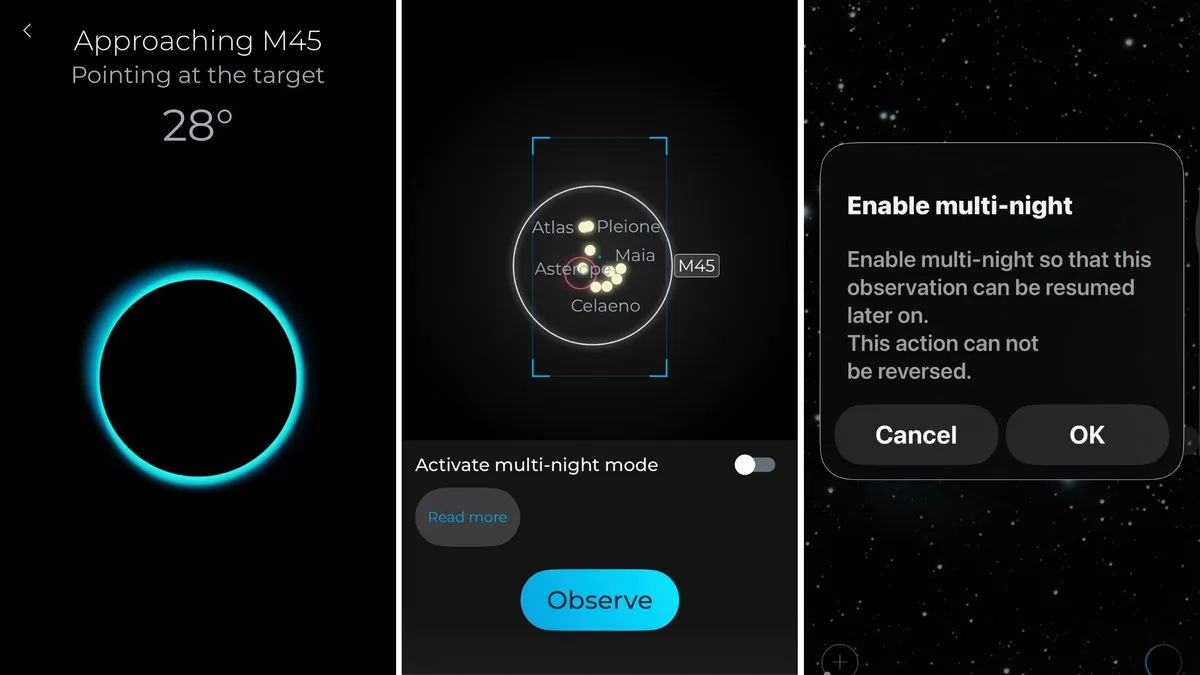
With the Vespera 3, I spent several nights photographing the Pleiades (M45), the famous star cluster in Taurus. The Pleiades make an excellent subject for testing a telescope because the stars are bright, but the surrounding nebulosity is much harder to capture convincingly. The Singularity app used to control Vespera 3 stacks each image as it goes, but keeps them in sight as an optional time-lapse, so you can see exactly why you’re spending so much time on one object.
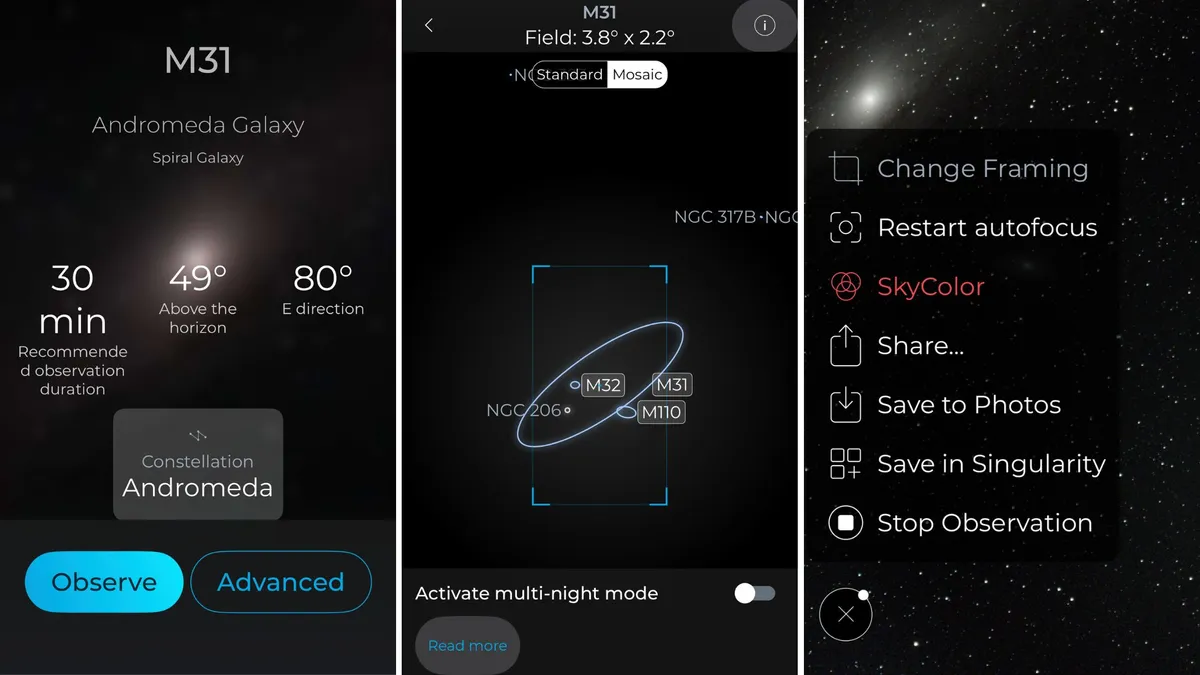
Even better, the Vespera 3’s PerseverENS feature lets you add data to an existing observation over multiple nights (it’s actually called multi-night observation in the app). Instead of having to call it a night or start again every time the weather interrupts an imaging session, you can return to a target and continue building the image over weeks — or years. This is excellent for faint nebulas, but also for anyone who lives somewhere with unpredictable weather.
The Vespera 3 also has CovalENS, Vaonis’s mosaic imaging system, which captures adjacent sections of sky to produce a larger image. That’s helpful for objects such as the Pleiades and large nebulas, which occupy a substantial area of the sky.
Mosaics inevitably take longer than conventional images — if it images six sections of the night sky, it takes six times longer for the same image quality — but they also make the telescope more versatile than its native field of view (2.5 x 1.4 degrees) might suggest.
I was impressed by what it captured from an urban location
Smart telescopes are particularly useful for people living under light-polluted skies. A conventional optical telescope can show you the moon, the planets and some brighter star clusters, but faint nebulas are largely out of reach. The Vespera 3 tackles that problem by taking repeated short exposures and combining them automatically. As the exposures accumulate, faint details become clearer, and the image becomes less noisy.
I photographed the Orion Nebula (M42), one of the most rewarding deep-sky targets for almost any telescope. Its bright central region makes it a quick capture, but the surrounding clouds of gas give a camera plenty more to uncover. The color in M42 via the Vespera 3 was particularly striking: stars looked sharp, the background was pleasingly clean, but the colors had a richness you don’t always see from less expensive models.
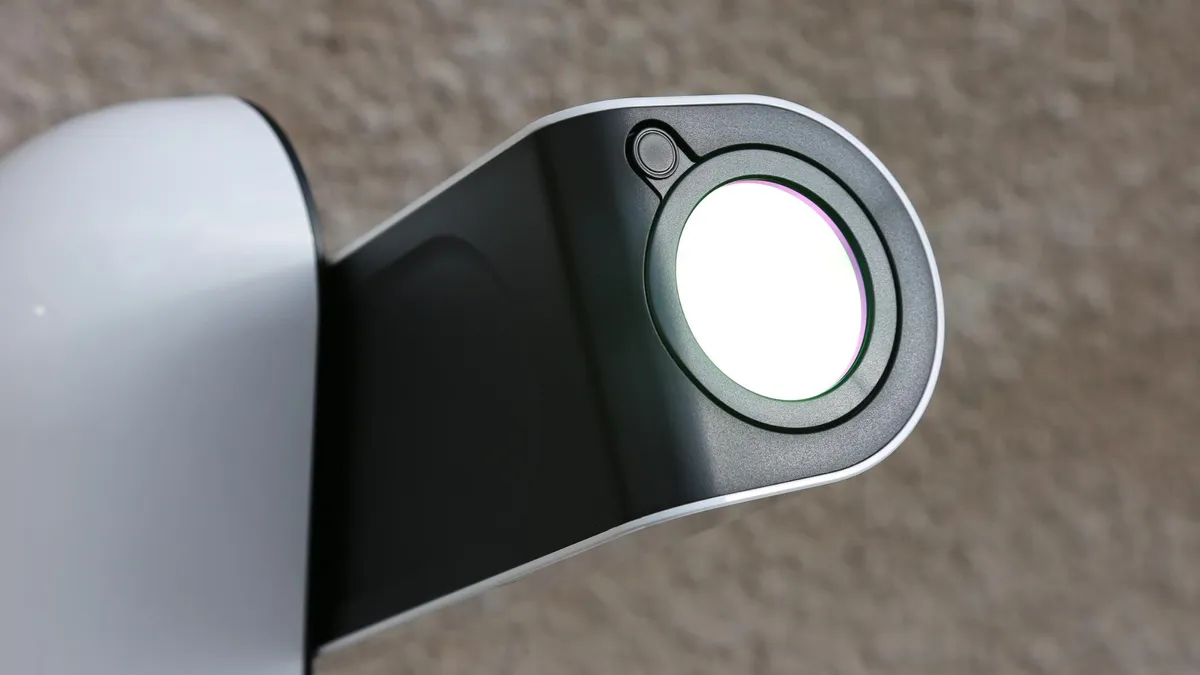
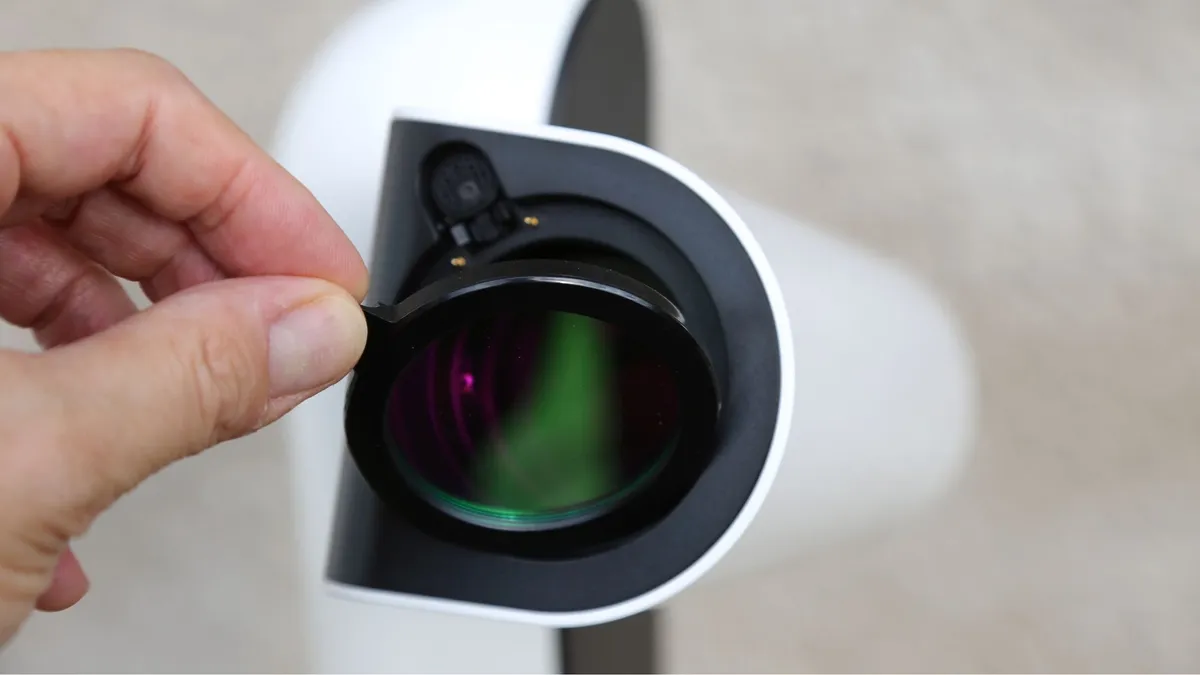
The Vespera 3 uses a 50mm refractor telescope and an 8.3-megapixel Sony IMX585 camera sensor. Those specifications are identical to the Vespera 2, but the Vespera 3 has a new optical system, which uses four lenses in three groups, including two extra-low-dispersion elements. Vaonis has also introduced internal baffling to reduce unwanted reflections from nearby artificial lights. For urban astronomers, every little helps. I wouldn’t claim that the Vespera 3 makes dark skies unnecessary. It doesn’t — and if you do take a trip to dark skies with the Vespera 3, your images will improve — but it can produce extremely satisfying images even from a city.
For anyone who wants more control over their images, the Vespera 3 also saves lossless TIFF files that can be exported to a PC or Mac using a USB-C cable. That means you can take the images into your preferred editing software for further processing, rather than relying entirely on the results produced by the Singularity app.
I wish choosing what to photograph was more intuitive
There’s something wonderfully simple about looking at a map of the night sky, spotting an interesting object and tapping it to point your scope in that direction. It’s one of the reasons I enjoy using Seestar smart telescopes. I did miss that experience with the Vespera 3.
Vaonis’s Singularity app has an extensive catalog of galaxies, nebulas, star clusters and other targets, but I found myself browsing lists when I’d rather have been exploring an interactive sky chart.
There is a section devoted to constellations, which initially got my hopes up. I thought it might allow me to photograph an entire constellation, capturing its familiar star pattern as a wide-field image. Sadly not — each constellation has a diagram showing where the catalog’s deep-sky objects are located. That’s useful if you already know what you’re looking for, but it isn’t the same as being able to see the sky overhead and choose a target visually.
However, the telescope can still find and photograph the objects in its catalog, and the automated tracking works well once you’ve made your choice.
It takes a while to get started
That smart telescopes give you instant gratification is something of a selling point — but it’s also a myth. Yes, they save an enormous amount of work compared with traditional astrophotography equipment. There’s no separate tracking mount to align, no camera to attach and no laptop required to control the imaging process. However, automation doesn’t necessarily mean instant results.
For example, every time the Vespera 3 is switched on, it needs to establish its position by identifying stars overhead. Its Star Zone Search and autofocus procedure took around five minutes, with a percentage displayed in the app to show how far it had progressed. That’s not an unreasonable wait for a sophisticated astronomical instrument, but it felt a little drawn-out when I was eager to begin photographing something. If there are clouds, expect it to take much longer.
Once the Vespera 3 had aligned itself, I could choose a target and leave the telescope to work. The optical arm moved into position, the camera began collecting exposures and an image gradually appeared on my smartphone.
I was less impressed by the touch-sensitive power button. Its softly illuminated indicator didn’t always make it obvious whether the telescope was switched on. More than once, I had to check my phone’s available Wi-Fi networks to establish whether it was on or off.
Not having to worry about battery life is bliss
Vaonis claims the Vespera 3 can operate for up to 11 hours. I didn’t run it continuously until the battery was exhausted, but it lasted longer than every observing session I attempted. That did change how I used it, because I could concentrate on the target instead of keeping an eye on the remaining charge or wondering whether I should connect a portable battery.
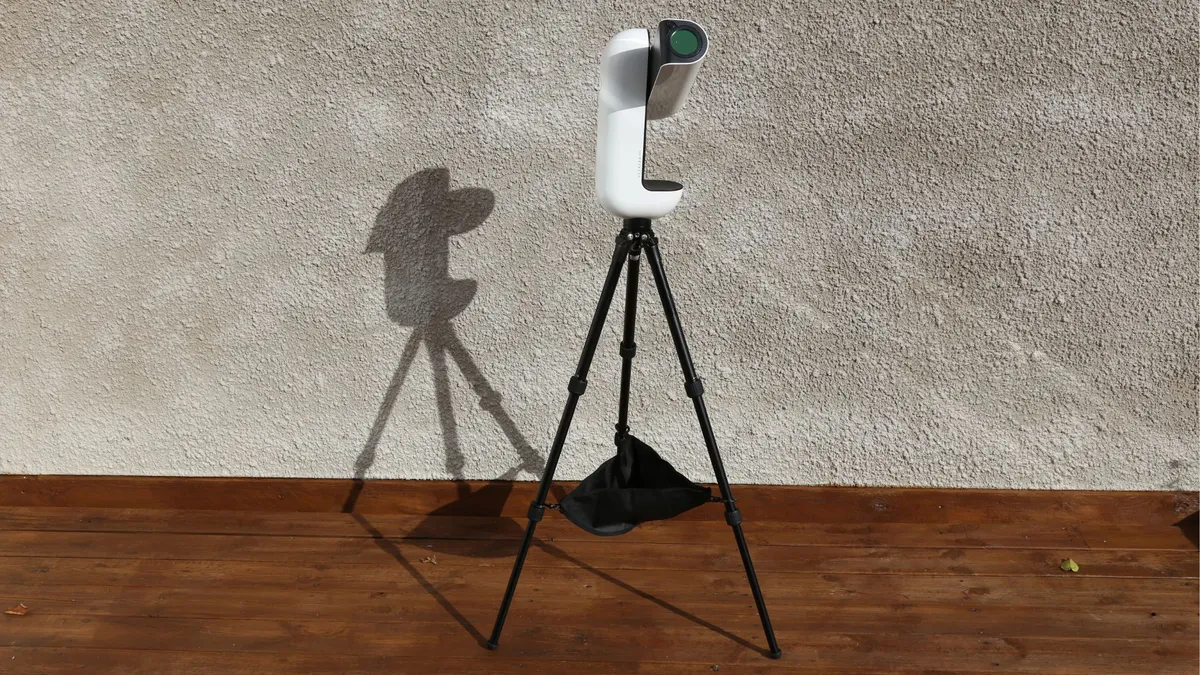
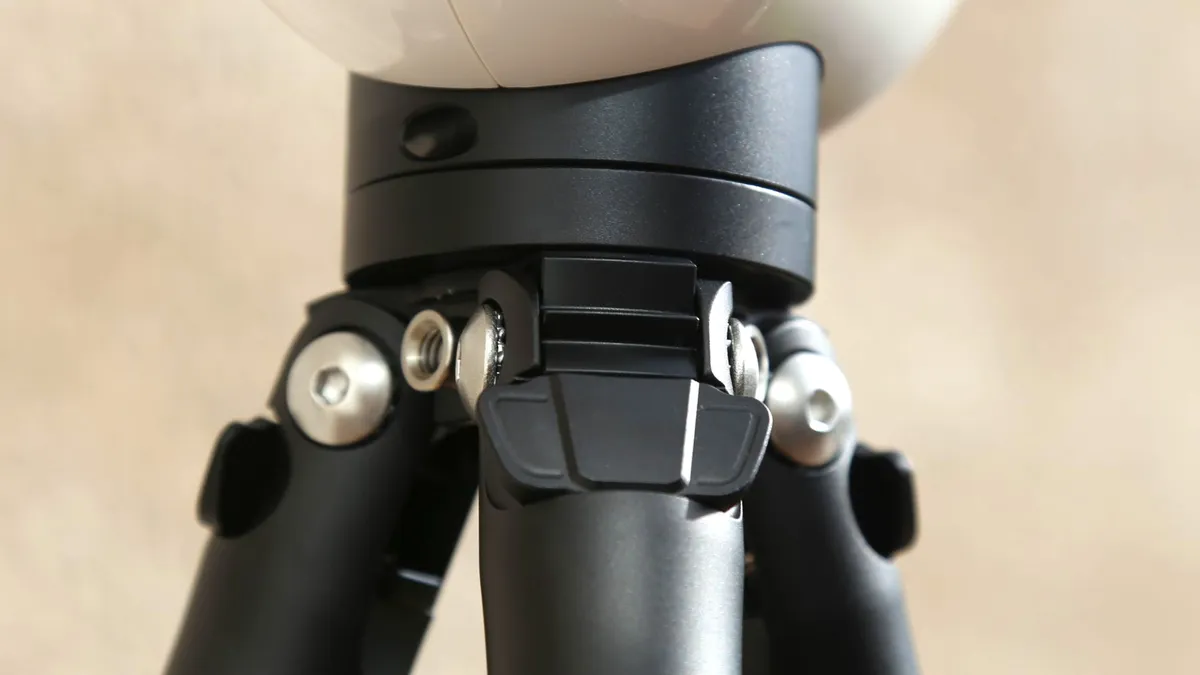
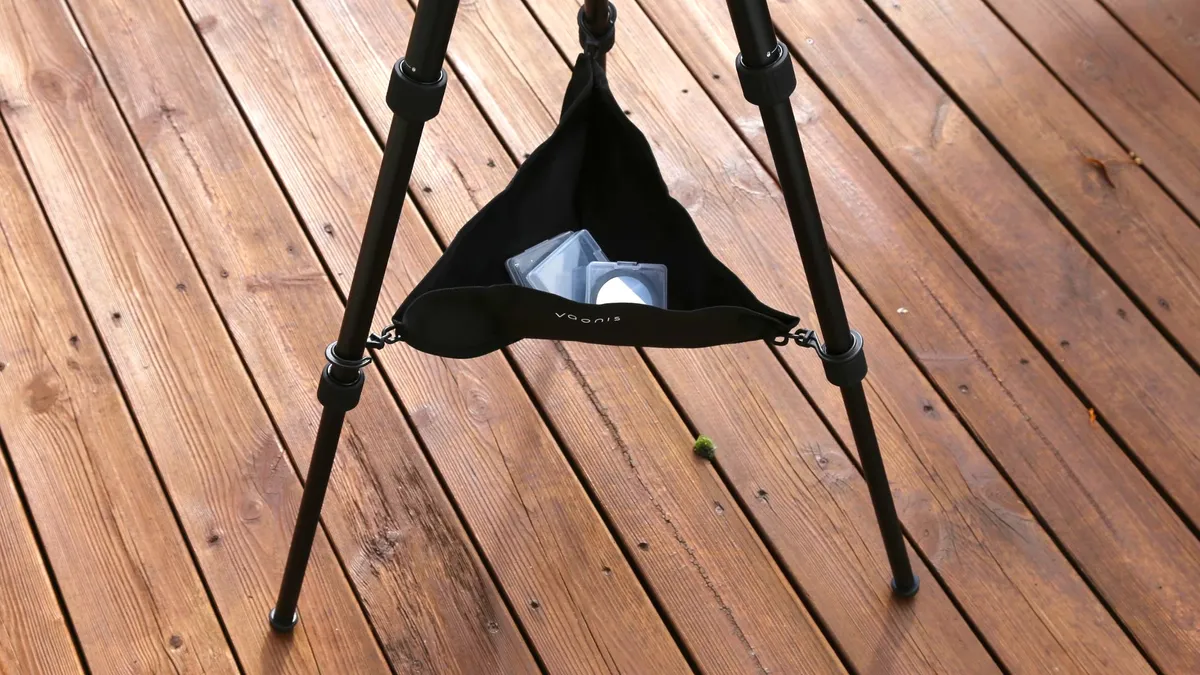
The new, improved tripod also makes a difference. It’s tall, adjustable and reassuringly stable, with a useful canopy strung between its legs for holding any accessories — perhaps filters, a red torch or snacks.
I wouldn’t buy it primarily for the sun or planets
The Vespera 3 is capable of photographing the moon and the sun, although solar photography requires a properly fitted optional solar filter. Unfortunately, that costs a further $179/£159, which is rather steep.
It’s also not the best choice for detailed planetary images. The 245mm focal length is ideal for framing many galaxies and nebulas, but Jupiter and Saturn remain small subjects.
Another omission is an equatorial tracking mode. Some cheaper smart telescopes — such as the Seestar S50 Pro and the DwarfLab Dwarf 3 — offer EQ mode for more advanced imaging, but the Vespera 3 relies solely on its motorized alt-azimuth mount. That doesn’t stop it from producing excellent photographs, but it does mean more experienced users have one less option to experiment with.
I’d recommend it to someone who knows they’ll use it
The biggest question surrounding the Vespera 3 isn’t whether it works — it’s whether it’s worth the money. After all, it costs far more than the Seestar S50 Pro, which also has built-in imaging filters, whereas the Vespera’s light pollution ($229/£219), dual-band ($399/£370) and solar (£179/£159) filters are optional purchases. They do, however, make a significant difference — with the dual-band filter giving nebulas more contrast, color and detail.
Overall, the Vespera 3 offers a slightly more polished imaging experience than the many entry-level smart telescopes on the market. I enjoyed its clean, colorful images and appreciated the ability to work on the same subject over several nights, while the excellent tripod and battery endurance make it particularly well suited to longer observing sessions.
I wouldn’t recommend it to everyone, but I can see why someone who already loves photographing the night sky might happily pay extra for the Vespera 3.