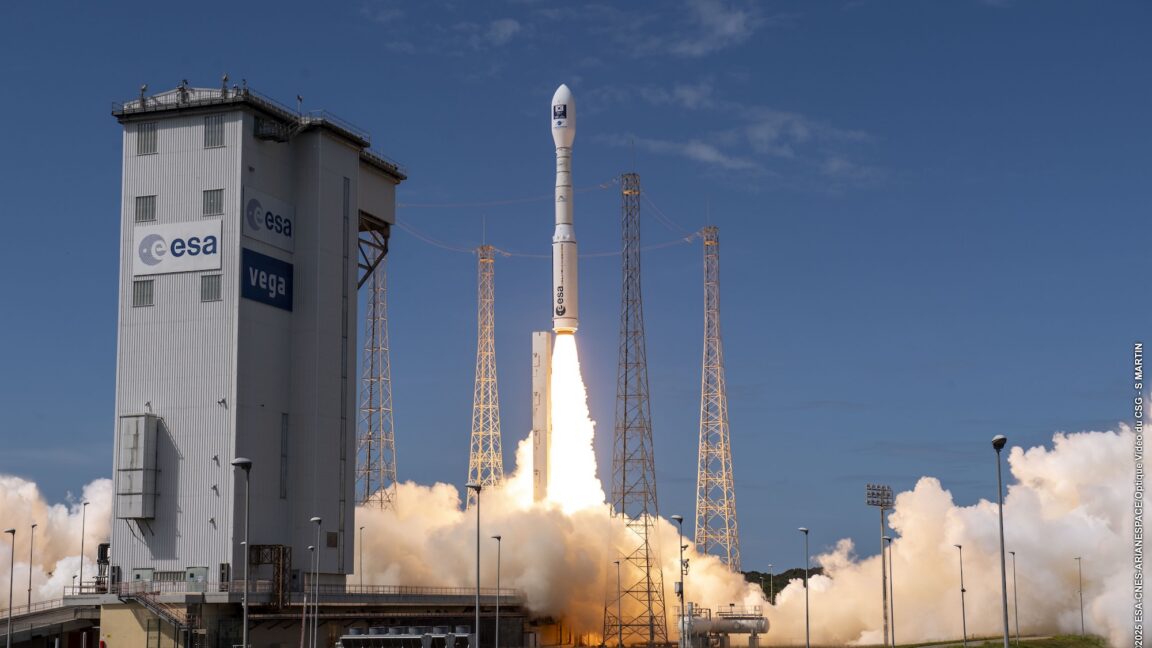
Avio oversees the consortium of European companies that produces the Vega C rocket and conducts final assembly of Vega C rocket stages at its factory near Rome. For most of the Vega program’s history, Avio handed the rockets to the French launch provider Arianespace, which managed marketing, sales, and launch day operations in French Guiana. Avio recently took over those responsibilities to bring the entire Vega C operation in-house.
ICEYE has built and launched 84 radar reconnaissance satellites, providing routine overhead imagery of locations around the world, even during darkness or cloud cover. In addition to its commercial satellite fleet, ICEYE has sold turnkey satellites directly to national governments, including Finland, Poland, Germany, Sweden, Portugal, Greece, and the Netherlands.
Last month, ICEYE announced a partnership with Nokia, another Finnish company, to develop a low-Earth orbit satellite constellation to support European connectivity needs, particularly in the defense and security sectors. Ukraine’s Ministry of Defense announced a preliminary agreement, saying it intends to work with ICEYE and Nokia on the constellation, days after Ukraine reported new restrictions on its access to Starlink and Starshield broadband services offered by SpaceX.
“Modern warfare has proven that reliable communications are a matter of national security,” Ukrainian President Volodymyr Zelenskyy said. “We must all rely on capabilities that we can control.”
There’s a long way to go before ICEYE and Nokia can start deploying their constellation, but their goal is to begin launching 50 satellites per year starting in 2028. The companies have not disclosed expected figures for throughput and latency on the network, or a total number of satellites for global or regional coverage. Depending on altitude, it would likely require hundreds or thousands of satellites. SpaceX has more than 11,000 operating satellites in its Starlink constellation today.