AI OS
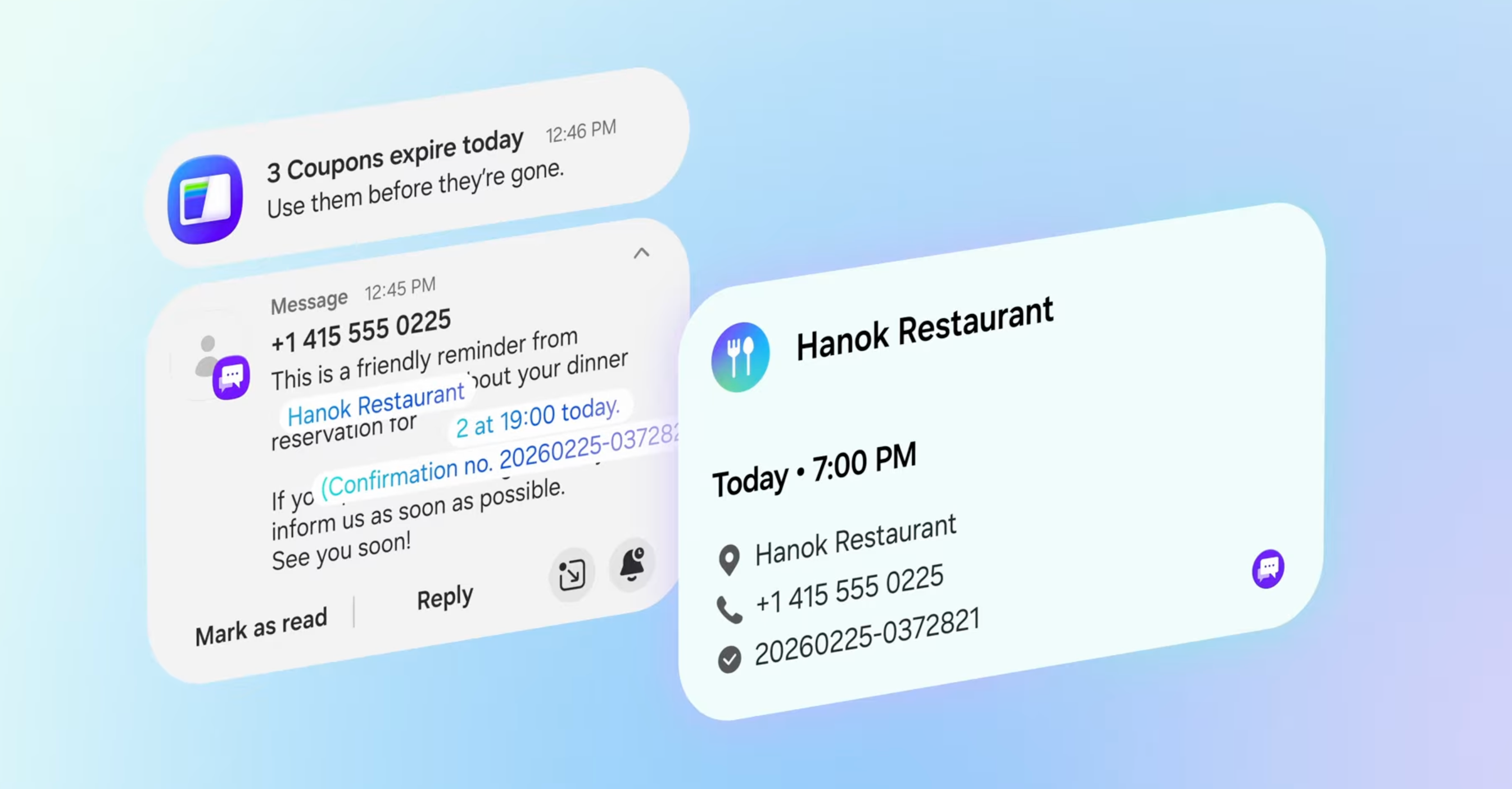
The Galaxy S26 will remind you about notifications. | Image by Samsung
Samsung’s head of mobile business TM Roh claims the Galaxy S26 line is among the first of its phones to run an AI OS developed in partnership with Google. AI is working at the OS level on the new phones, allowing them to complete complex, multi-app tasks with minimal human input.That’s in contrast with most other smartphones, which require customers to toggle between multiple apps. The company rebuilt its system architecture to achieve this automation.
Despite the marketing hype, AI OS has just started to take shape, and an entirely new operating system doesn’t exist just yet. Samsung’s COO of Mobile eXperience Business, Won-Joon Choi, and the European division’s Chief Marketing Officer, Benjamin Braun, admitted as much. They revealed the company is working on AI OS, which will be based on Android.
Samsung expects it to be a differentiator, giving it an edge over Apple and other Android competitors.
The company was thin on specifics, but the main idea is that it will be a proactive system, accomplishing tasks without being prompted.
As Tech Radar points out, Samsung gave a preview of its vision when it showed Galaxy AI automatically detecting a restaurant reservation and prompting the user to add it to their calendar without being asked.
Privacy concerns
For its phones to complete a multi-step task, Galaxy AI would require access to various apps and personal data, which might make customers uneasy. Samsung has assuaged those fears by saying that customers will have the option of using on-device AI, rather than sending their data to the cloud.In theory, the new operating system sounds intuitive and futuristic, and may change how we use our smartphones.
The future is software
In the run-up to the launch of the Galaxy S26, there was a lot of talk about the lineup being underwhelming in terms of hardware upgrades. With the launch of the Galaxy S26 and its goal to create a new operating system, it’s clear that the company wants to elevate the user experience by rolling out more software-based enhancements, rather than focusing on raw specs.