NASA / JPL-Caltech / MSSS
The Curiosity team has reported the detection of seven carbon-rich molecules never before detected on Mars. Some of them incorporate nitrogen and sulfur atoms in their structures — these molecules, like amino acids, are considered precursors to life. The results were published in Nature Communications.
Modern-day Mars is incredibly hostile to carbon-based chemistry; its ground and air are full of oxidizing compounds that tear such organic molecules apart. Yet during its mission, Curiosity has found several locations where clay minerals have entombed ancient organic molecules, keeping them safe for billions of years.
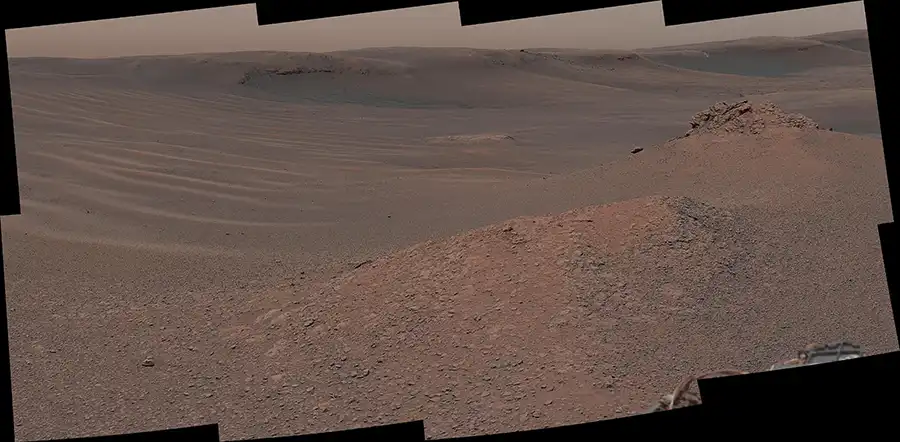
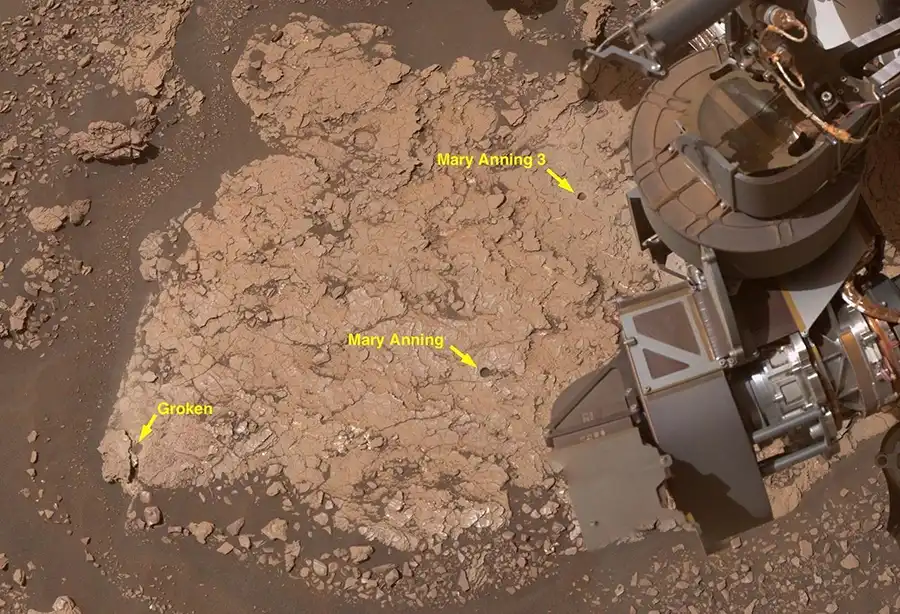
Finding new and different organic molecules required a high-stakes experiment with the rover’s laboratory instruments. The detections relied on a special wet chemistry sample cup in Curiosity’s Sample Analysis for Mars (SAM) experiment. SAM brought only two of those particular sample cups to Mars, each of which can be used only once. The SAM team waited for years to find the most promising drill site before committing to the experiment. The site they chose is called Mary Anning, located in Glen Torridon, a clay-rich valley at the base of Gale Crater’s central mountain.
The team, led by Amy Williams (University of Florida), had been looking forward to sampling in Glen Torridon even before Curiosity landed, because orbiting spectrometers had detected the clear signal of clay minerals exposed on the surface. Clays are good for two reasons: they require pH-neutral water to form, and they can preserve organic compounds over geologic time. After Curiosity roved across the Bradbury plains and Vera Rubin Ridge, the team’s geologists decided that the rocks in Glen Torridon represented the best example of deep-lake sediments that they’d found yet — the sort of low-energy environment considered best for preserving fossil evidence for life.
Curiosity drilled and sampled the Mary Anning site on sol 2838, which corresponds to July 31, 2020. The rover delivered a sample into a dry quartz cup within SAM. SAM then performed its standard experiment, heating the powdered rock in an oven and puffing the rock vapors into a gas chromatograph and mass spectrometer, measuring the masses of constituent molecules. SAM confirmed detections of some of the same carbon-rich molecules found in previous samples. A few months later, Curiosity drilled again at a nearby site, this one named Mary Anning 3 on sol 2870 (September 2, 2020). This one it delivered to one of SAM’s two wet chemistry sample cups.
NASA / JPL-Caltech / MSSS
These cups are designed for the detection of complex organic compounds. When such heavy compounds are heated dry, they can decompose into simple molecules, so the full complex molecule never makes it to the mass spectrometer. When these large molecules are placed in water and react with chemicals there, they become more volatile and able to vaporize as whole molecules. SAM brought nine wet chemistry cups to Mars, two of which are especially useful for detecting the most complex organic compounds, such as lipids and proteins.
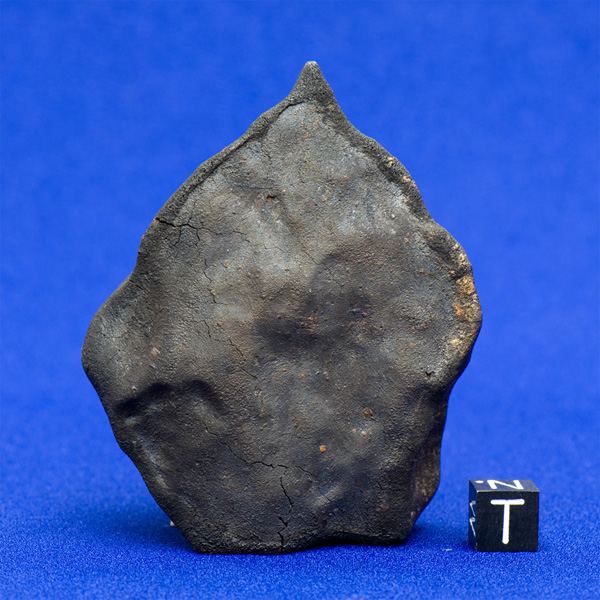
Analysis of the Mary Anning 3 sample yielded potential detections of 28 different compounds. But that was only the first step in the experiment. To understand the results, the SAM team had to replicate them in the lab on Earth. They didn’t have a Martian sample on hand, but they did have a piece of the Murchison meteorite, a carbonaceous chondrite considered representative of the materials present during the formation of the solar system. In ground-up samples from the Murchison meteorite, they found 16 of the same compounds as SAM found in Mary Anning 3 on Mars. The lab experiments took years until the team could be sure of the identities of seven of the compounds; they’ve tentatively identified the remaining 21.
Ponnamperuma et al. / Nature 1970
Carbon atoms link up into hexagonal rings, creating a skeletal structure that helps make large molecules. Among the newly detected organic compounds are naphthalenes and benzothiophenes, both of which are based on two connected carbon ring structures. Previously, the most complex organic compounds detected on Mars were benzenes (with only one ring) and alkanes (long chains of carbon atoms, not linked into rings).
While SAM can tell us that the complex organic compounds are present, it can’t tell us where those compounds came from. They could have been made on Mars with or without the help of life. Meteorites could also have carried those molecules to Mars. What’s most important is that the compounds Curiosity sampled came from inside rocks that formed when Mars was young, in an environment where Earth-like life could have thrived. That gives hope that future searches for fossil evidence of life on Mars will be fruitful.
Today is sol 4878. Curiosity has long since driven away from Glen Torridon and is well up onto the flanks of Gale’s central mountain, still examining the history of Mars’s watery past, as recorded in its rocks. It has one more wet chemistry cup left in its SAM suite, ready to read a different page of that story from a different time.