For years, OLED display owners have lived with a quiet set of tradeoffs: screens that dim over time, panels that struggle in bright rooms, and laptops that run out of juice faster than expected. LG Display’s latest OLED lineup, unveiled at SID Display Week 2026 in Los Angeles, takes direct aim at all three with a range of new technologies across different product categories.
Longer life and less degradation, starting with your car
The most significant announcement is LG’s third-generation Tandem OLED, designed initially for automotive applications. Compared to the previous generation, it delivers more than double the lifespan alongside an 18% reduction in power consumption.

The gains come from a newly developed OLED element that optimizes electron movement to minimize degradation and ensure uniform picture quality over time, paired with a “deep blue dopant” that improves color purity and reproduction. The automotive panel hits 1,200 nits of brightness and is built to maintain that performance for more than 15,000 hours at room temperature without visible degradation.
LG plans to begin mass production of this new automotive panel before the end of the year, with expansion into laptops and other IT applications to follow.
Brightness that holds up in bright living rooms
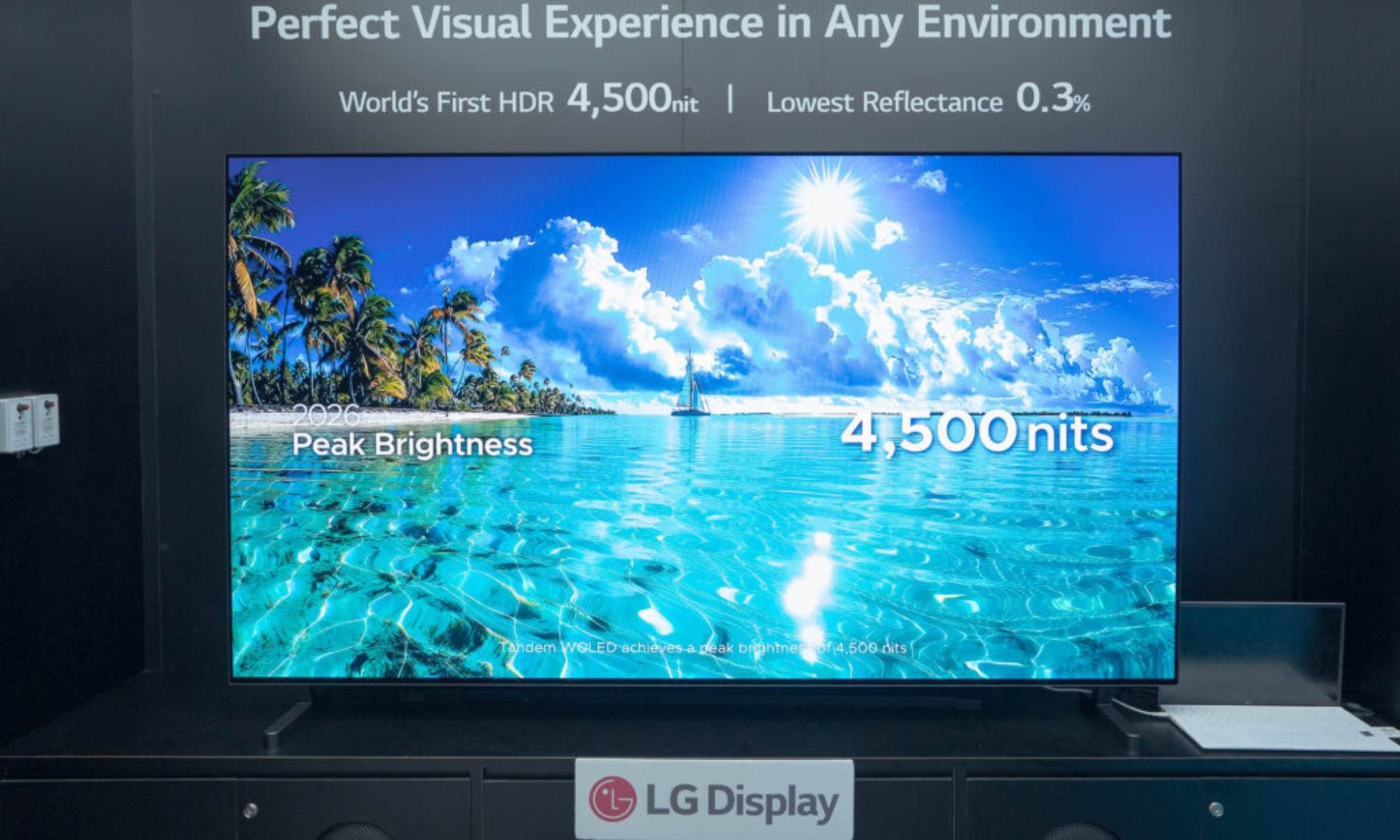
On the TV side, LG’s new Primary RGB Tandem 2.0 technology reaches a peak brightness of 4,500 nits and has an ultra-low reflectance of just 0.3%, the lowest of any current display. For consumers watching in bright living rooms, that combination addresses one of the most persistent complaints about OLED in non-ideal viewing conditions.
LG has also introduced a 16-inch Tandem OLED panel optimized for AI laptops. It is thinner and lighter than conventional OLED panels, and extends battery usage by up to 2.3 hours.
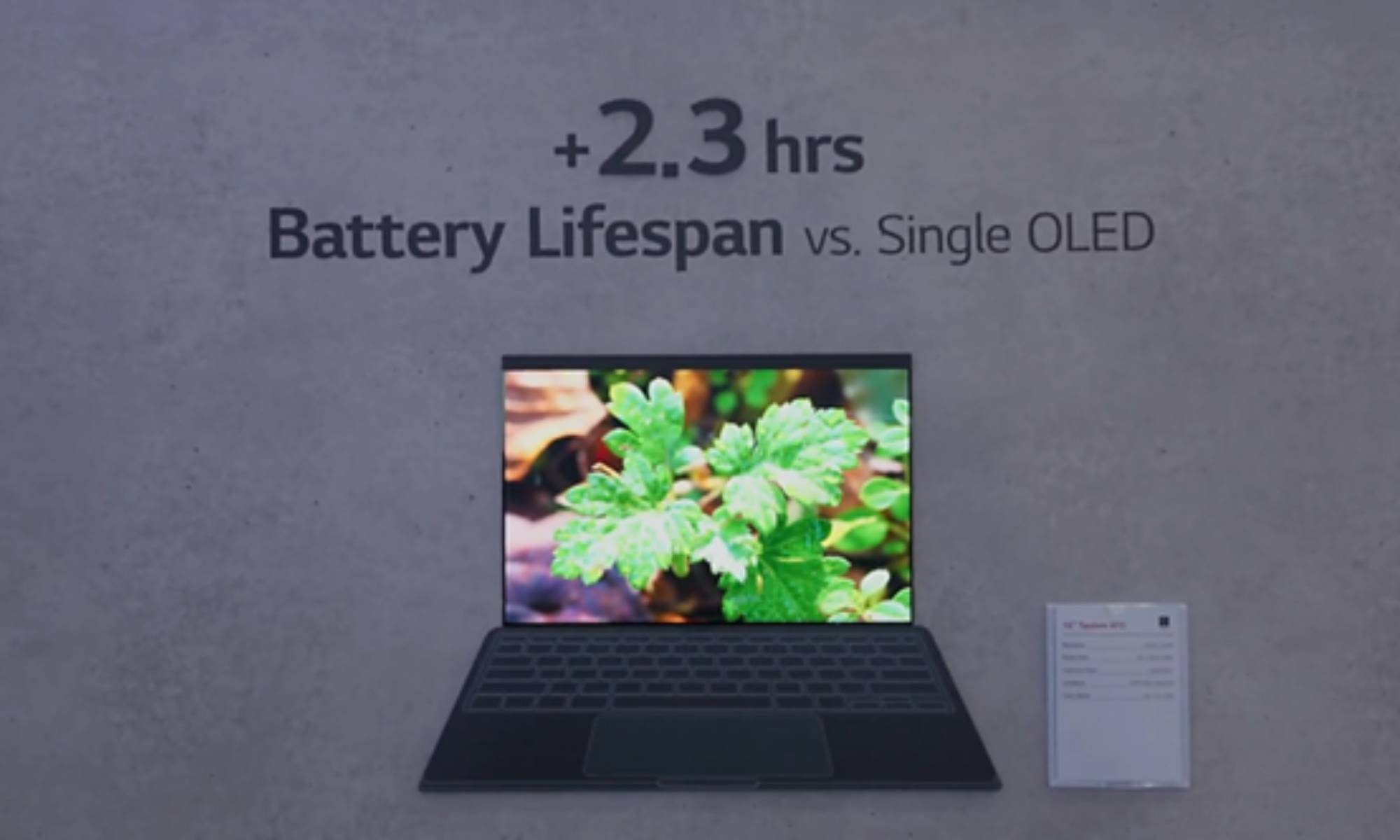
This could result in a new range of OLED laptops that no longer force a tradeoff between display quality and battery life.
Built for wherever screens are going next
LG has also debuted a new P-OLED solution designed for humanoid robots, leveraging its automotive-grade Tandem OLED technology that can withstand extreme temperatures and demanding physical conditions.

If the specs across this lineup hold up at scale, the persistent gripes around OLED brightness, longevity, and efficiency may finally have a real answer.