NSF–DOE Vera C. Rubin Observatory / NOIRLab / SLAC / AURA
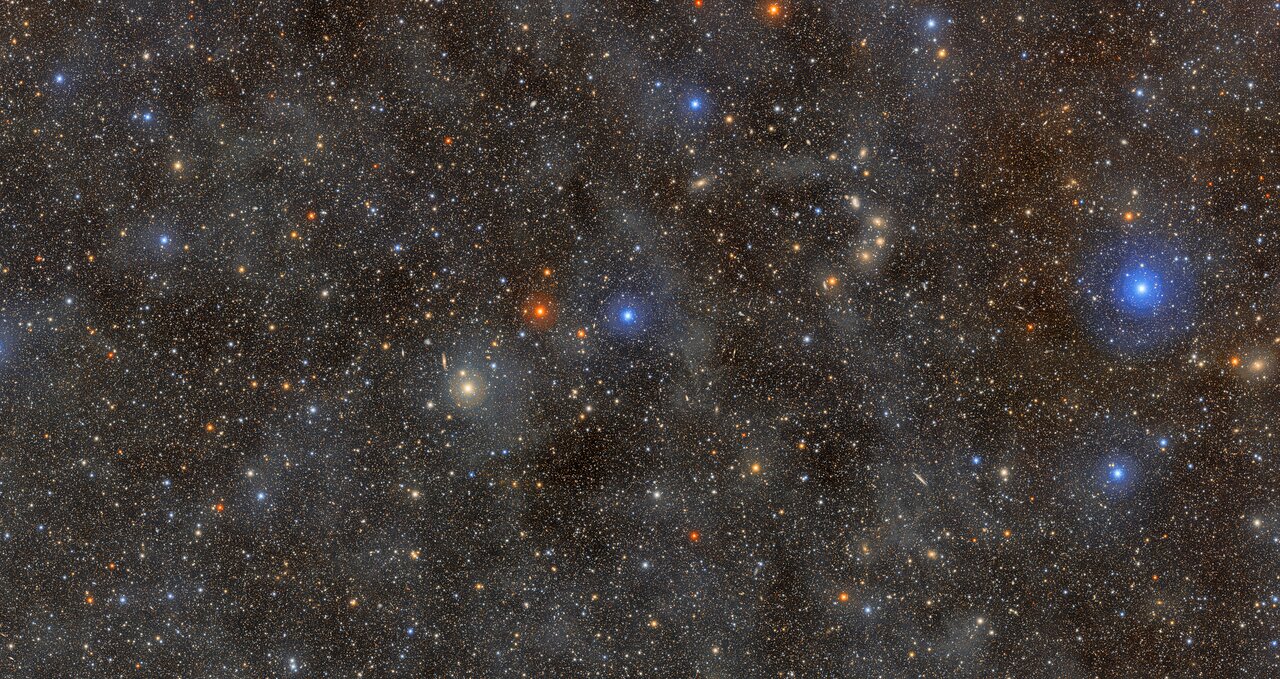
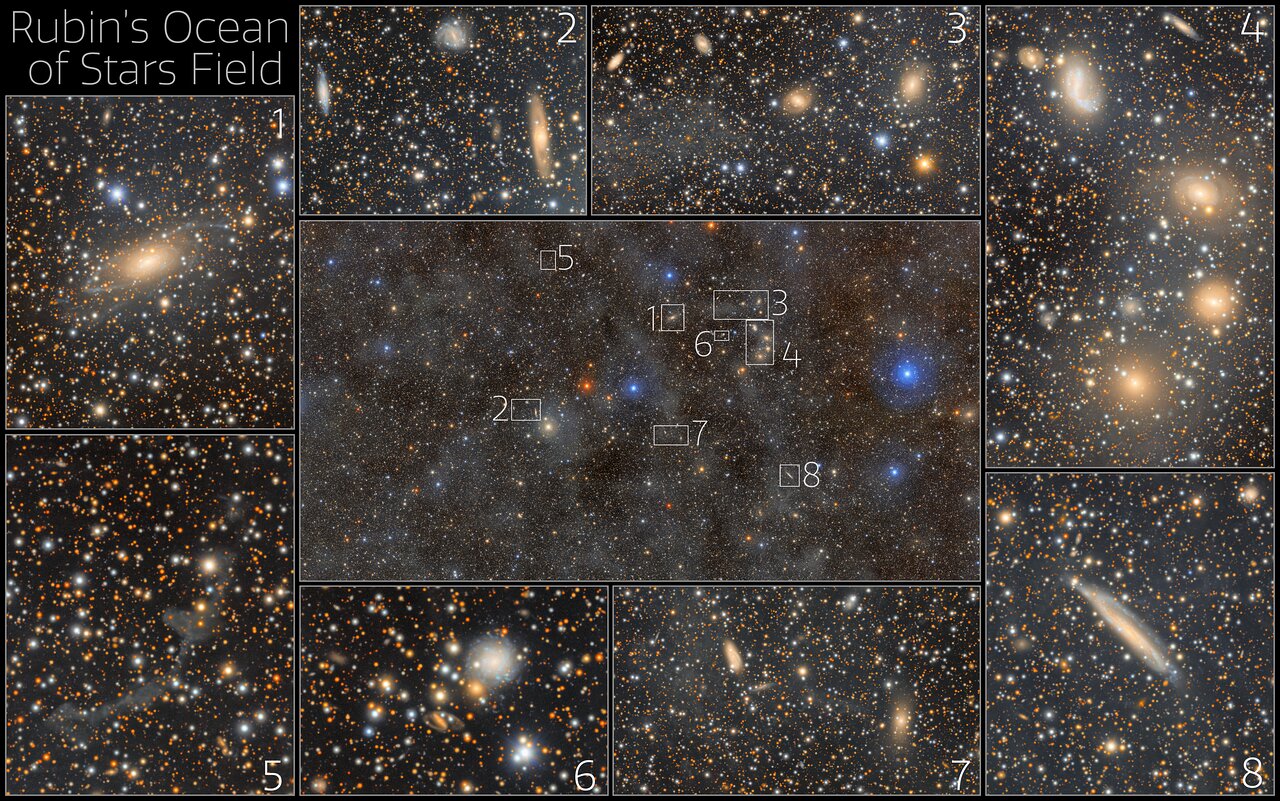
One year ago, the Vera C. Rubin Observatory released its first photos — tiny windows into millions of galaxies and thousands of asteroids captured with only 10 hours of test observations from a remote location on Chile’s Cerro Pachón mountain. That tantalizing morsel only piqued astronomers’ interest into the impending sky-sweeping abilities of the giant telescope. Now, they wait no longer.
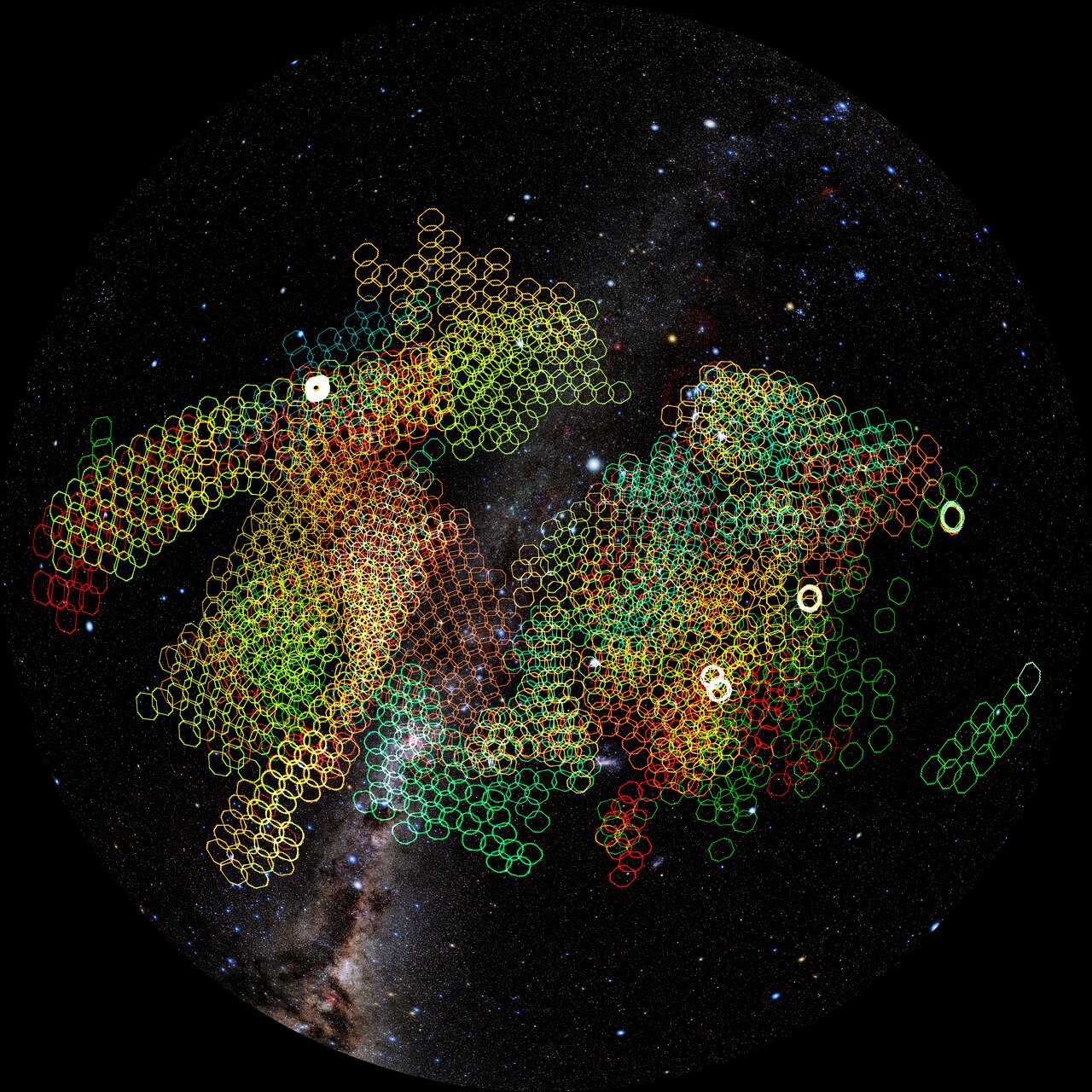
This week, the observatory’s Legacy Survey of Space and Time (LSST) officially begins. Designed to survey the entire sky every three days in visible and near-infrared light, Rubin will capture an unprecedented time-lapse movie of the universe.
“It’s what I could only dream about 25 years ago,” says planetary scientist Mike Brown (Caltech). “If you talk to 50 different astronomers, you would get 50 different answers about what they are looking forward to.”
NSF–DOE Vera C. Rubin Observatory / NOIRLab / SLAC / AURA
The Movie Begins
Over the past year, the Rubin team has been testing the telescope’s functionality, data quality, and consistency. The decision to start the LSST followed measures of Rubin’s image quality, effective survey speed, system uptime and reliability, and calibration accuracy, the team reports in a press release.
“I’m excited because we are finally beginning to start answering the questions that Rubin set out to provide answers to,” says cosmologist Arun Kannawadi Jayaraman (Duke University), who works with data from the Rubin Observatory. “And I’m nervous because, although we have been dealing with the immense amount of data Rubin Observatory has been generating during its Science Validation and Commissioning phase, it is now getting real.”
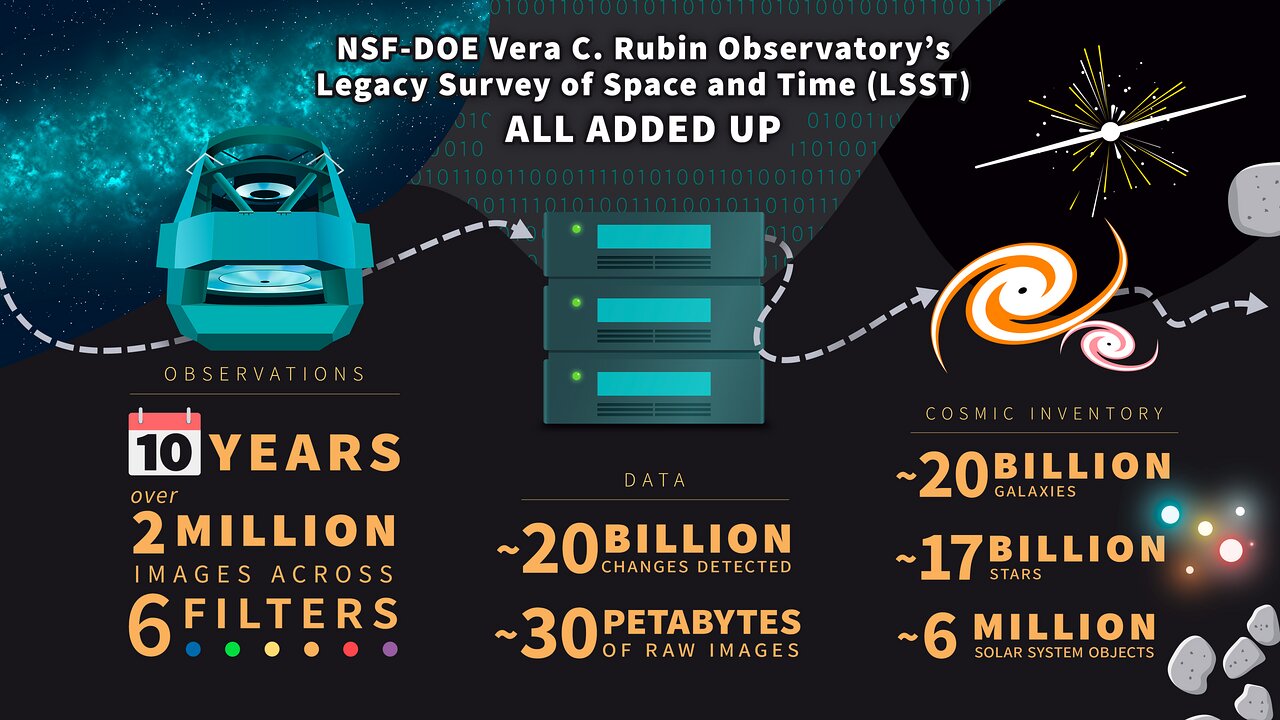
The $800 million observatory boasts the 8.4-meter Simonyi Survey Telescope and the largest digital camera in the world, at three tons and 3,200 megapixels (more than 65 times sharper than the camera in the iPhone 17). Every 30 seconds, the observatory will take a photo before swiveling to spy a new section of the sky. Over the next 10 years, it will turn its eye to each point in the sky around 800 times.
NSF–DOE Vera C. Rubin Observatory / NOIRLab / SLAC / AURA
Rubin will be especially useful for spotting transient objects like supernovae, as well as measuring the gradual expansion of the universe. Whenever the telescope detects an object that has moved, brightened, or dimmed, the observatory’s processing center at SLAC National Accelerator Laboratory will send out an alert. Astronomers estimate that up to 10 million alerts could occur every evening, some of which can direct researchers to follow up on dramatic astronomical events with other telescopes. “It is going to be hard for transients to hide from us,” says Kannawadi.
While thousands of daily supernova detections will keep astrophysicists occupied, planetary scientists will key in on tens of thousands of near-Earth asteroid detections, some of which could potentially spell close encounters with Earth or the Moon. And still others will look for the dozens of predicted interstellar objects, of which only three have ever been detected in the solar system.
“The survey should revolutionize planetary science,” says Darryl Seligman (Michigan State University). “It’s really the beginning of an entirely new era in time-domain astronomy.”
Planetary scientist Kat Volk (Planetary Science Institute), a member of the LSST’s Solar System Science Collaboration, is most excited to spot more trans-Neptunian objects — icy bodies such as Pluto that orbit beyond Neptune and range from tens to thousands of kilometers across. Studying their orbits can reveal the early history of the solar system, including how the outer planets evolved.
For his part, Brown is most interested to see if LSST discovers Planet Nine, a hypothesized planet five to 10 times more massive than Earth that may be warping the orbits of outer solar system bodies. Even if Rubin can’t spot the exact planet, he thinks it could detect more objects with warped orbits, pointing to Planet Nine’s existence. If not, “even that result would be an important nail to put into yet another planetary theory,” says Brown.
NSF–DOE Vera C. Rubin Observatory / NOIRLab / SLAC / AURA
Into the Unknown
“Rubin is a project that I’ve been watching since I started grad school 20 years ago,” adds Volk. And yet, “I think the most important questions LSST will help us answer are possibly the ones we haven’t even thought of yet.”
Those questions may touch on the ever-elusive dark matter and dark energy, topics originally used to justify Rubin’s construction. The main method the giant telescope will employ is weak gravitational lensing, searching for dark matter’s subtle gravitational effects on giant samples of galaxies.
The questions may also surround features that emit or reflect little light that other telescopes have not been powerful enough to see, says astronomer Meredith Rawls (University of Washington), who is also member of the LSST team. Some such wispy strands of gas already appeared between galaxies in Rubin’s “first look” photos, she says. “It’s just remarkable how a dark enough sky and a whole lot of patience with one of the biggest cameras ever built can reveal some of the most gorgeous structures in the universe.”
But perhaps Rubin’s biggest impact on astronomy will be its sheer deluge of data. Each night, the telescope will log 10 to 20 terabytes — the equivalent to hundreds of 4K movies. Within just one year, the telescope is expected to image more objects than all other visible-light observatories in human history combined.
“Despite a ton of preparation by the Rubin project, I still expect there to be a period of shock for the scientific community in how to work with the tsunami of information,” says Gary Bernstein (University of Pennsylvania).
Unfortunately, not all of this information will be pristine, points out Samantha Lawler (University of Regina, Canada); the 15,000-plus satellites now zooming overhead may add streaks to images or obscure fainter astronomical sources. “I’m very concerned about how these satellites will impact science results,” she says. Throughout the 10-year survey, companies such as Starlink aim for thousands more launches.
The answer to both the data flood and the satellite defects likely leans on artificial intelligence, which should help tease out the most interesting objects from the errors. Multiple official intelligent-software platforms, called brokers, have been designed to filter, sort, and classify Rubin alerts before distributing them to other scientists, citizen scientists, and the public. The scientific community will surely iterate on these services as they adapt to the new world Rubin has opened.
“This moment is marking a new era in astronomy, not just in terms of the data volume and quality that LSST ushers in, but also in how research in astronomy gets done,” says Kannawadi. “Science-ready data will be handed over on a giant plate. We’re ready to dig in.”