Futurists and science fiction writers have predicted privately funded missions to Mars for decades, but until recently, the prospect appeared to be decades away. While fully private human missions to Mars are probably not yet practical (given the complexity and cost of such missions), the commercial sector, in partnership with space agencies such as NASA, has a critical role to play in enabling a human presence on Mars. Whether that possibility becomes reality will depend on the choices we make today about public leadership, commercial engagement, and international collaboration.
The role of national space agencies is not limited to funding missions. They maintain the research ecosystems, testing facilities, safety standards, planetary-science programs, and international partnerships that commercial industry builds upon.
However, no single agency — not even NASA — can develop all the technologies, supply chains, transportation systems, life-support tools, digital platforms, and surface infrastructure needed to move from exploration to sustained settlement. Commercial participation is therefore not “nice to have”; it is the engine that will turn Mars from an aspirational destination into an achievable, economically grounded frontier. While NASA has an extraordinary repository of knowledge and expertise from which to draw, commercial industry can deploy more “outside the box” thinking and a somewhat higher risk tolerance that can yield more nimbleness. Working together should deliver the best of both worlds.

Public-private partnerships between NASA and industry demonstrate today’s commitment to building a platform for a vibrant and multisided commercial space economy. Over the last two decades, NASA introduced programs such as the Commercial Orbital Transportation Services (COTS), the Commercial Crew Program (CCP), Commercial Lunar Payload Services (CLPS), and the Human Landing System (HLS) program.
While these programs have faced challenges (such as the continuing delays in developing a system capable of safely landing humans on the moon), they have succeeded in producing new cargo vehicles to supply the International Space Station (ISS), the only new operational crew vehicle yet to reach the ISS (SpaceX’s Dragon capsule), and the first commercial robotic landers on the lunar surface. NASA also just awarded over $1 billion in contracts to start developing infrastructure needed to build the planned Moon Base.
Public-private Mars missions
Not all of NASA’s commercial partnerships have been focused on low Earth orbit (LEO) or the moon. NASA’s ESCAPADE mission, a partnership between NASA, UC Berkeley, Rocket Lab, and Advanced Space, launched on Blue Origin’s New Glenn rocket in November 2025, using commercially developed spacecraft platforms and streamlined development processes. ESCAPADE is expected to deliver critical knowledge for human exploration about radiation risks, atmospheric escape, and space weather dynamics at a fraction of the traditional cost.
On June 17, NASA also announced a partnership with Relativity Space to deliver the Aeolus atmospheric‑science instrument payload suite to Mars in 2028. According to NASA Administrator Jared Isaacman, “By pairing NASA’s world‑class instruments with commercial innovation and investment, we can deliver more science, more often, and reduce the time it takes to get essential data into the hands of researchers preparing for future human missions to Mars.”
In 2025, NASA also announced a new, highly ambitious, public-private partnership program: Commercial Mars Payload Services (CMPS). By challenging the commercial aerospace industry to deliver payloads and communications relays to both Mars orbit and the surface, CMPS may create efficiencies that could enable the development of lunar and Mars architectures in parallel, which is essential if we hope to land humans on the Red Planet anytime soon. However, with the realignment of NASA’s Artemis Program, as well as budget disagreements between the Administration and Congress, the future of CMPS remains unclear.
Even with a large amount of funds entering the commercial space industry (such as the recent SpaceX IPO), a critical part of this equation is NASA’s role as an anchor tenant, which was key to transforming commercial space in LEO and is now poised to do the same for Mars. When NASA commits to purchasing services rather than owning the entire stack (imagery, transportation, surface mobility, communications, in-situ resource utilization), it sends a powerful signal to the market: there will be customers, there will be demand, and there will be revenue beyond any single mission.
That stable early demand empowers companies to raise capital, build technologies, and develop capabilities that would be far too risky or expensive to pursue on speculation. Firms collaborating with NASA could then sell similar capabilities to other U.S. and international agencies, research institutions, and eventually commercial customers. By serving as a guaranteed first buyer, the agency catalyzes an ecosystem that becomes self-sustaining over time.
Mars innovation improving life on Earth
Creating a human presence on Mars isn’t only about rockets and crew vehicles—and not all projects need cost billions of dollars. A sustainable Mars program will require hundreds, if not thousands, of innovations that protect human health, maintain psychological resilience, and support efficient work in one of the harshest environments imaginable. Mars inhabitants will need to eat, drink, breathe, heal, sleep, relax, and collaborate productively for months or years at a time.
Delivering those capabilities will demand breakthroughs in medical science, mental-health support, agriculture and nutrition, artificial intelligence, autonomy and robotics, biotechnology, circular environmental systems, materials science, design, and more. Importantly, many critical solutions will come from companies that currently do not think of themselves as “space companies.”
This is where Mars becomes a driving engine for improving life on Earth. By inviting innovators across sectors — health, food, energy, manufacturing, construction, A.I. and more — to solve Mars-class problems, we accelerate progress on the very challenges that people face on Earth today. Technologies that keep crews alive and thriving on Mars can make our hospitals more resilient, our homes more efficient, our food systems more sustainable, and our workplaces healthier.
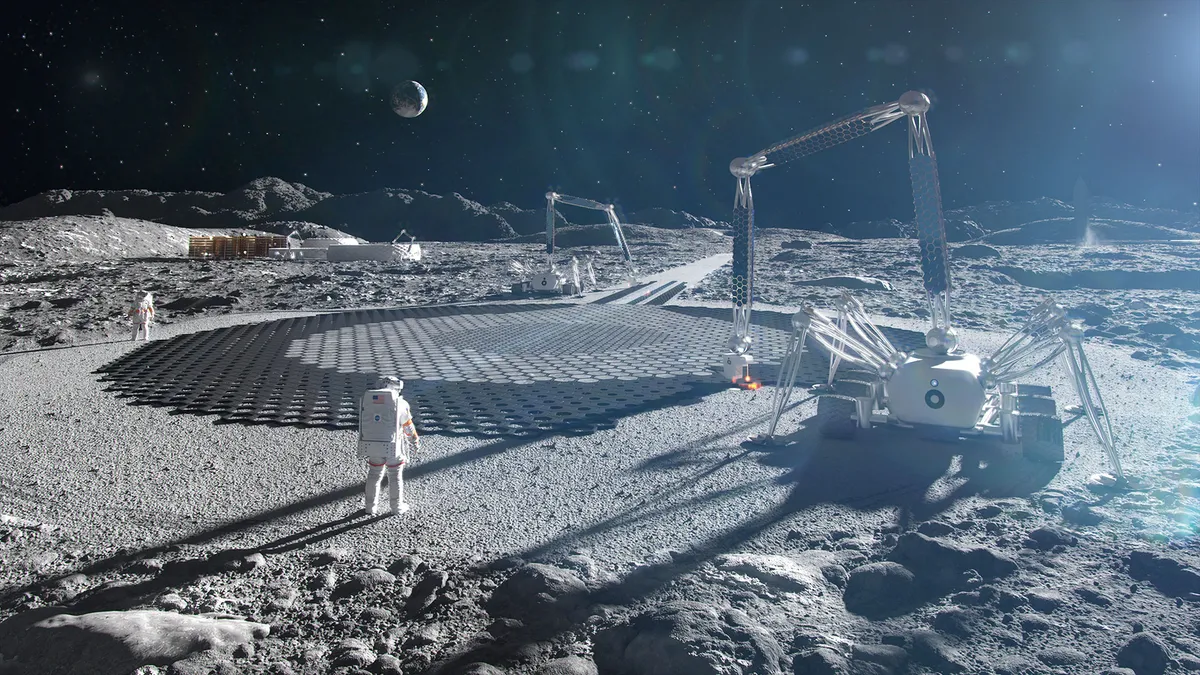
Ultimately, the path to Mars runs through a steady cadence of public–private projects in LEO and here on Earth, as well as missions launched directly to the Red Planet. Every new launch vehicle, propulsion system, habitat technology, food-production method, and autonomous system built for deep-space missions drives jobs, strengthens manufacturing capacity, opens new markets, and builds the technological base here on Earth that keeps the U.S. and its partners competitive. Such benefits to our home planet do not and will not have to wait until we actually land humans on Mars. They are already being felt, and enjoyed, here on Earth today.
This commercial pathway depends on NASA leadership. As NASA prepares to build the Moon Base over the next several years, it should not lose sight of Mars. It must continue to empower public-private partnerships to help enable human missions to Mars as soon as the 2030s.
Now is the moment for action. If we act deliberately in this decade by strengthening public leadership, empowering commercial innovation, and working together across borders, we will not only make a human presence on Mars achievable, but also unlock enduring benefits for life on Earth.
Dr. Tiffany Vora is President of Explore Mars, Inc and a Nonresident Senior Fellow at the Atlantic Council’s GeoTech Center.
Chris Carberry is CEO of Explore Mars, Inc. and the author of The Music of Space, Alcohol in Space, and co-editor of A Future Spacefaring Society.