At a glance
Expert’s Rating
Pros
- Powerful suction
- Effective mopping
- Quiet operation
Cons
- Expensive
- Too many cleaning modes
- Heavy base station
Our Verdict
The Roborock Saros 20 is a premium robot vacuum that cleans well and makes life easier, but it’s expensive and probably more than what most people need for their homes.
Price When Reviewed
This value will show the geolocated pricing text for product undefined
Best Pricing Today
Price When Reviewed
$1,599.99
Best Prices Today: Roborock Saros 20

$1,599.99

$1599.99
Let’s get one thing straight up front: Roborock’s Saros 20 sits on the premium side of the robot vacuum category. It’s got just about everything you’d expect. Mopping, vacuuming, obstacle detection, a self-cleaning dock, the whole nine yards.
I spent time testing it in my split-level home on both hard floors and rugs. My greyhound, who has a strange habit of standing like a statue in the hallway, gave the obstacle avoidance feature plenty of practice. It cleaned consistently, that’s for sure, but the bigger question isn’t whether it works… it’s whether it does enough to justify the $1,599.99 price tag.
Roborock Saros 20: Setup
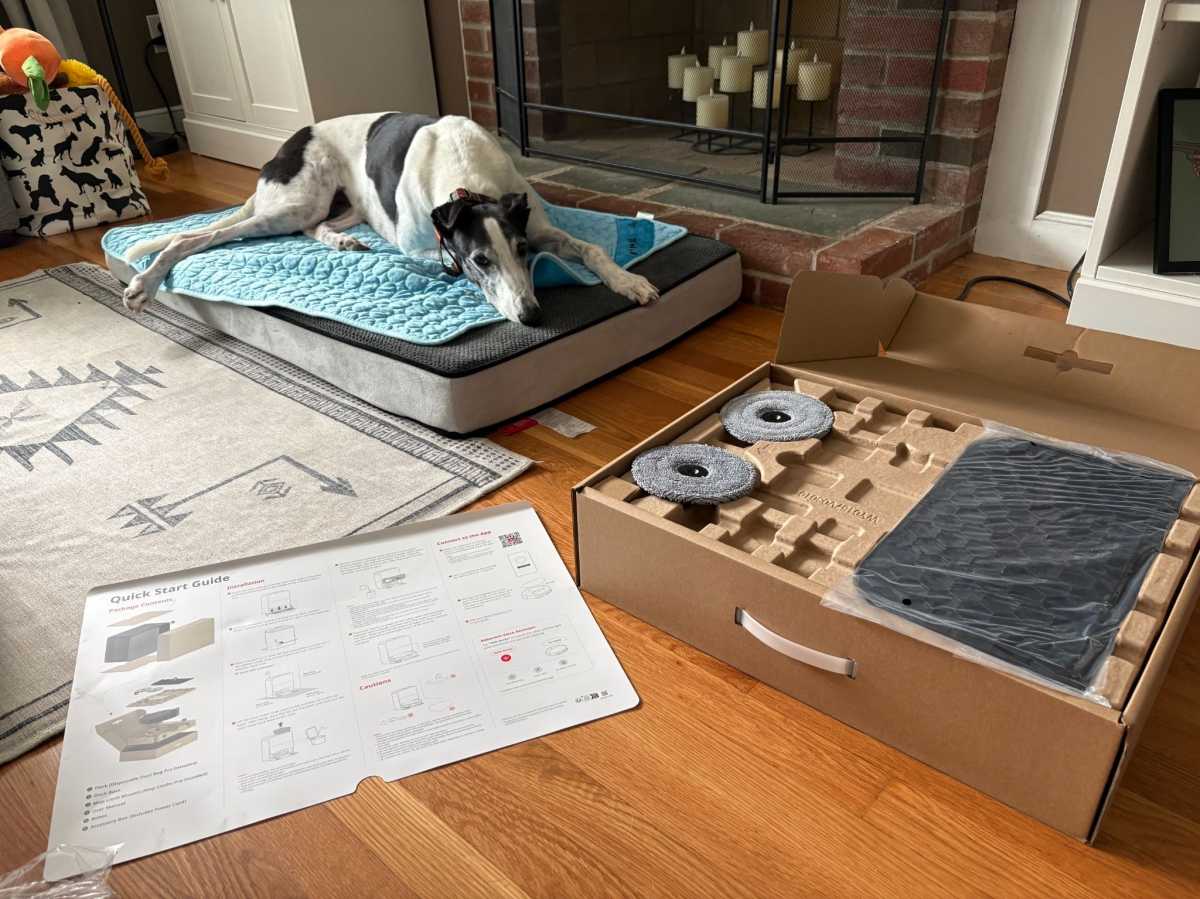
Getting everything ready didn’t take long at all. In the box, the parts are all there and laid out in a straightforward way. There’s a single sheet of instructions (Quick Start Guide) that explains everything and the visuals are easy to follow.
The biggest challenge was moving the base station around. It’s bulky and heavier than I expected—not impossible to move (robot lawn mowers are much heavier), but it’s not some tiny charging dock either.
One thing I wasn’t crazy about is how the app handles multiple floors. After cleaning upstairs, I wanted to try it downstairs where I get a lot more foot traffic, especially between the dog and me. (My dog tracks in a never-ending stream of leaves and dirt.) This meant I had to physically carry the entire base station down to the basement so the robot could make another map. Oof.
And when the Saros 20 finished the new map, the original map had been replaced by the new one. I expected it to remember both.
I later found out that the Saros 20 can remember different floors, but it just takes some noodling around in the app. Getting to the right page isn’t exactly straightforward, so I’ll tell you where to go: Settings, tap Manage Maps, and change Home Layout to Multi-Level.
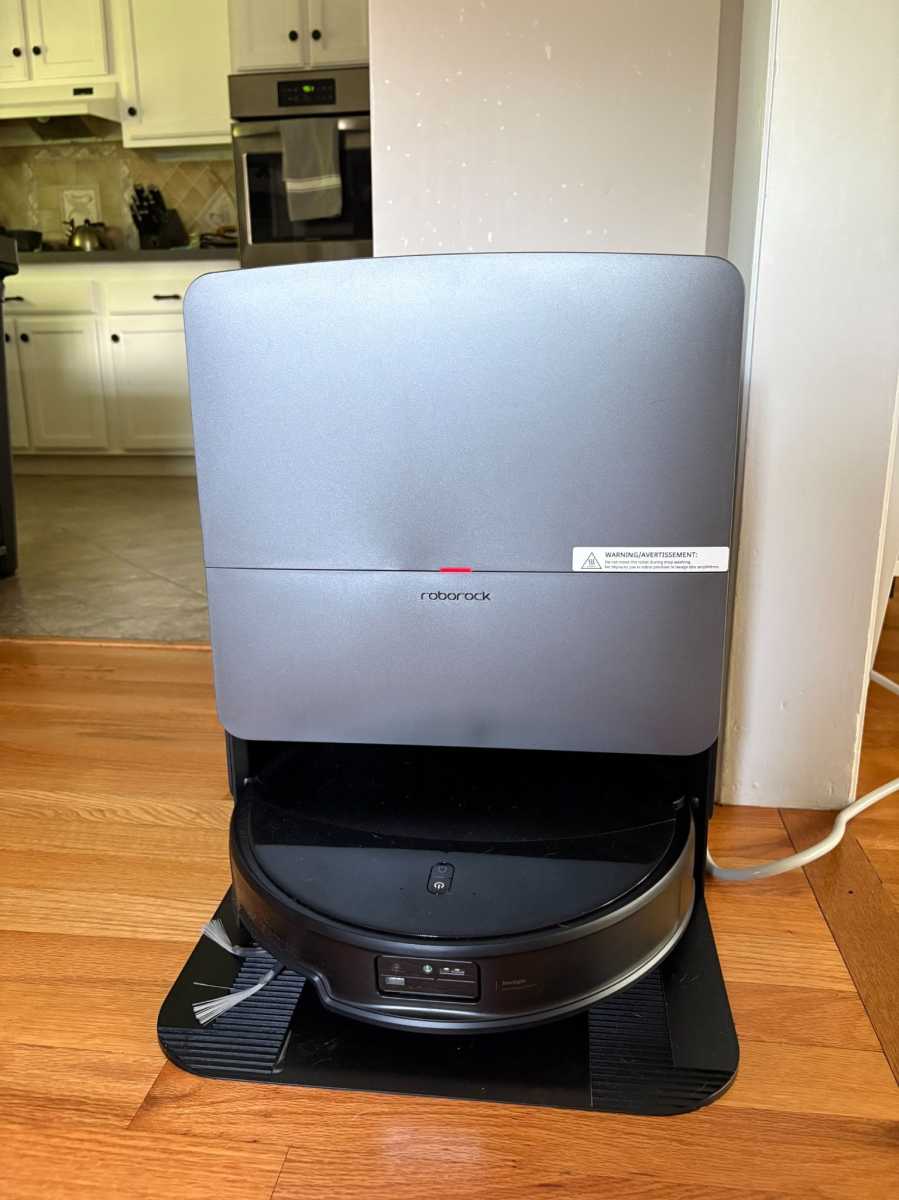
At the end of every cleaning cycle, the Saros 20 doesn’t return to base just to charge—it also empties debris into a dust bin (disposable bag included!) and cleans its mops with boiling hot water before drying off. You don’t ever have to touch the mops with your hand, which is nice if you’re sensitive to textures like I am.
The Saros 20 is fairly quiet when it’s out cleaning. It’s much quieter than the roar of my upright vacuum. That said, when it goes back to the base station to empty debris and wash the mops, it makes this big whooshing sound, which is pretty darn loud.
The dirty water tank and dust bin are also easy to empty. I found myself emptying the water tank more often than the dust bin because I don’t like the idea of dirty water sitting around for days at a time.
Roborock Saros 20: The app
The app is surprisingly approachable considering how many options it gives you.
There’s no shortage of cleaning modes. There’s Deep, Deep+, After Meals, Intensive Sweeping, and so on. It feels complicated for the sake of being complicated, you know? I mostly stuck with Full Cleaning (vacuum plus mopping) since that covered everything I needed.
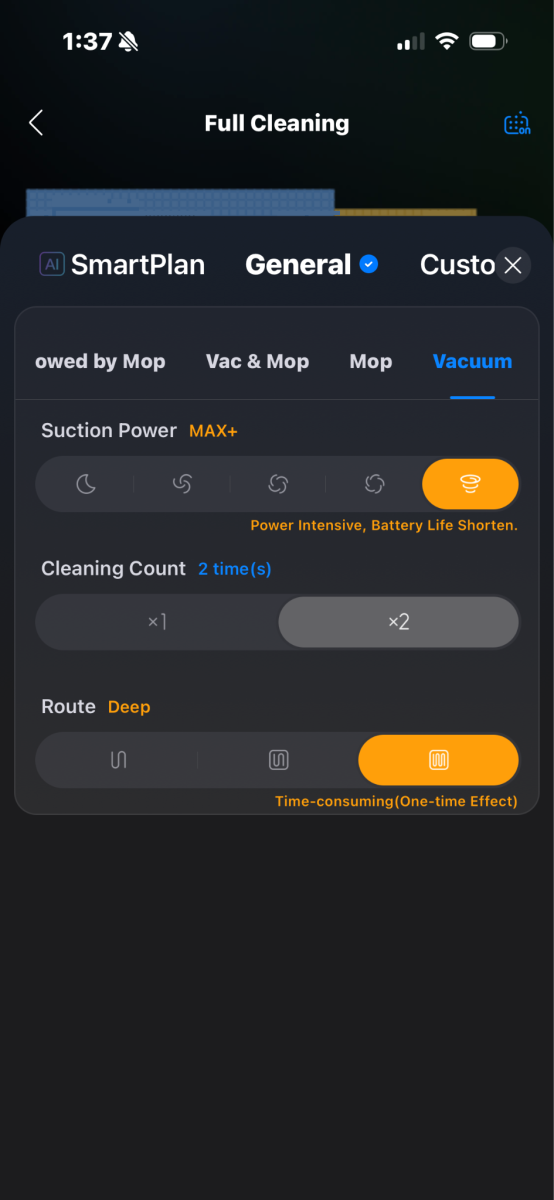
If you really want to crank things up, you can max out the suction power using the little tornado icon. It’s probably more power than I needed most days, but it’s nice having the option.

The mapping system worked well overall. It built an accurate layout of my house, although it wasn’t particularly good at naming the rooms. Somehow the hallway in my basement ended up labeled as the kitchen. Thankfully that’s easy enough to fix since you can rename the rooms yourself and even create barriers or no-go zones.
Roborock Saros 20: Navigation
For the most part, the Saros 20 moves carefully around the house. It’s very intentional in where it’s going, too. That’s because it’s got an internal lidar system (no turret on top) and obstacle-recognition sensors (Roborock’s StarSight Vision Recognition System). This means it’s always scanning the room while it cleans.
My dog didn’t seem to care much about this thing zooming around the house, which surprised me. I expected at least a little curiosity, but after the first few minutes he acted like it had always been around.
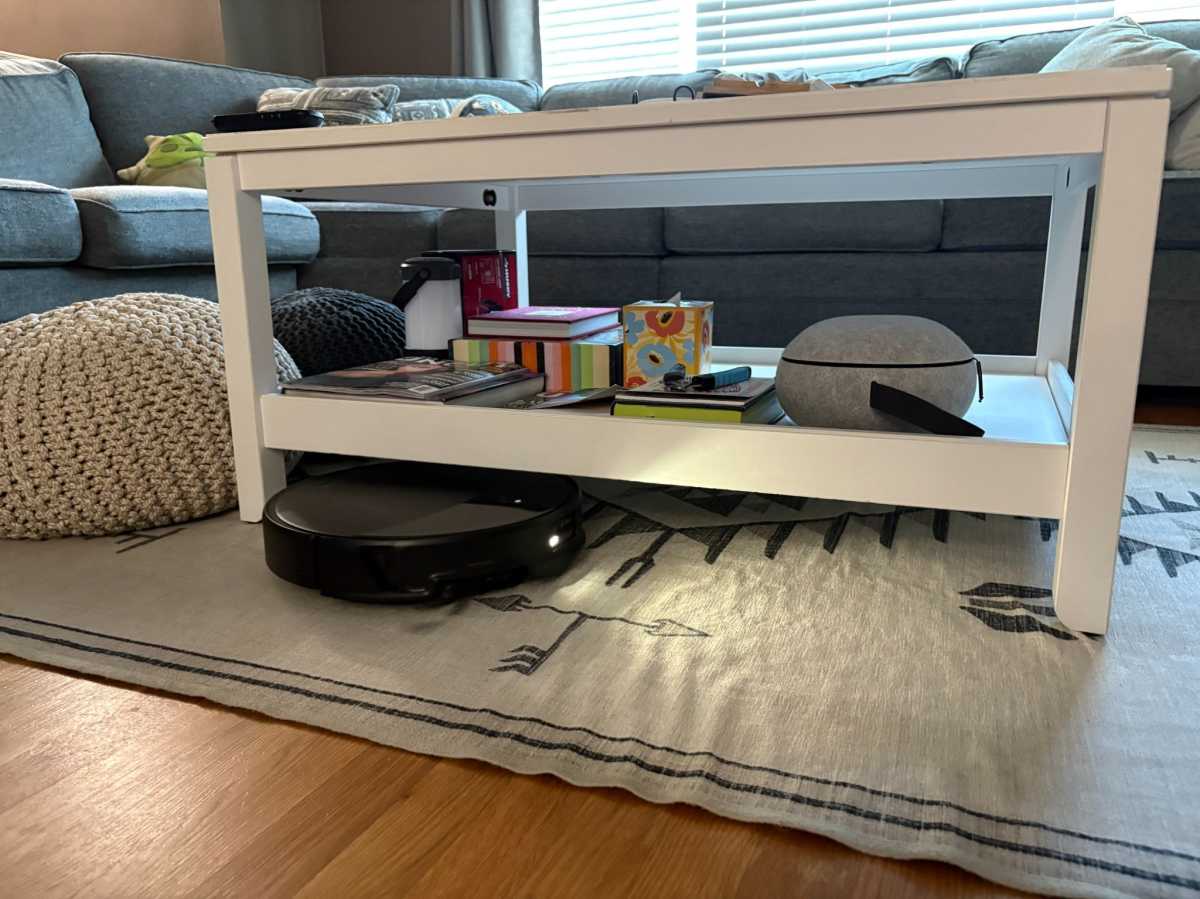
It also did a better job cleaning under my low IKEA coffee table than I usually do myself. That area has a Ruggable rug beneath it, and getting a traditional vacuum under there is always awkward. Fortunately, the robot slipped under without much trouble. It even closely hugged the legs of the table, ensuring a pretty thorough clean.
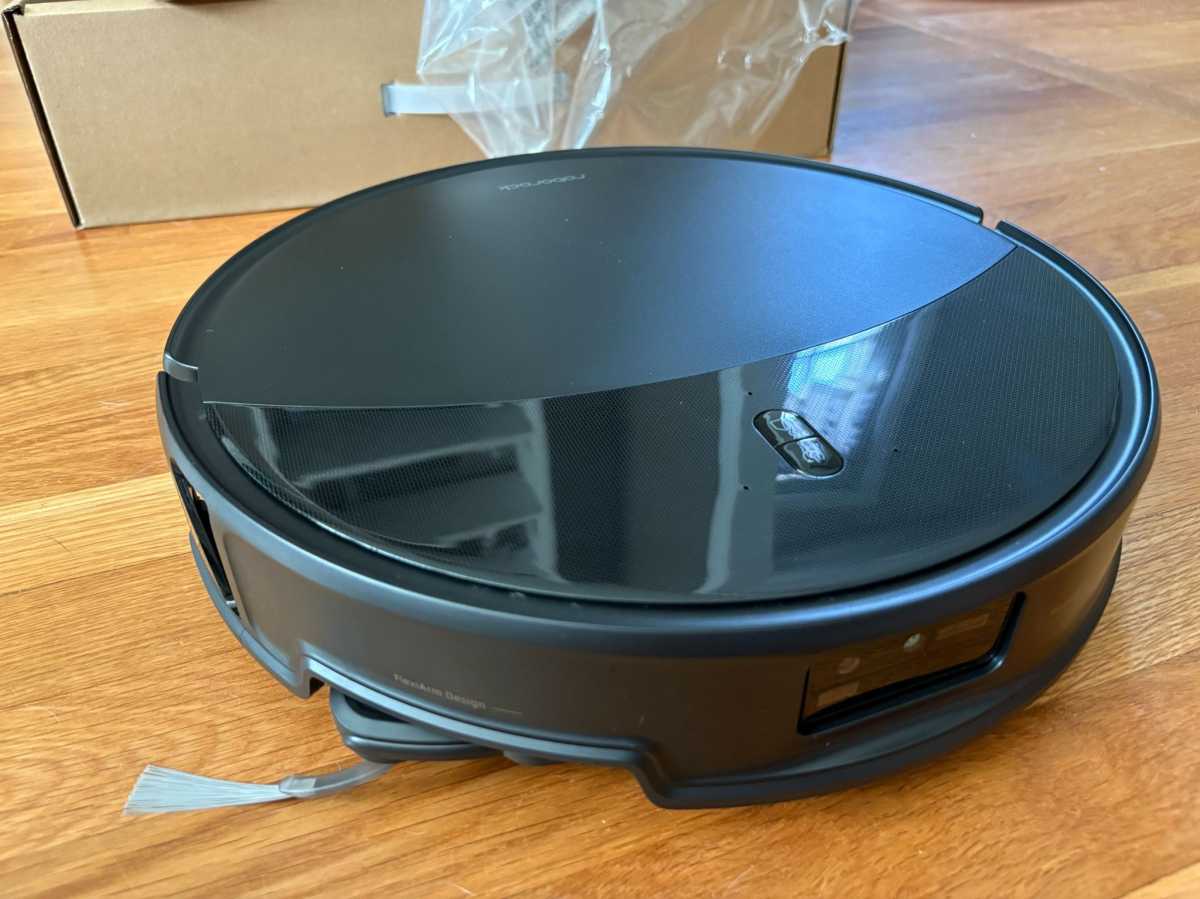
It’s not perfect, though.
I’ve got a side table in the office with a metal frame and the Saros 20 tried to climb over the metal part. I think it wrongly identified it as a floor ledge. It also bumped into a framed picture that was leaning against the wall, knocking it over. At one point, it grabbed hold of a loose charging cord left out on the floor. That one was mostly on me. The robot tells you (in a very stern-sounding voice) to clear loose objects before it starts a cleaning cycle, and I completely forgot about that.
Roborock Saros 20: Performance
Vacuuming is the highlight here—as it should be! In this price range, robot vacuums are supposed to vacuum and mop with minimal oversight or intervention from the humans they serve.
6,400mAh battery. 36,000 Pa of suction. The Saros 20 is in a different tier entirely as far as power goes. Budget robot vacuums, on the other hand, usually have a suction power of 2,000 to 5,000 Pa. They also tend to struggle with hair buildup because the brushes aren’t designed to handle it well. Not the Saros 20!
The Saros 20’s DuoDivide anti-tangle brush keeps hair from wrapping around it. I didn’t see much buildup after running it a few times. Most of the hair in my house comes from my greyhound. He doesn’t shed much, being a short-haired breed, but it does accumulate, especially if I haven’t vacuumed in a while.
A full cleaning downstairs took about 35 minutes. By full cleaning, I mean both vacuuming and mopping. The robot followed a consistent back-and-forth pattern, and it didn’t rush through it. It also finished with plenty of battery to spare.
Instead of immediately sucking it up, it left it sitting on the floor like a cat with a dead bird.
One funny thing happened during testing. It pulled a giant dust bunny out from somewhere under my furniture. But instead of sucking it up, it left it sitting on the floor like a cat with a dead bird. Once I nudged it directly into the robot’s path, it disappeared instantly.
As for the dual mop feature, spinning away at 200 RPM, it works. It’s not going to get all the nooks and crannies squeaky clean, but it’s fine at daily upkeep. That’s normal for models in this category anyway.
One thing I appreciated is that the robot automatically lifts its mop pads whenever it crosses over carpet, so I never worried about anything getting wet. It also pauses vacuuming when it detects wet floors.
I also conducted a “jelly test” in my kitchen. I left a streak of red jelly on the floor to see how it would handle something sticky.
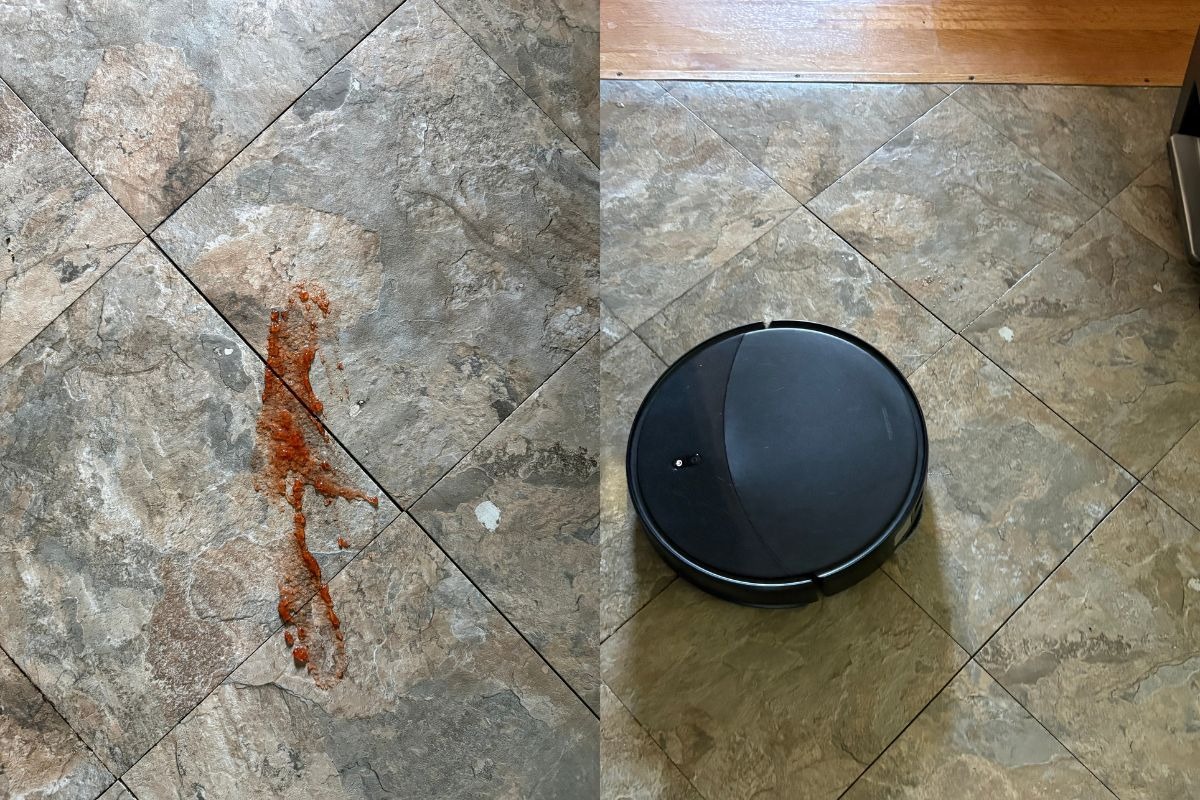
Honestly? The Saros 20 crushed it.
The mops cleaned up all the jelly in one pass, leaving no residue behind. I was expecting it to struggle more or leave behind some evidence, but it is a $1,599.99 robot vacuum and it sure acts like it.
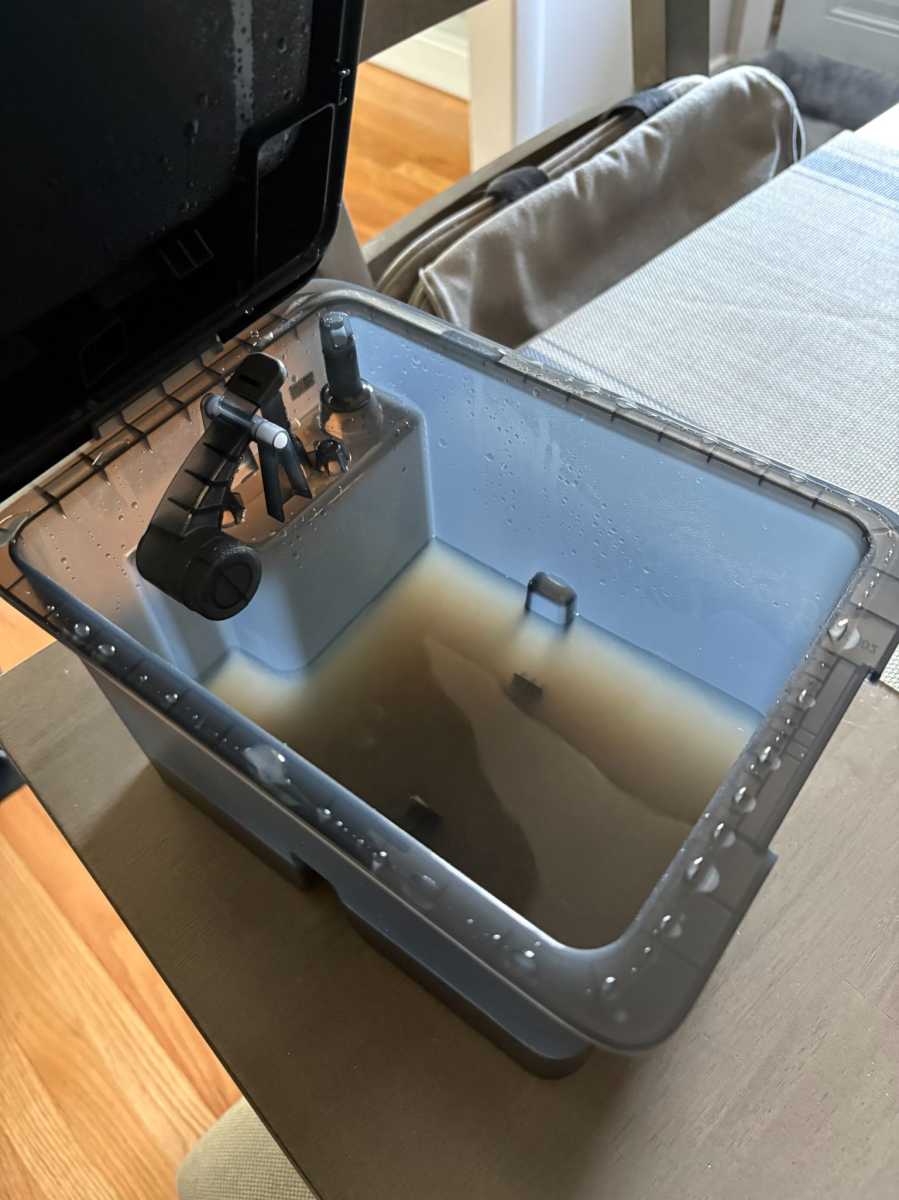
One thing that genuinely surprised me was the dirty water tank. After only a couple of mop washes, the water looked absolutely disgusting. Those mops do a pretty good job!
The biggest benefit wasn’t the cleaning itself, though. I found that I had more time to dedicate to other chores. While the robot was doing its thing upstairs, I finally got around to breaking down the mountain of cardboard boxes that had been sitting in my basement for weeks.
Should you buy the Roborock Saros 20?
The Roborock Saros 20 sits at the high end, both in performance and price. There’s no getting around it. It’s honestly overkill for my house size and my lifestyle. I’ve got no kids, just a dog and a husband. My space doesn’t get very dirty often.
Honestly, I didn’t hate using this vacuum. It cleans very well. The $1,599.99 price tag is just hard to ignore.
If you’ve got a larger home or money isn’t a concern, the Saros 20 makes sense. If you’d rather not drop that amount of cash (fair), I’d spring for the Roborock Q7 M5+, which is currently $299.99 on Amazon. It mops. It vacuums. It even comes with a self-emptying base station. The main trade-off I’m seeing here is the reduced suction power. It’s got a suction rating of 10,000 Pa, so it’s weaker than the Saros 20. If you don’t mind sacrificing a bit of performance for the price, then the Roborock Q7 M5+ is the way to go.