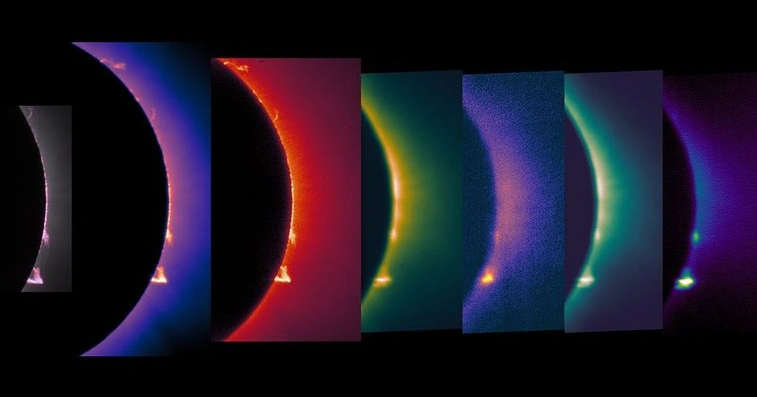
NASA / SwRI / William Ashfield
A total solar eclipse offers a rare chance to study solar phenomena that otherwise generally remain hidden from view. As eclipse-chasers enjoy the celestial spectacle from below, several scientific efforts are heading to the skies to intercept the Moon’s shadow during next week’s total solar eclipse.
The eclipse is the only total eclipse for 2026. The Moon’s shadow touches down at sunrise off the remote Arctic coast of Russia before curling around the North Pole, crossing Greenland and nicking Iceland on its passage across the North Atlantic. Final landfall crosses northern Spain before ending at sunset over Mallorca and the western Mediterranean.
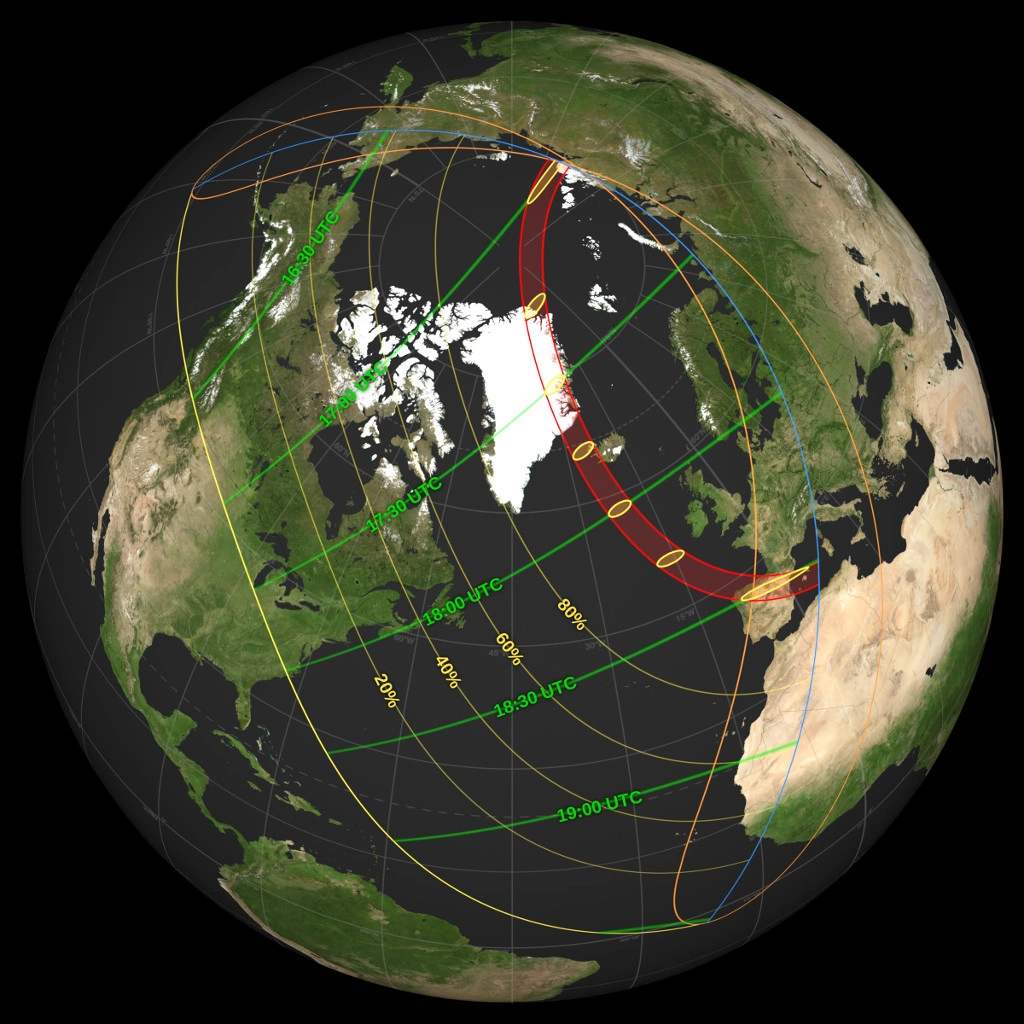
NASA / GSFC / Ernie Wright
Totality Science in History
Some of the most adventurous tales in science history revolve around eclipses. Astronomer Warren de la Rue (also observing from northern Spain, back in 1860) correctly determined that the Sun was the source of prominences seen during totality (see S&T‘s August 2026 issue). Observers discovered the element helium in the spectrum of the Sun’s chromosphere during an eclipse in 1868. And scientists in an expedition to Wyoming territory in 1878 hoped to spot the elusive planet Vulcan near the Sun during totality.
Magician and cinematographer Nevil Maskelyne also caught the first moving video sequence of totality during an eclipse on May 28, 1900, as seen from North Carolina. This eclipse was a member of saros series 126, the same family as the August 12th eclipse.
NASA’s Eclipse Science
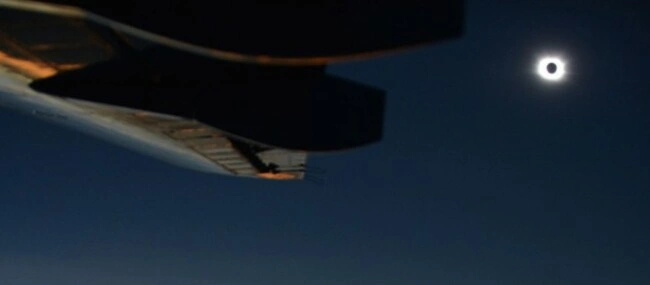
While many today seek out total solar eclipses for their sheer rarity and beauty, serious science can still be done during those fleeting moments of totality. NASA plans to lead the way on August 12th, flying one of its WB-57 Canberra aircraft (a converted military bomber) to chase the shadow of the Moon. The aircraft houses a unique set of four cameras in its nose that will capture 20 frames per second as they swivel to track the Sun. The instruments will help scientists study the solar corona and prominences at wavelengths from infrared through visible light.
The data will help scientists understand why the corona is super-heated to millions of degrees, when the visible surface closer to the Sun’s inferno is only thousands of degrees. The observations could also provide clues on the source of the solar wind, the particles that stream out from the Sun and through the solar system.
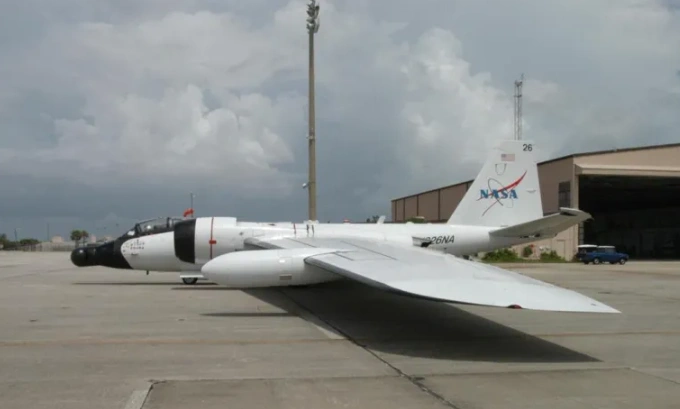
NASA
NASA’s WB-57 will meet the Moon’s shadow under cloudless skies at 50,000 feet over the North Atlantic west of Iceland, near the maximum point of totality. The shadow will be racing across Earth at over 2,100 mph, so the 460 mph flight will extend totality from 2 minutes, 18 seconds, to about 3 minutes duration. NASA has performed similar eclipse intercepts in 2017 and 2024.
“We are running another eclipse experiment with the WB-57s with the same instrument that we flew in 2024,” says Amir Caspi (Southwest Research Institute). “The instrument is the same, but we are implementing lessons learned from 2024 to better dial in the instrument settings, and the data will be processed much faster using the processing pipeline that was developed using the 2024 data.”
NASA teams are also planning balloon flights from Iceland and Spain on eclipse day. This is part of the NASA-supported initiative known as the Nationwide Ballooning Project. In Iceland, teams will release 80 balloons, starting 18 hours before totality and continuing through the duration of the eclipse. The data the balloon-lofted instruments collect will help the teams understand how the eclipse impacts the layer of the atmosphere that hugs the planet’s surface.
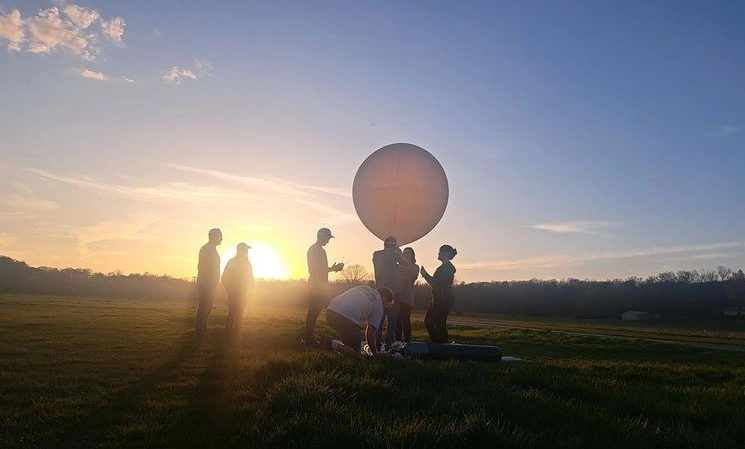
Sean Bailey / University of Kentucky
In Spain,similar teams plan to release six balloons to gather data on how the onset of totality impacts the ozone layer. Cameras on board that can have 360-degree fields of view should also capture dramatic views of the Moon’s approaching shadow.
Finally, NASA’s Liz MacDonald is leading an expedition to Iceland with a unique goal: spotting the aurora during totality. To be sure, it’s a long shot; several factors, including solar activity and space weather at Earth, would have to line up just right. Still, this could make for a unique observation if it comes to pass.
European Missions
The European Space Agency (ESA) has plans to conduct science campaigns during the eclipse as well. A joint ESA/Irish Air Corps C295 flight will chase the Moon’s shadow on August 12th. The instrument on board, employed by a team from ESA and the Dublin Institute for Advanced Studies, is a spare from ESA’s Proba 3 mission, which studies the Sun’s corona from space.
Irish Air Corps
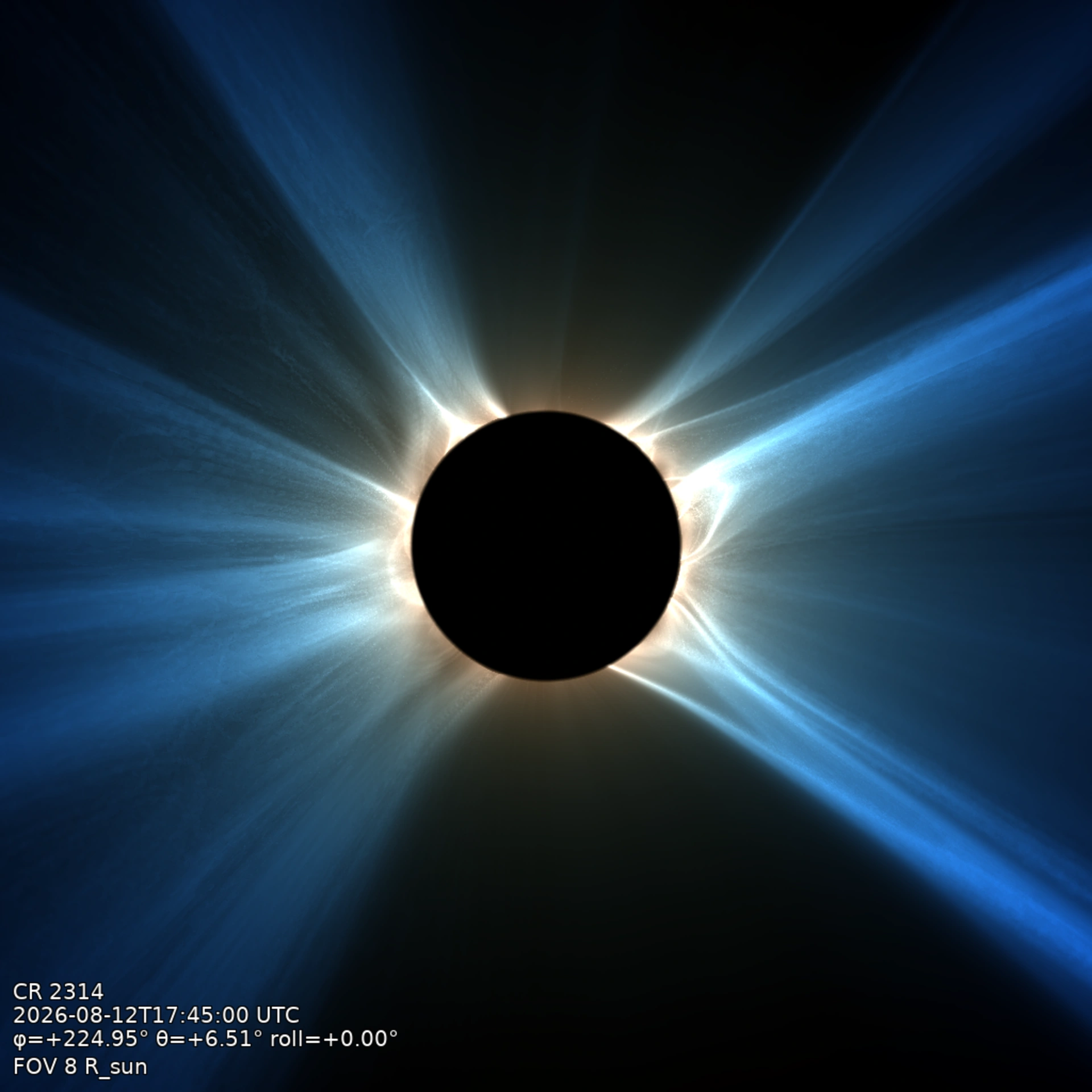
The Proba 3 mission is already performing a series of observation orbits to study the Sun in the days leading up to the eclipse. Launched in December 2024, Proba 3 is a unique orbiting observatory that uses two spacecraft flying in formation to make and observe artificial eclipses. Along with observations from ESA’s Solar Orbiter and the joint ESA/NASA Solar Heliospheric Observatory (SOHO), ESA plans to test a totality forecast — a “virtual totality” that predicts the state of the corona come eclipse day. The prediction and comparison observations could test current models of solar activity.
ESA
Finally, students from Portugal and Spain are planning to use the eclipse as a practice run for an experiment they’ll run next year, during the longer totality on August 2, 2027. They aim to replicate the famous Eddington experiment, measuring the effect of the Sun’s gravity in bending starlight.
It’s great to see eclipse science alive and well, even in 2026.