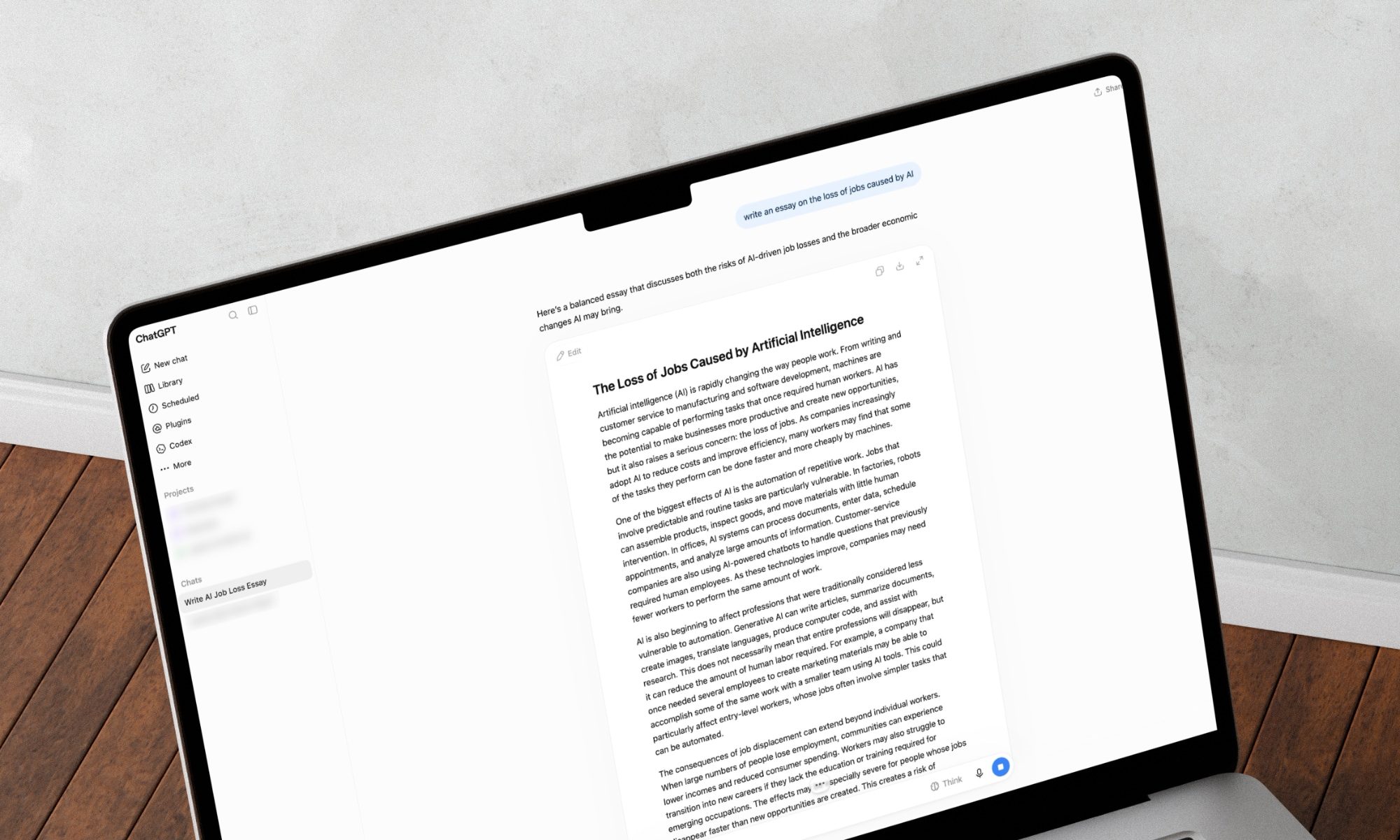
Last year, teachers spent most of their energy trying to catch students using ChatGPT to write essays. This year, many have decided that’s a losing battle, especially since the detectors meant to catch cheaters have been burning innocent students instead.
A Bloomberg investigation found popular tools like GPTZero and Copyleaks wrongly flagged pre-ChatGPT college essays as AI-written, and one UC Davis senior was accused of cheating and handed a zero on his midterm, purely based on a detector’s score, even though he wrote every word himself.
As The Washington Post reports, Rachael Zeleny, who runs the writing program at the University of Baltimore, used to lean on a tracking app called Brisk that recorded every edit a student made in Google Docs. It worked, but she knew it wasn’t a real fix. “This is a Band-Aid, this isn’t a solution,” she told her instructors last year.
So what are teachers doing differently now?
Instead of grading a single polished essay, Zeleny’s students now turn in the messier parts of the process: handwritten outlines, video reflections on their work, and even transcripts of conversations they had with a chatbot. She also built AI characters through a platform called BoodleBox that argue with students in mock scenarios, like a heated school board meeting over banning books, to test how well they can build an argument on the spot.
Other educators are having a similar change of heart. Andrew Zeiser, who teaches supply chain management at John Carroll University, said the real worry isn’t whether students are using AI anymore. It’s whether they’re learning anything at all. His students now play a decision-making simulation game and then explain the reasoning behind their choices afterward, something a chatbot can’t easily fake.
Are schools and AI companies on the same page?
New York City and the Los Angeles Unified School District both rolled out temporary bans on generative AI just last week. Meanwhile, companies like OpenAI, Anthropic, and Google are handing out free classroom access to hook students and teachers early.
There’s an even bigger headache brewing too. Some AI tools can now act as agents, logging into a school’s learning portal and completing an entire test on a student’s behalf. Teachers barely have detection software figured out, and the next wave of AI is already knocking.