Rentosertib, a drug Insilico Medicine designed almost entirely using AI, was created to treat idiopathic pulmonary fibrosis, a disease that scars and stiffens the lungs over time. But fighting lung disease was only half the plan from the start.
According to a new study published in Nature Biotechnology, the drug’s target was chosen specifically because it overlaps heavily with the biology of aging, and the whole trial was designed to test whether treating the lungs could also mean turning back the body’s biological clock.
Researchers ran the drug through a 12-week phase 2a trial with 42 patients split across three doses and a placebo group. Alongside tracking lung function, the team was also checking whether the drug was quietly changing how fast these patients were biologically aging.
How do you even measure biological age from a blood sample?
Scientists used something called proteomic aging clocks. Instead of looking at your birth certificate, these tools study the proteins floating around in your blood and estimate how “old” your body actually behaves. The team ran six different clock models on the same blood samples, and all six agreed on one thing: patients taking rentosertib showed a drop in biological age compared to the placebo group.
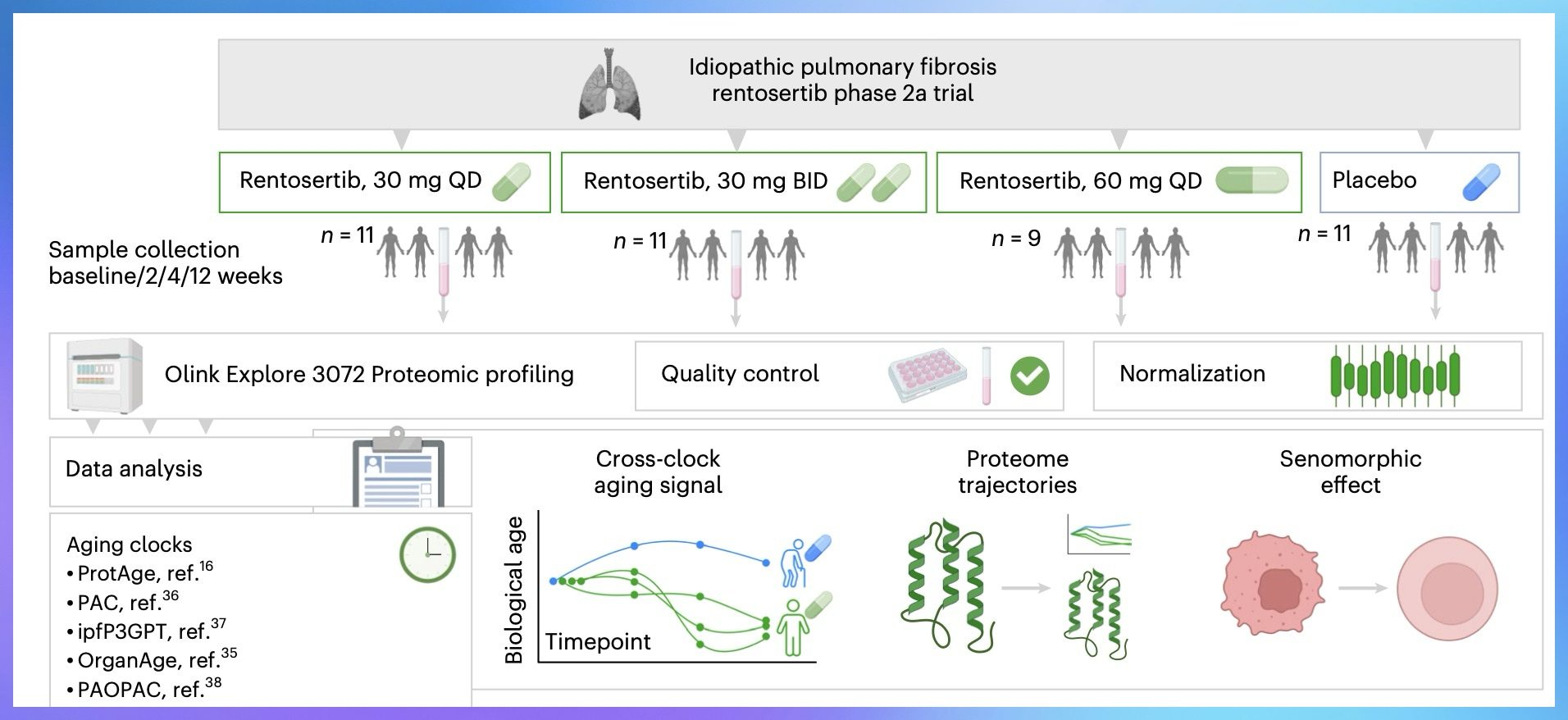
Interestingly, the effect was strongest at the lower 30mg dose taken twice a day rather than a single larger 60mg dose, even though both add up to the same amount of drug per day. Something about splitting the dose seems to matter.
Is this really an anti-aging effect, or just the drug doing its job?
That’s the tricky part. Since rentosertib is built to fight fibrosis, it’s hard to say if the biological age drop is a genuine aging reversal or simply a byproduct of patients getting healthier lungs.
To dig deeper, researchers compared the protein changes to aging patterns from over 55,000 people in the UK Biobank. The twice-daily 30mg group showed a real reversal of normal age-related protein changes, something the once-daily 60mg group didn’t show at all, despite that group posting the best lung function results in the original trial.
Nothing here confirms rentosertib as an anti-aging drug just yet, and even the researchers say more direct testing is needed before anyone can call this a proven geroprotective effect. But it’s an early sign that building a drug around aging biology from the ground up, rather than treating it as an afterthought, might actually be a smarter way to develop treatments going forward.