If you’re thinking about getting the cheapest Mac mini and adding an aftermarket SSD later, I’ve got bad news.
Apple’s new M6 and M5 Pro Mac minis solder their storage drives back onto the logic board, effectively killing that workaround. Furthermore, the base 256GB model now runs noticeably slower than its more expensive siblings.
Is Mac mini storage really non-upgradeable again?
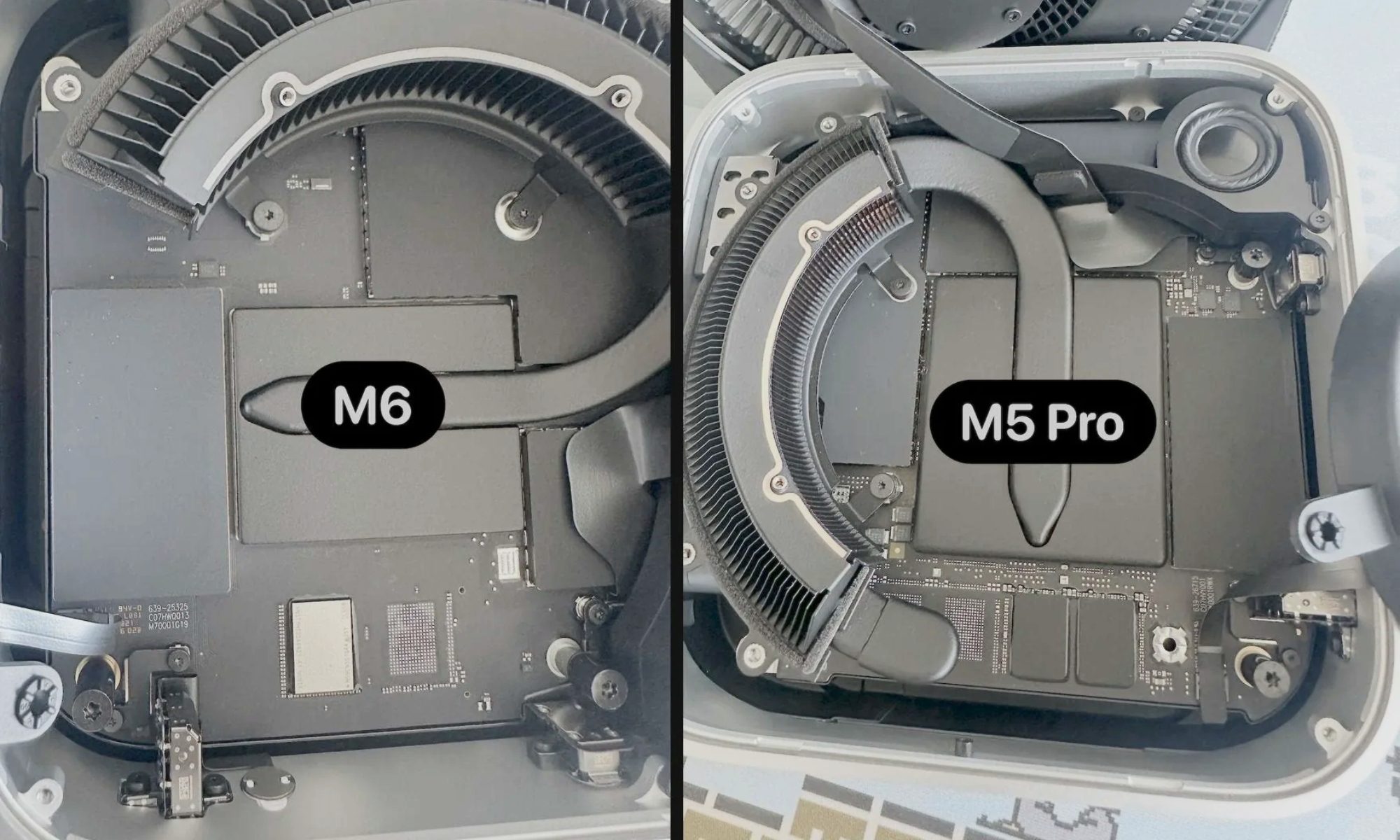
Unfortunately, yes. Teardown specialists at Expand Mac Mini confirmed it. They cracked open the new M6 or M5 Pro mini and found the NAND chip was soldered to the logic board. No slot, nothing to swap whatsoever (via MacRumors).
That essentially reverses Apple’s approach to the M4 and M4 Pro Mac minis. They used a pop-out module anyone could cheaply upgrade. It let buyers grab Apple’s cheapest 256GB config and upgrade later for hundreds less than the storage upgrade markup. However, that’s nowhere to be found on the latest models.
To put it bluntly, the company has backed away from one of the most loved, consumer-friendly aspects of its portable machines.
Soldered storage means the NAND memory chip is permanently attached to the logic board. So, what you buy on day one is what you’re stuck with forever. This has been Apple’s default for most Mac mini models, from the M1 to the M3.
Doesn’t the soldered storage work just as fine?
This stings more because the company briefly gave us a ray of hope. However, as it turns out, the M4 and the M4 Pro Mac minis were a one-off exception.
As if that wasn’t enough, there’s a second catch in the M6 Mac mini’s base model. Benchmarks from AAPL Ch. show the 256GB variant now runs a single NAND chip (instead of two). This results in half the read speed compared to the 512GB model (roughly 3,217 MB/s versus 6,371 MB/s on the 512GB M6 Mac mini).
While the read speed is still faster than that on the M4 Mac mini, most people might not notice the difference either way. Those who do will never stop wondering why they paid extra for less storage and slower speeds in the first place.