As fall sets in, households that don’t have central air are turning their heating back on for the first time in months, only to find that one or two radiators aren’t warming up properly.
Reaching for a radiator key the moment a panel feels chilly, however, could be a completely wasted effort. Heating expert at U.K. Radiators Rob Nezard warns that a cold radiator doesn’t automatically mean you have trapped air, and performing the wrong fix won’t solve the real underlying issue.
“Early fall is a sensible time to test your heating rather than waiting until the first really cold week,” says Nezard. “Turn the heating on and give the system enough time to warm up. Then carefully check each radiator for uneven temperatures and listen for any unusual gurgling.”
Latest Videos FromTom’s Guide
Here is how to diagnose your cold radiator in seconds using a simple touch test, plus six common bleeding mistakes to avoid this season.
Check where the radiator is cold first
Before touching any valves, turn your heating on and gently run your hands over the surface of the problem radiator. Where the cold air is trapped reveals everything.
Cold at the top? Bleeding will help. “The classic sign that a radiator needs bleeding is when the bottom is getting warm but the top remains noticeably colder,” explains Nezard. “You might also hear gurgling, clunking or groaning noises when the heating comes on.
These can be signs that air has become trapped inside the radiator. Bleeding releases that trapped air and allows the hot water to circulate more effectively.”

Cold at the bottom? Do not bleed it. If you feel the opposite, air is not your issue and opening the bleed valve will solve nothing.
“If the radiator is hot at the top but cold towards the bottom, don’t automatically bleed it,” Nezard warns. “Cold patches at the bottom can be associated with a build-up of sludge or debris inside the radiator. That’s a different problem and repeatedly bleeding the radiator isn’t going to remove sludge.”
If sludge build-up or brown liquid is escaping your radiator, the system will likely need a professional flush rather than a simple bleed.
Radiator bleeding mistakes to avoid
If your diagnostic test confirms that air is trapped at the top of your radiator, proceed with caution. Nezard highlights six critical mistakes households regularly make when trying to fix their heating:
1. Bleeding radiators while they’re hot

“Never start bleeding a radiator you’ve just had running at full temperature,” cautions Nezard. “Switch the heating off and let the radiator cool completely first. You don’t want hot water escaping when you open the valve.”
2. Assuming every cold radiator needs bleeding

“Where the radiator is cold matters,” Nezard reiterates. “Cold at the top can suggest trapped air. Cold at the bottom can point towards sludge. If the whole radiator isn’t heating, you could be looking at a different issue entirely — like a stuck valve or balancing problem. Bleeding isn’t a universal fix for a radiator that won’t get warm.”
3. Opening the bleed valve too far

You do not need to unscrew the entire valve mechanism to release trapped air. “You don’t need to completely open the valve,” says Nezard. “A quarter to half turn should be enough to allow trapped air to escape. You’ll usually hear a hissing noise. Once that stops and water begins to appear, close the valve again.”
4. Forgetting a towel and catch bucket

“It sounds obvious, but have a towel and small container ready before you touch the valve,” advises Nezard. “Once the air has escaped, water follows, and that’s not the point at which you want to start searching the house for an old towel.”
5. Forgetting to check boiler pressure afterwards
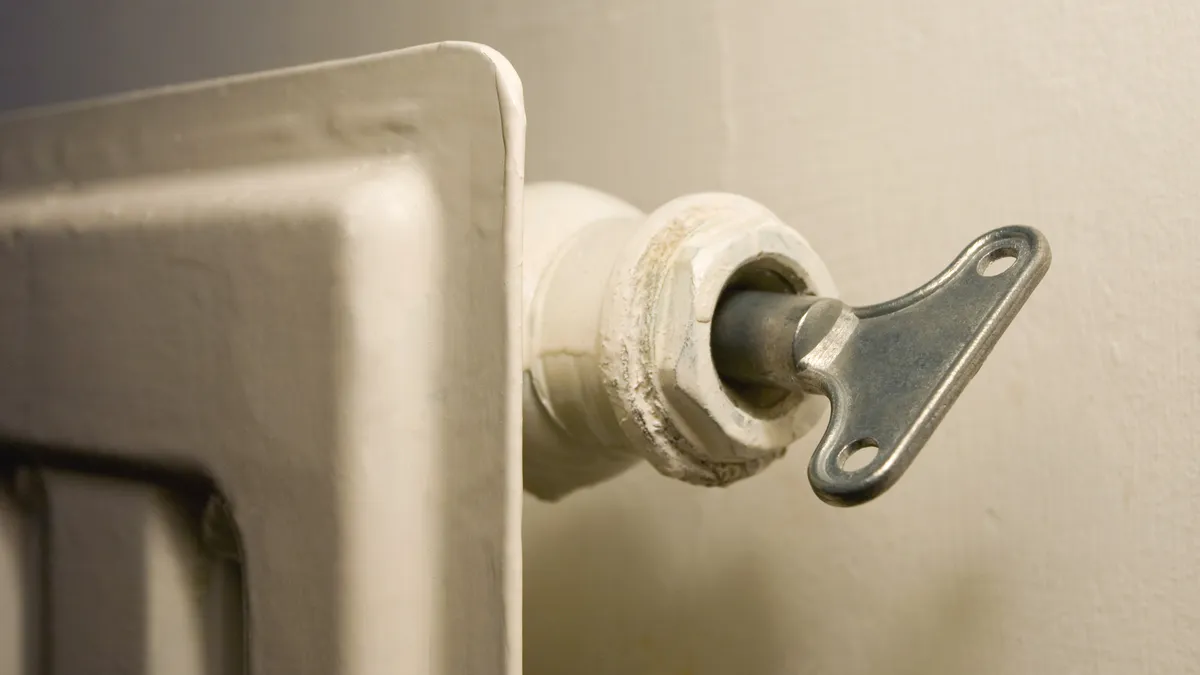
Bleeding releases both air and water from inside your heating pipes, which inevitably drops the pressure in sealed systems.
“Once you’ve finished, check your heating system’s pressure and compare it with the manufacturer’s recommended level,” says Nezard. “Bleeding releases air and some water from the system, so on a pressurised system you may need to top the pressure back up afterwards.
Don’t simply keep adding pressure without understanding why it is dropping, though.”
6: Repeatedly bleeding the same radiator

“If you’re constantly having to bleed the same radiator, don’t just make it part of your weekly routine,” Nezard points out. “Likewise, if you’ve bled it correctly and it’s still cold, don’t keep opening the valve hoping it’ll eventually work.
Persistent problems can indicate something else is going on within the heating system and may need further investigation.”

Follow Tom’s Guide on Google News and add us as a preferred source to get our up-to-date news, analysis, and reviews in your feeds. Make sure to click the Follow button!