Treating a heart infection is no walk in the park. Patients often spend weeks on IV antibiotics, and if that fails, open-heart surgery enters the picture. Johns Hopkins University engineers may have found a better way.
The team has developed magnetic “millirobots” that are about as wide as a pencil tip and roughly as long as a grain of rice. As detailed in their study published in Advanced Materials Technologies, the robots are designed to deliver medicine directly to infected heart tissue.
What’s wrong with current heart infection treatments?
Endocarditis is an infection of the heart tissue that about 50,000 Americans get each year. The usual treatment is several weeks of IV antibiotics, but the drugs get watered down on their way to the heart and often fail. Doctors must then raise the dose and risk toxic side effects or turn to risky open-heart surgery.
How do these tiny robots work?
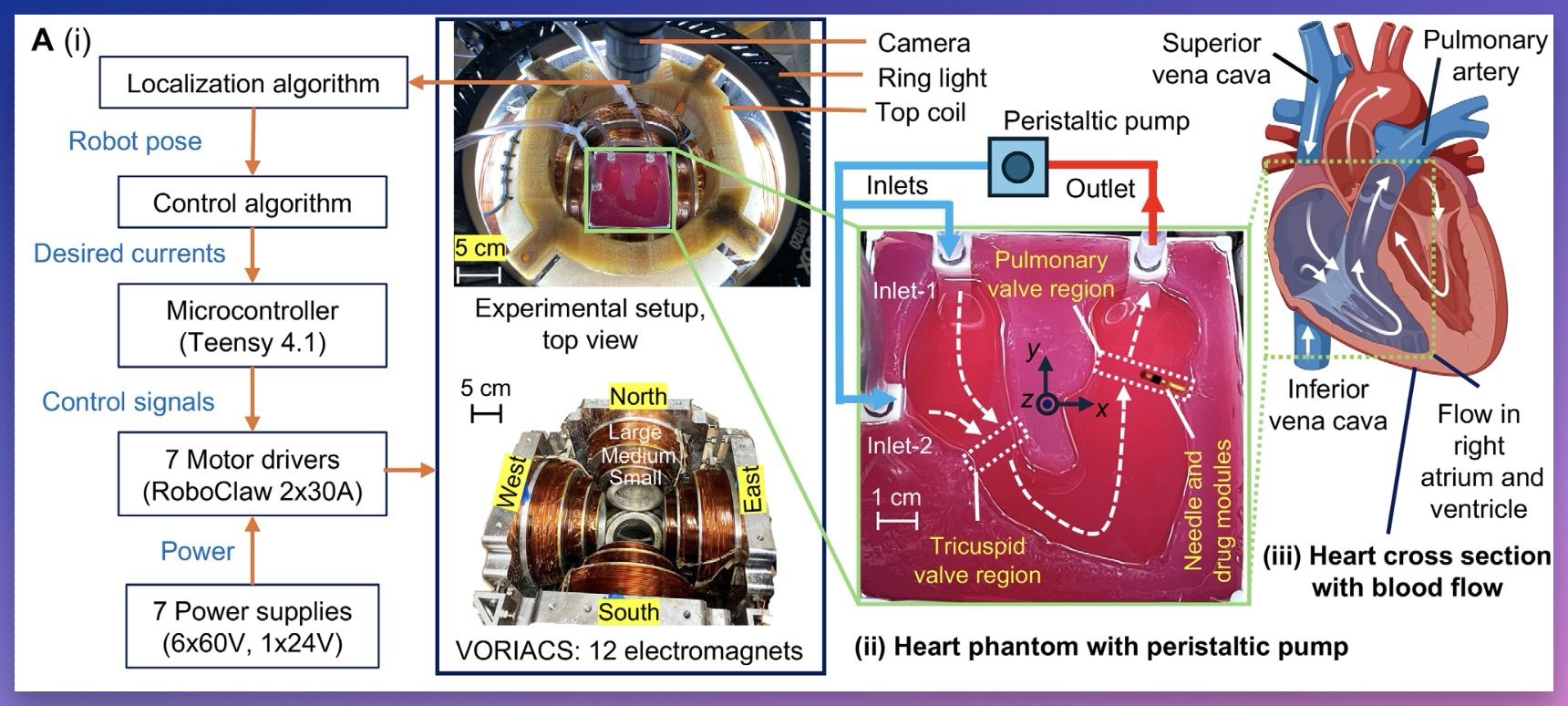
The robots work as a tag team. The first one, called the needle module, grips the heart tissue near the infection and stays put as a parking spot for its partner. The second one, the drug module, carries the antibiotics, snaps onto the needle using magnets, and gradually releases them at the infection site.
Since the needle stays anchored, doctors can swap in a fresh drug module for repeat doses. Neither robot carries a battery or motor. Instead, a set of electromagnetic coils placed outside the body steers them wirelessly using magnetic fields similar to the ones in an MRI machine.
“With just a little pinprick, you insert a micro robot and do a procedure without infection or blood loss,” said senior author Axel Krieger.
The robots have already navigated heart models that mimic a human heart, even against simulated blood flow, and were tested on pig heart tissue. If everything works as planned, first author Anuruddha Bhattacharjee says a procedure could take about 10 minutes, or around an hour for a couple of rounds, turning four to six weeks of treatment into a day or less.
Next, the team plans to test the robots in phantom hearts that beat and contract like the real thing. The same tech could one day help deliver cancer drugs too.
RELATED COVERAGE: