Forewarned is forearmed, after all.
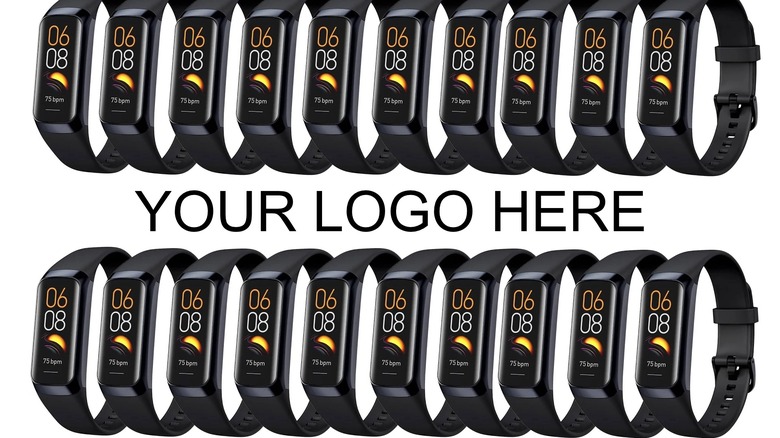
A few weeks ago, the Engadget team was swapping war stories about covering tech in the face of an ever-growing glut of white label devices. Tech, pumped out by a single factory, then sold on to others who put their name on it to sell. They’re often attached to a Zombie Brand, as it’s an easy way to sell mediocre tech to an unsuspecting public. That’s not to say white label tech is bad per se, but it helps to know what you’re buying before you hand your money over. So I’ve sketched out this brief spotter’s guide to make sure you’re not going to get duped.
White labels 101
Device manufacturing is the province of a small cluster of Asian factories. Very few companies actually make their own hardware. Even those with a long history of designing and building products outsource the actual work this way. White label manufacturing is a legitimate practice, and even big names will add their brand to gear made by their ostensible rivals. Take Sony, which put its name on Samsung and LG-made panels years before it sold its TV business to TCL.
But there are also plenty of generic, sometimes copycat devices, stamped out by an Original Device Manufacturer (ODM). In one example, Engadget’s camera guru Steve Dent found the exact same gimbal camera available under three different names. Ordro’s UHD-M5, AgfaPhoto Realimove MC3X and Minolta Showtime MN5KG100 even have identical pictures on their Amazon listings. And it’s not just camera gear that is rife with products like this.
I was examining the broader smart ring market and found a whole heap of branded rings which could be traced back to a single ODM, J-Style. On its website, J-Style says it offers a rapid white label service for its rings, including custom packaging and logo placement. And it appears the rings offered by Fittr, Qalo and Insix all use the same J-Style X1 under different names. On a similar note, the Reebok/F50 smart ring, which is sold by The Original Fit Factory, looks awfully similar to J-Style’s X6 ring.
How to spot a white label
You already know the easiest and smartest thing to do before buying any product is look it up on the internet. I’d advise skipping the AI overview in favor of actual reviews both from sites like this one, and on social media platforms like Reddit. If something’s not very good, or comes from a brand with a less than stellar reputation, it’s going to be hard to keep that fact quiet for long. If there are no reviews beyond customer recommendations on the product page, it’s a sign the company is looking to avoid the scrutiny that comes from being independently reviewed.
Brand
The biggest names in the technology industry have taken a lot of time and effort to build trust with the public. If the name is particularly weighty, the less likely they are to risk it with a low-effort product produced by an unnamed third party. Oftentimes, it’s the medium-sized company that’s happier to license the brand to third parties for products outside their usual domain.
A good example here is Reebok, a company known for making footwear and apparel and apparel-related things. But you can also buy Reebok-branded exercise equipment (RFE International), Reebok-branded eyewear (Mondottica), a Reebok-branded smart ring (The Original Fit Factory), Reebok-branded smart glasses (by Lucyd) and a Reebok-branded smartwatch (CE Brands/Vitalist).
Similarly, a formerly notable tech giant like Motorola, which is now Lenovo’s mobile brand, is happy to license its name. The company ceased making its own wearables nearly a decade ago, and its watches since then were made by licensees. This can wind up backfiring and hurting the brand if the product sold under the name isn’t very good. I can only speak to my time with the 2026 Moto Watch (also by CE Brands/Vitalist).
At the bottom of the pile are the Zombie Brands, names from a few years back which have been picked up for pennies at a bankruptcy auction. These are snapped up by various ODMs or their partners for a memorable name to slap on an otherwise cheap product. One of the most notable must be Kodak, which has had its brand sliced and shared out among so many companies it’s hard to keep track.
Track record and the pitch
A crucial benefit of the white label process, for both new companies and zombie brands, is that it’s an easy way to enter a new market. If you’re a company looking to enter the gadget space, harnessing an ODM is a quick and easy way to do so without a lot of risk. At least, not to them, since most of the risk is taken on by the consumer parting with cash for the product.
That’s a useful tell for wary customers, since if your local bakery suddenly starts selling smart glasses, you can probably guess they didn’t make it. If a company enters a space it’s had no experience in, and they don’t spend a lot of time talking about the product, it’s a white label. Sure, it’s not unheard of that an analog company would enter the tech space, but they’ll also be more than willing to spend hours talking about it.
In fact, that’s true for most tech companies, since they sure love to talk about the process which led to the product’s creation. Even for the most mundane devices, they’ll wheel a designer out to wax lyrical about the improvements they’ve made to the product.
Amazon
If you’re worried the gadget you’re looking to buy could be from a white label, it’s often good to look on Amazon. As part of the whole “low cost, low effort” nature of these devices, you’ll often find the same device sold under multiple names by multiple brands. Often, they’ll be marketed using the same set of images supplied by the ODM, resulting in a scroll of products which all look the same. Or it’s the same initial render with the odd tweak, because one company has their own pricey Photoshop subscription.
For instance, let’s take a look at the low-end fitness tracker market where Xiaomi’s various bands reign supreme. Scroll past the name brand options, however, and you’ll soon find a series of listings that look very similar indeed. YJYK, Nhemeylp, Spurkey, Moremore and Flywin all use the same promotional image of their fitness trackers. The only difference is the use of a slightly different watch face, some better edited onto the render than others.
Second, of course, is the fact the specs aren’t just very similar, they’re identical to one another. All of them are fitness trackers with 1.1-inch AMOLED touchscreens, 25 sport modes and the same sensor functions. An even bigger tell is that they all use the same Keep Health companion app, no matter which company is selling them. Which, if nothing else, means you can look at all of the various listings and pick up the cheapest one knowing the product will be the same.
Caveat emptor
Again, this isn’t to denounce any and all white label gadgets as inherently bad, or not worth your time. It’s more that, as everything gets pricier, those suspiciously-cheap devices on the second and third pages of your Amazon search can look a lot more tempting. We’ve all been bitten by those temptations, and normally the only thing we’ve lost is the time it takes to request a refund. But if you can avoid that issue, surely you’d do so anyway.