Upon announcing Project Suncatcher a year ago, Google said it was planning for the mid-2030s, when launch costs are projected to drop to as little as $200 per kg. The only rocket likely capable of reaching those costs during the next decade is SpaceX’s Starship vehicle, but in recent months it has become clear that SpaceX will prioritize its own payloads (including Starmind data centers) on Starship. For Google to reach its target price of $200 per kg, it would likely require a fully optimized Starship V4 (the company is currently flying a V3 Starship) that reaches a lift capacity of approximately 200 metric tons to orbit.
SpaceX has powerful incentives to prioritize its own orbital computing infrastructure, potentially leaving Google dependent on whatever Starship capacity and pricing SpaceX is willing to offer outside customers. So how does Google plan to reach orbit in the 2030s?
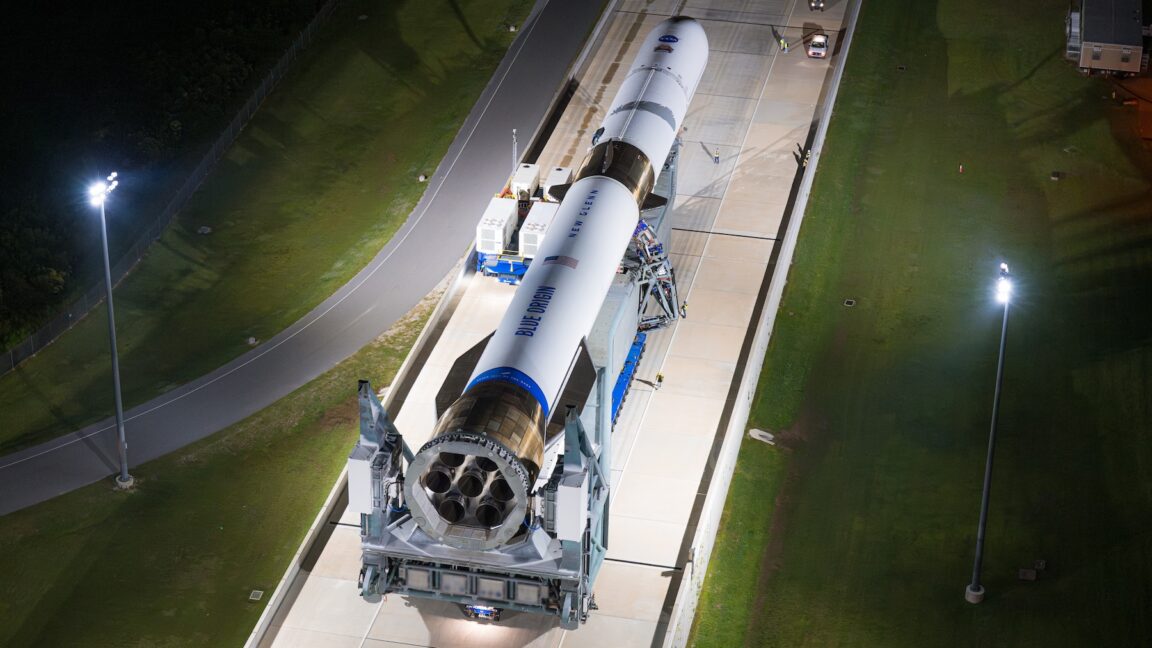
Perhaps this explains the new partnership with Blue Origin, which presently covers a single launch but could grow to more. By the 2030s Blue Origin should be flying the larger 9×4 variant of its New Glenn rocket, but this vehicle will probably face a significant cost disadvantage against a fully reusable, high-cadence Starship. And Blue Origin is planning its own orbital data center constellation, Project Sunrise. So again, Google could be stuck subsidizing a competitor while paying higher launch costs.
Can anyone else do this?
Perhaps another company, such as Rocket Lab, Relativity Space, or Stoke Space, will have a larger rocket by then.
But developing a super-heavy-lift rocket requires enormous capital. SpaceX has spent more than $15 billion developing Starship, according to its 2026 securities filings, and Blue Origin has likewise invested billions in developing New Glenn. In terms of time, both companies have put more than a decade of work into their large vehicles. For now, all of these other US launch companies are working through the growing pains of developing medium-lift vehicles.
At this point, Google has some not-great options. It can hope that one of the newer US launch companies steps up for commercial satellite operators and decides not to pursue its own constellation. It could buy one of those newer launch companies. Or Google could hire some rocket scientists to start developing powerful rocket engines and begin chasing SpaceX and Blue Origin in launch—both of which have a 25-year head start.