Key specs
Type: Full-frame prime lens
Focal length: 50mm
Maximum aperture: f/1.4
Lens mount: Sony FE
Weight: 28 oz / 800 g
Dimensions: 3.33 x 4.37-in / 84.5 x 111 mm
Filter thread: 77mm
Release date: October 2025
We all know that prime lenses are the best option for capturing the night sky, and depending on how you’re composing your shots, 50mm, 35mm, 20mm and wider options are available for full-frame cameras.
Pair this lens up with one of the best Sony cameras, and you could potentially have a great budget yet professional combination for less wide-angle astrophotography.
Sure, it’s not as premium as the Sony FE 50mm f/1.4 GM, but the Sony lens costs a whopping, almost, three times as much as the Viltrox lens, but there’s no way it’s three times as good. In fact, the Viltrox 50mm is an impressive lens, whichever subjects you’re shooting.
This lens costs a highly reasonable $549 / £525, which is a fantastic price for a 50mm f/1.4. It’s not the least expensive option, and you could save more by opting for a 50mm f/1.8 lens, but when you factor in the great build and the impressive image quality of the Viltrox, it is definitely worth considering.
The Viltrox 50mm f/1.4 is part of Viltrox’s Pro range, which sits just below the flagship LAB range, which includes the impressive Viltrox AF 35mm f/1.2 LAB FE.
Viltrox AF 50mm f/1.4 Pro FE lens review
Viltrox AF 50mm f/1.4 Pro FE: Design
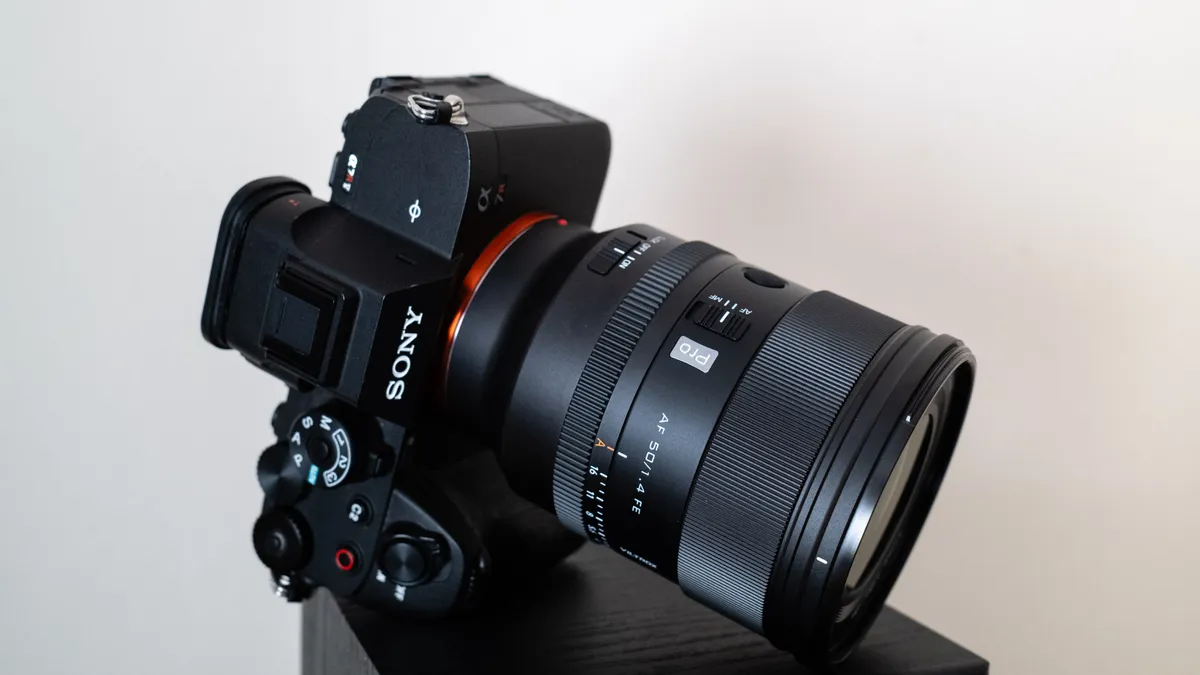
- Solid build quality
- Manual aperture ring
- Wide metal focusing ring
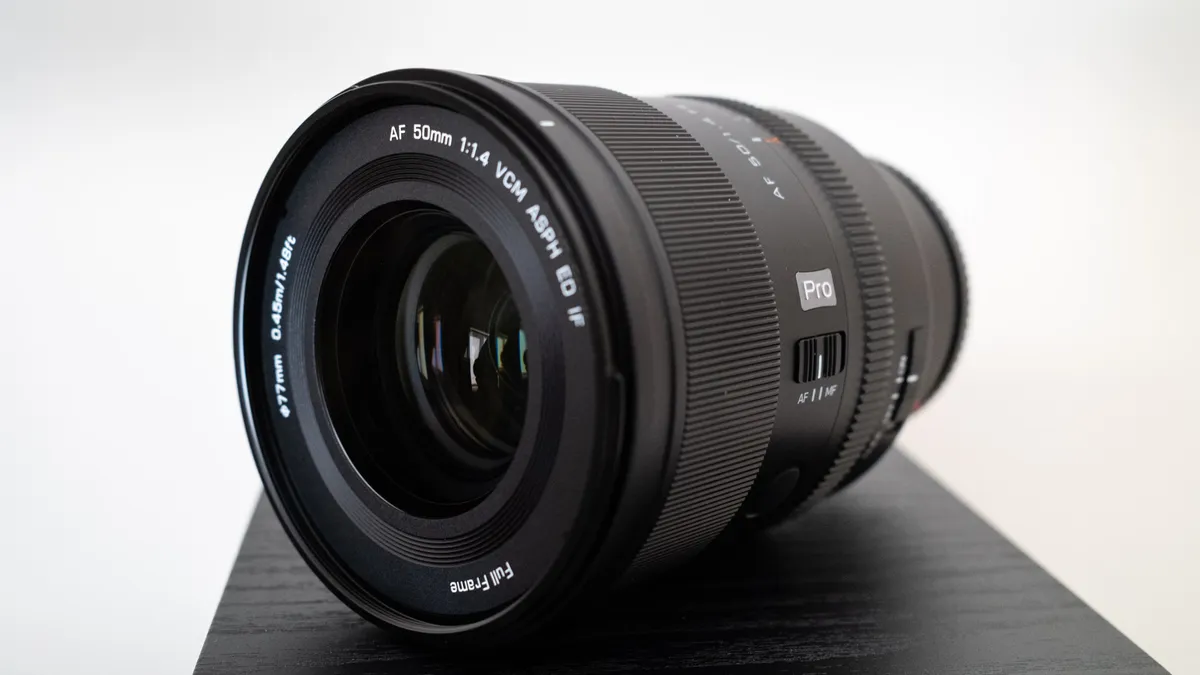
Viltrox lenses have a handful of things in common: excellent build quality and being surprisingly heavy are a couple of these. The lens itself isn’t huge and comes in at roughly the size of most 50mm f/1.4 lenses at 3.33 x 4.37-in / 84.5 x 111mm, but it weighs a colossal 28 oz / 800 g.
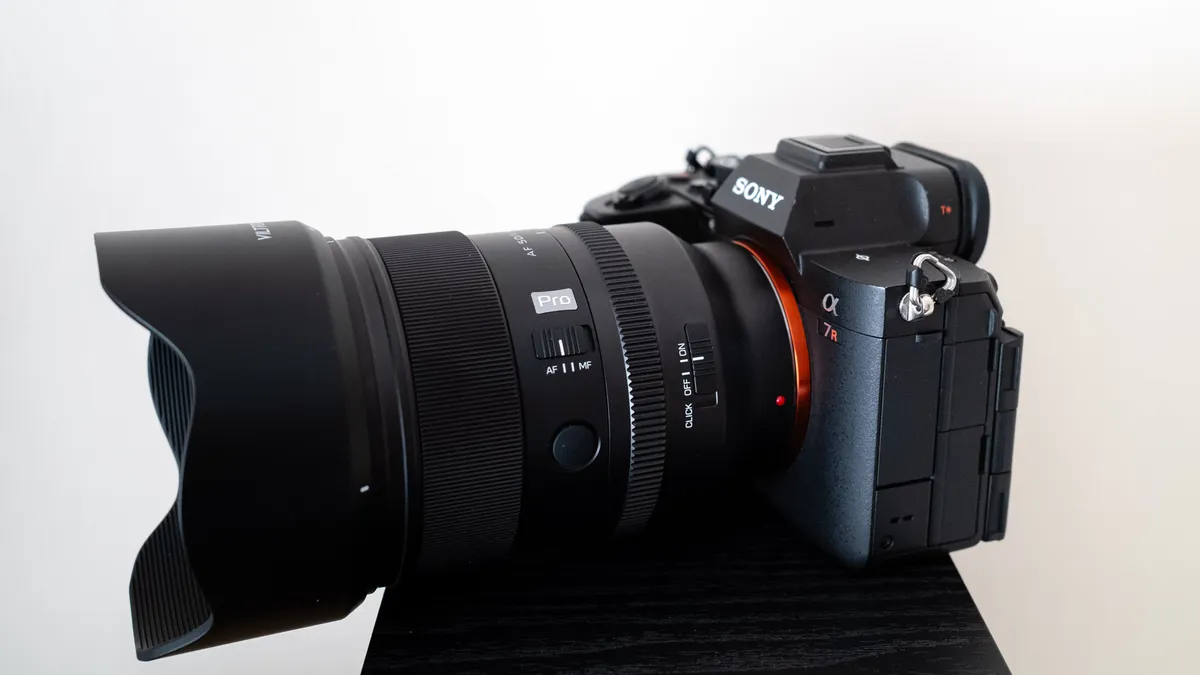
To be fair, it balances well with Sony full-frame cameras but is considerably heavier than the Sony FE 50mm f/1.4 GM, which weighs in at a more moderate 18.2 oz / 516 g.
The Viltrox does, however, sport an all-metal and weather-sealed construction, which includes the comfortably wide metal manual focusing ring; something you’d no doubt get plenty of use out of when shooting the night sky.
Then there’s the metal manual aperture ring that can be set to clicked or clickless operation, an AF/MF switch and a programmable Fn button. Weather sealing is great for cold nights out, but that hefty weight isn’t ideal if you have to trek to locations with a variety of lenses in your kit bag.
Image 1 of 4
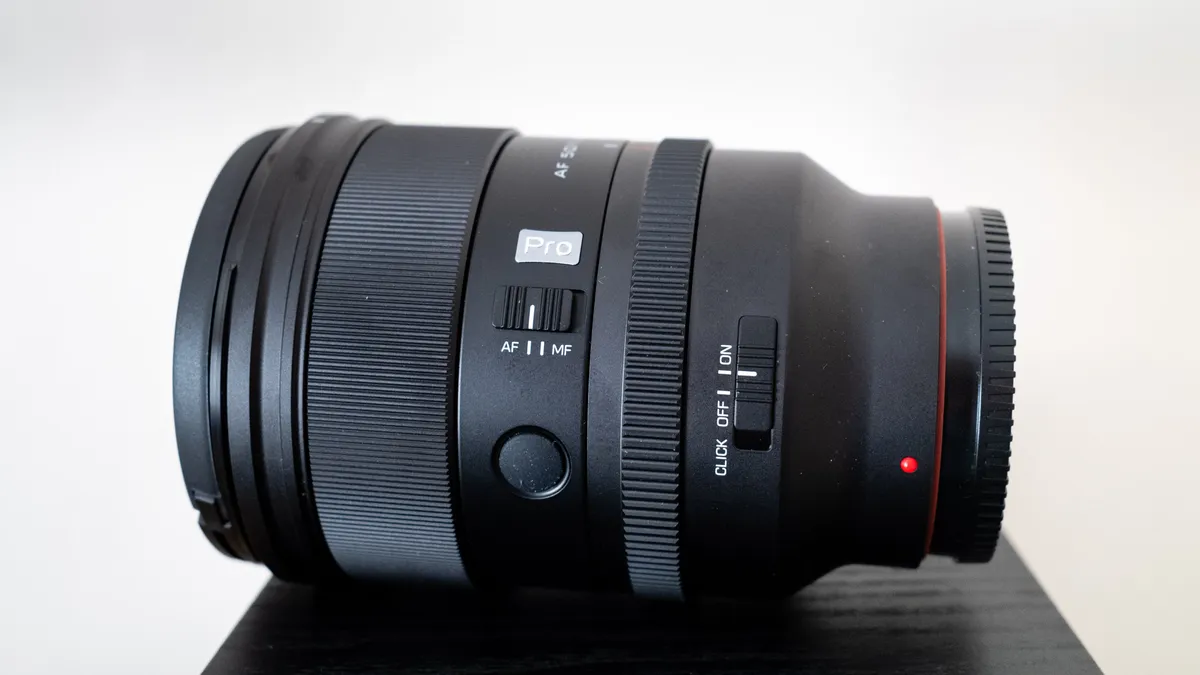


The lens is made up of 15 elements in 11 groups. This includes one ultra-precision aspherical element, three extra-low dispersion (ED) elements and eight high refractive elements. The front element also features a water and stain-resistant coating, which is useful when working in dark and sometimes cold and damp conditions.
The aperture is made up of 11 diaphragm blades, which produce a pleasing bokeh effect (background blur). The minimum focusing distance is 17.7-in / 45 cm, and the filter thread size is 77mm.
While there aren’t a huge number of filters available for astrophotography, the 77mm filter thread is a standard size if you happen to use color correction filters to remove the orange glow of artificial lighting, or star filters to add a glow to stars. These types of filters are available in both the circular screw-in type and square filters.
Viltrox AF 50mm f/1.4 Pro FE: Performance
- Fantastic image quality
- Vignetting wide open
- The sweet spot is f/8
The Viltrox AF 50mm f/1.4 Pro FE is a fantastic lens, following what you’d expect from a fast prime lens in terms of sharpness, distortion and overall image quality.
For astrophotography, it’s what happens as the wider end of the aperture range that’s most important, which we’ll cover, but it’s also important to look at the lens in a wider context to give the fairest and, indeed, strongest assessment possible.
Image 1 of 2
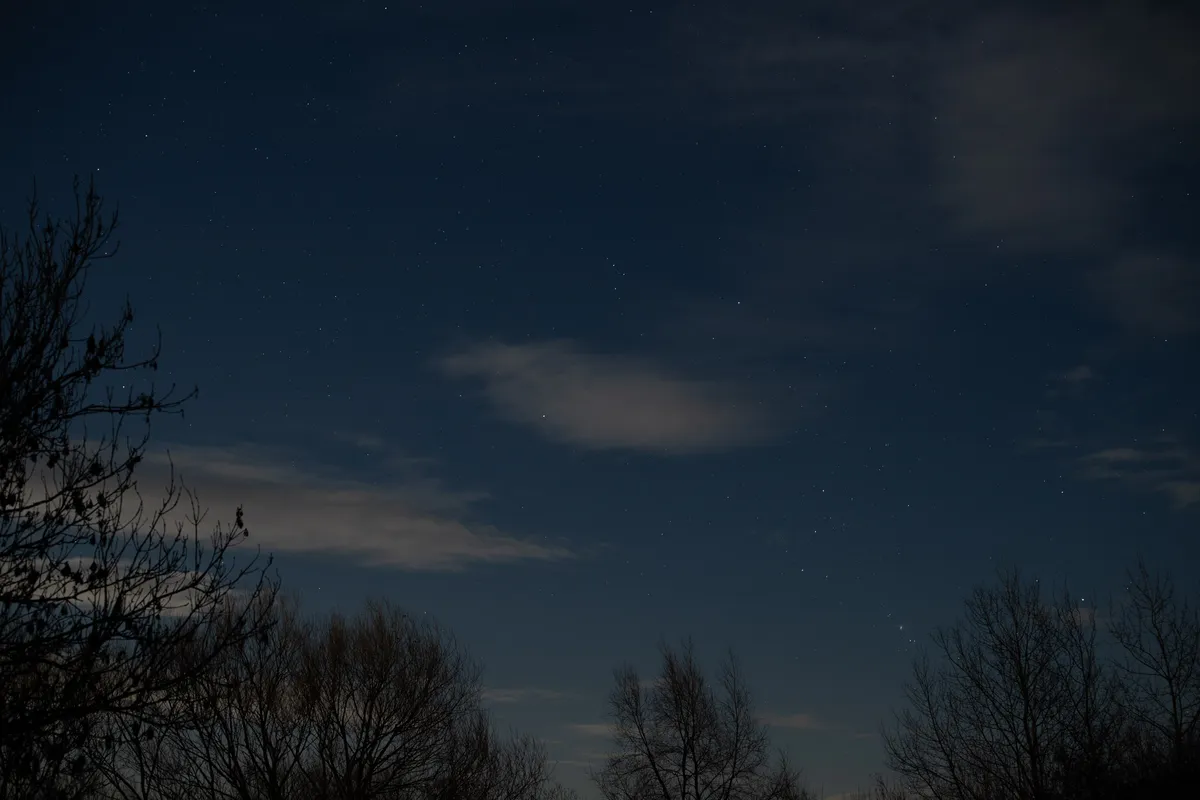

The 50mm f/1.4 produces reasonable sharpness at f/1.4, although the corners don’t exhibit a great deal of fall-off. Central and corner sharpness improve incrementally as you stop down the aperture, with f/8 being both the sweet spot of the lens and the setting where image quality takes a leap in a positive direction.
Despite this, shooting between f/1.4 and f/2.8 for astrophotography produces excellent results. Like all fast aperture prime lenses, there’s vignetting wide open, which is f/1.4 for this lens. This reduced slightly at f/2.8 and was gone at f/4.
Image 1 of 3
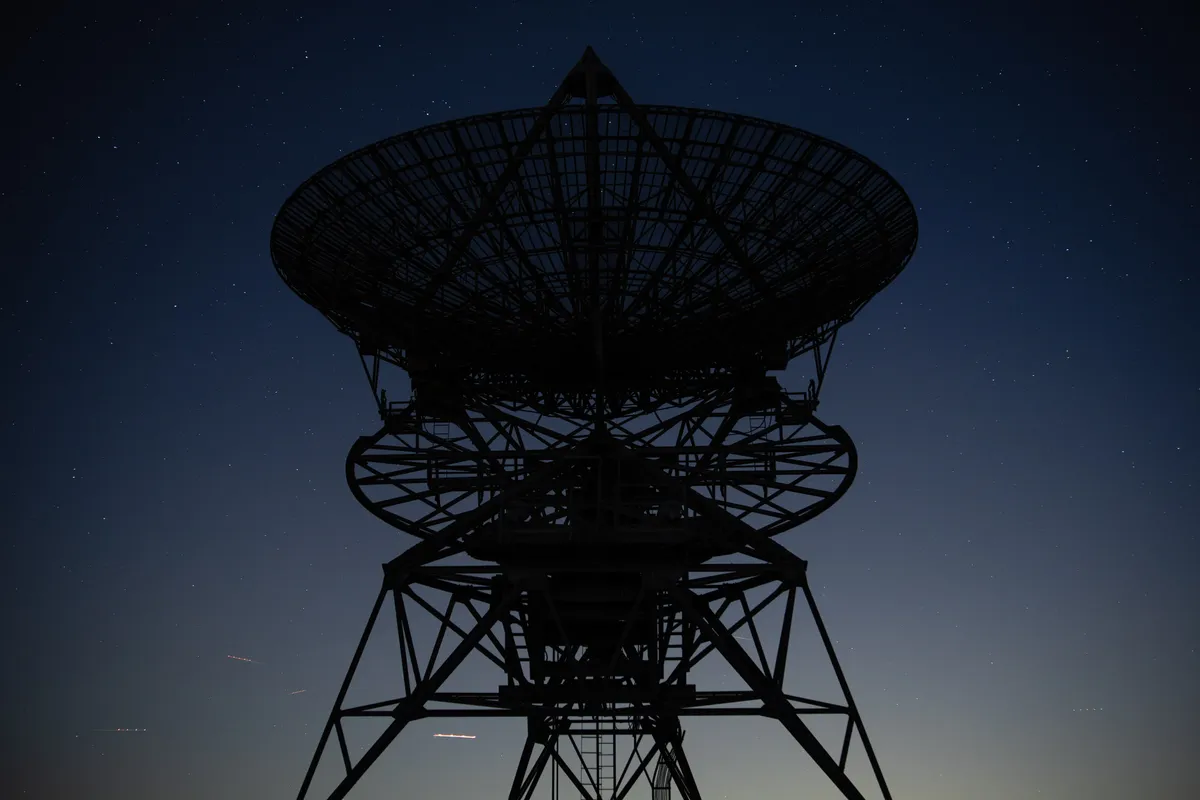


At the time of writing, there wasn’t a lens profile available in Adobe Lightroom or Adobe Camera Raw, so lens corrections, except for chromatic aberration removal, had to be applied manually. The images presented in the review have not had any lens corrections applied, so you can see what the lens is capable of.
During testing, a shot was taken of Christmas lights with trees behind at f/1.4, and there was only the tiniest amount of fringing/chromatic aberration visible. This was easily removed using the “Remove Chromatic Aberration” option in the Lens Corrections tab in Adobe Lightroom.
Viltrox AF 50mm f/1.4 Pro FE: Functionality
- No Optical Image Stabilization (OIS)
- Fast and silent autofocus
- USB-C port for updates
Just like other prime lenses, there’s not a huge amount to shout about with the Viltrox 50mm f/1.4. This is typically the case because prime lenses traditionally trade on their, hopefully, excellent image quality and fast maximum apertures, with a handful of other features thrown in for good measure, such as manual aperture rings.
Manual focus with the lens is extremely comfortable thanks to the wide focus ring with smooth resistance, while its width makes it easy to use in low light and when wearing gloves. The same goes for the aperture ring, which features click and clickless operation via a switch. The downside of the all-metal construction, however, is that it will get cold when shooting in winter, so gloves will be a necessity.
Moving on to autofocus (AF), which isn’t relevant but remains important to mention, especially if you plan to use the lens for capturing other subjects, is that the AF is fast and silent. AF is powered by Dual Viltrox HyperVCM motors, so half the amount of the Viltrox 35mm LAB lens, but the 50mm managed to lock onto subjects positively during testing. Focusing is also internal, so the front element doesn’t rotate whether focusing manually or with AF.
One feature that’s handy for keeping the lens up to date is the USB-C port on the lens mount. This allows the lens to be powered by a computer, for example and switches on Bluetooth so you can connect the lens to the Viltrox Lens app. Alternatively, you can attach it to a computer via USB-C for firmware updates and use the desktop app instead.
Viltrox AF 50mm f/1.4 Pro FE: Price
At $549 / £525, the Viltrox AF 50mm f/1.4 Pro FE is an absolute bargain for a pro-spec lens. It may be tier two of the Viltrox line-up with Pro lenses sitting below the LAB series, but just like the flagship lenses, you get the lens, a lens hood, front and rear lens caps and a soft lens case in the box.
To give some context on how well-priced this lens is, the Sony FE 50mm f/1.4 GM costs $1448 / £1399, so it’s almost three times the price. The Sony GM is a fantastic lens, but it’s considerably more expensive — you could buy two Viltrox prime lenses for the same amount.
Viltrox AF 50mm f/1.4 Pro FE: User reviews
Online reviews suggest that users are extremely happy with the build quality and image quality, but often mention the weight of the lens. Some reviews mention slow autofocus, but this was apparently remedied with a firmware update. The firmware of the lens was updated before our review.
How we tested the Viltrox AF 50mm f/1.4 Pro FE
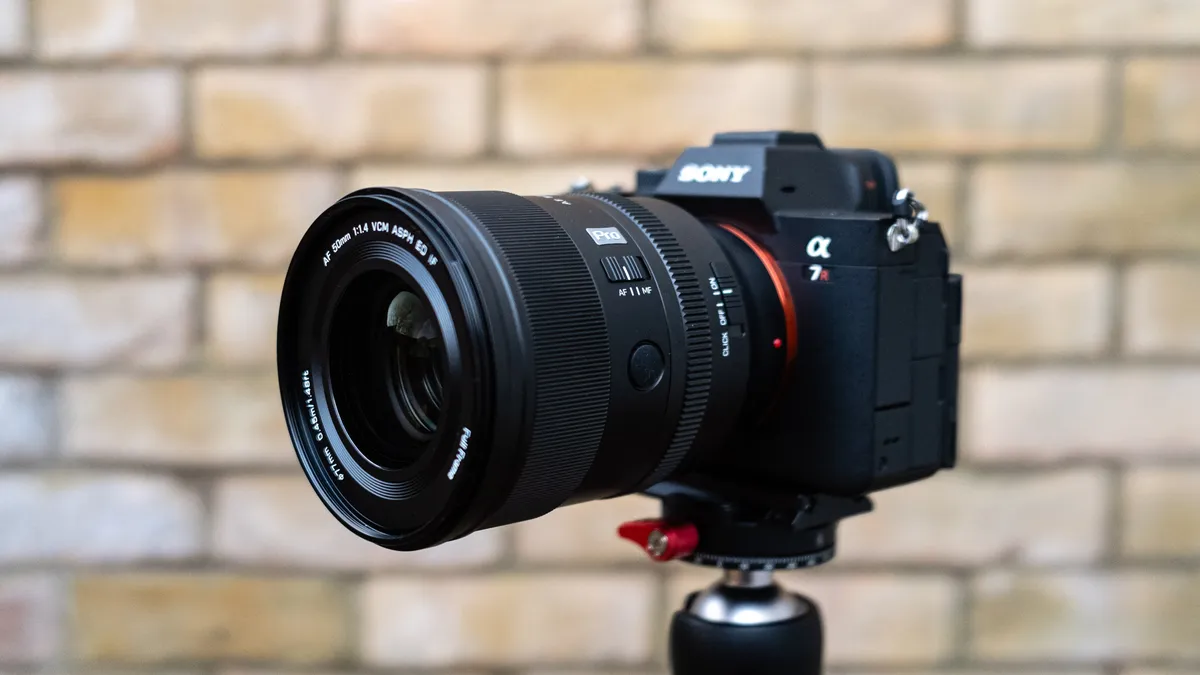
The Viltrox AF 50mm f/1.4 Pro FE was tested in combination with the Sony A7R V, which offers an unforgivingly high resolution. The lens was tested at night with a focus on astrophotography, and in daylight to assess sharpness, distortion and general functionality for an all-round approach to testing.
Should you buy the Viltrox AF 50mm f/1.4 Pro FE?
Buy it if
✅ You need a fast 50mm prime lens: With its f/1.4 maximum aperture, this is a fast lens that’s ideal for low-light photography.
✅ You need weather-sealing: With weather sealing against dust and moisture, this is a lens that can withstand outdoor use.
Don’t buy it if
❌ You’re on a tight budget: The Viltrox 50mm is great value, but it’s still more expensive than f/1.8 alternatives.
❌ You want a lightweight lens: At 28 oz / 800 g this is an extremely heavy 50mm f/1.4 lens, but it is all-metal.
If you’re in the market for a fast 50mm prime lens, the Viltrox AF 50mm f/1.4 Pro FE is a fantastic option well worth considering. The maximum f/1.4 aperture is ideal for astrophotography, and the excellent image quality produced makes it an ideal partner for the Sony A7R V and older R series models.
The focal length isn’t the most versatile for wide-angle astrophotography, but it is perfect when capturing silhouetted objects in the foreground to add context to shots.
Build quality is also excellent thanks to the all-metal design, which includes weather sealing and a water and smudge-repellent coating on the front element.
There’s no getting away from the fact that this is a heavy lens for what it is, but that could be a price worth paying for the overall cost and performance of the lens.
If this lens isn’t for you
The Sony FE 50mm f/1.4 G Master is a premium standard prime lens delivering excellent sharpness alongside Sony’s solid GM build quality. It’s a fantastic lens, but it also costs a lot more than the Viltrox 50mm f/1.4.
The Viltrox AF 35mm f/1.2 LAB FE is part of Viltrox’s flagship lens series, offering an ultra-fast maximum aperture, excellent image quality and a slightly wider-angle focal length.
The Sony FE 20mm f/1.8 G is a rare gem — one of those lenses that belies its price and series, offering exceptional image quality for a seriously affordable price. Many people say it’s better than the Sony 24mm f/1.4 GM.