To say that people weren’t impressed when Nvidia DLSS 5 was announced would be an understatement. Gamers and critics alike expressed concerns over heavy-handed “beauty filters” smoothing out character faces and AI overwriting developer art direction. The initial requirement of a second GPU for rendering also didn’t go over well.
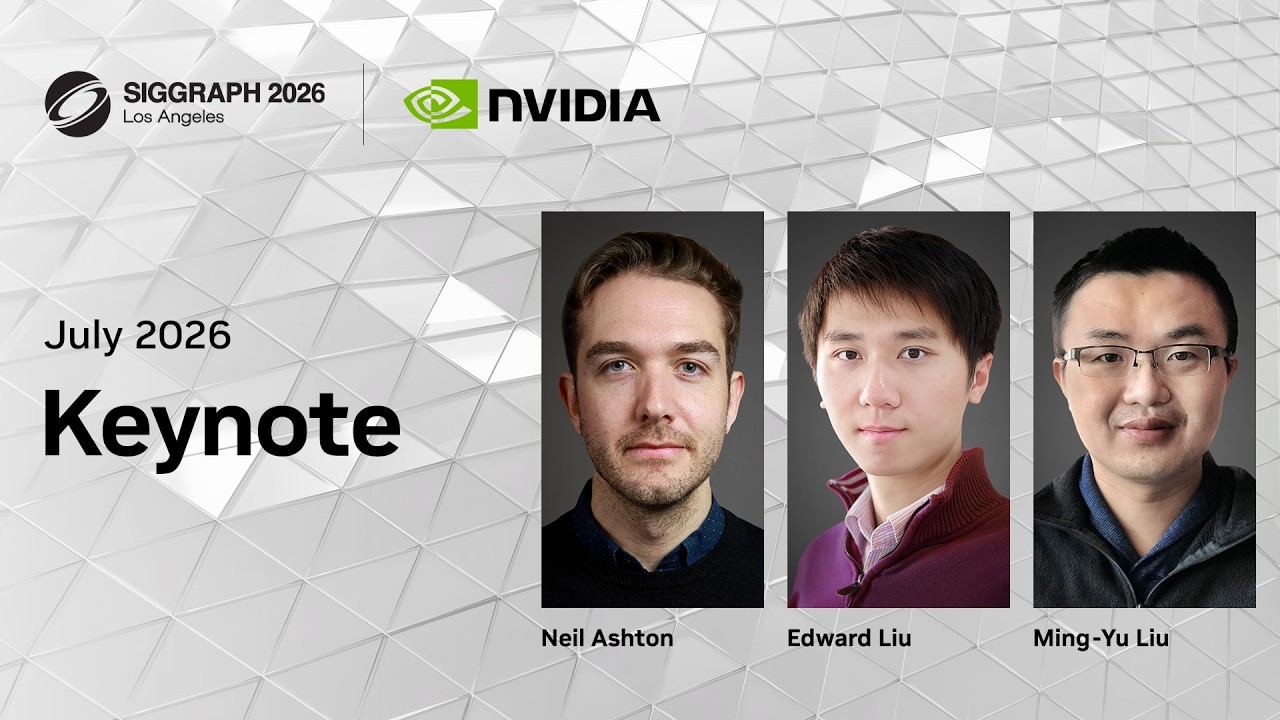
At SIGGRAPH, Nvidia held a follow-up keynote that was practically built to address the concerns folks have with DLSS 5. Instead of focusing on how photo-realistic DLSS 5 could make graphics appear, the keynote centered around the amount of control artists will have over the technology.
Here’s a breakdown of what Nvidia discussed at SIGGRAPH and how DLSS 5 might not be as bad as we feared.

Granular control

As you might recall, the biggest complaint with DLSS 5 is how the graphics appeared to have an Instagram/TikTok filter slapped over them. A less charitable description would be an “AI slop” filter. Nvidia addressed this concern directly, saying that game artists would have full control over a game’s graphics.
Developers won’t be forced into all-or-nothing with AI. They’ll be able to mask out individual characters, faces, props, or background elements so DLSS 5 either ignores them or processes them with tailored settings. Structural and Tone Intensity sliders will give devs fine control over how things appear. There will also be three distinct AI models for developers to assign.
No AI overwrites

Another concern is that the AI would hallucinate on low-poly geometry or rewrite hand-crafted visuals. DLSS 5 isn’t generating a game scene from scratch but relies strictly on internal game engine buffers to preserve the artist’s original intent.
Nvidia emphasized that traditional rasterization and ray tracing still build the entire frame first, defining geometry, lighting anchors, motion vectors, and surface normals. Nvidia framed DLSS 5 as a third category of AI rendering alongside upscaling reconstruction and frame generation. The engine creates the world while the model enriches complex lighting elements.
Latency

Generative video models usually process frames in batches, which can introduce input lag. That’s obviously a non-starter for fast-paced games like CSGO 2.
Nvidia says that DLSS 5 processes the current frame using the game’s engine’s native motion vectors without looking ahead to future frames. By avoiding multi-frame batch processing, Nvidia’s goal is to eliminate both generative latency and temporal shimmering artifacts.
One GPU needed, not two

When Nvidia first demoed DLSS 5, the computational overhead was so heavy that it reportedly required dual high-end GPUs just to run smoothly. Naturally, this isn’t feasible for most players, but Nvidia says you’ll be able to run DLSS 5 on a single GPU.
To that end, Nvidia revealed that they have distilled the massive generative model into a much smaller, single-step diffusion model. The updated implementation has been engineered to run on a single RTX GPU with efficient VRAM allocation instead of requiring multi-GPU rigs that only hardcore users own.
Outlook

I’ve championed Nvidia DLSS for years, but I was one of the folks who wasn’t enamored with that initial DLSS 5 reveal. Now, after SIGGRAPH, I’m less worried about this fall’s upcoming update.
We’ll have to wait to see how the final version functions, but I’m glad that Nvidia has addressed all the major concerns. If we can get richer game graphics without the infamous AI look, then we’ll all be winners.

Follow Tom’s Guide on Google News and add us as a preferred source to get our up-to-date news, analysis, and reviews in your feeds.